Showing posts with label accountable. Show all posts
Showing posts with label accountable. Show all posts
Sure Accountable Care Organizations ACOs Can Save Money But Can They MAKE Money
Tuesday, May 13, 2014
 |
| ACOs at work. |
All three institutions are using two key ingredients:
1) information technology-based risk stratification to identify the persons at greatest risk and
2) dedicated full-time nurses who perform telephonic and in-person outreach, coordinate care and provide patient coaching that, in turn, is tailored to that risk.
To the DMCB, the good news is that ACOs are using the two approaches that define modern-day disease and population health management. That industrys success will be Mt Sinais, Coastal Carolinas and Hackensacks success.
The bad news is that the news release only addresses half the question: did any savings exceed the institutions cost of the risk stratification and the nurse-FTEs? If the early answer is no, then avoided ER visits and reduced costs could turn out to be much like Governor Christies lap band: so far so good but its still risky and could ultimately be all for naught.
And on an unrelated note, this just-published New England Journal article makes note of "not made in America" health care innovations from overseas that could hold important lessons for the United States. In particular, the authors point out that Germanys DRG hospital payment system includes 30-days of post-discharge care and includes the physician payment. Readmissions within that 30 day window are, with a few exceptions, not covered and physician payment is possible because docs are often employees of the hospitals.
"Interesting!" says the DMCB, but is reminded that Germany is hardly a model for reducing inflationary cost trends. It also specifically recalls hearing Germanys Minister of Health, Daniel Bahr, express impatience with his countrys DRG system just last week. He criticized it for not advancing enough quality in his keynote address at the HauptKongress in Berlin.


The Failure of The Coming Failure of Accountable Care
Wednesday, April 2, 2014
 |
| An alternative to ACOs? |
Dr. Christensen argues that just because theyre in ACOs, a) physicians arent going to change their money-spending ways, b) without any corresponding "skin in the game," patients will continue to demand high-end services and c) the rosiest savings assumptions will still be minuscule compared to the total federal health budget.
If true transformation is needed, argues Dr. Christensen, health policymakers should embrace alternative care venues ("Minute Clinics"), downjobbing (let generalists provide specialty care services), non-physician providers (nurse practitioners) and telehealth.
The Disease Management Care Blog thinks Dr. Christensen has it mostly right about ACOs but has less confidence in his alternative solutions.
Minute Clinics: in classic health insurance 101, alternative care settings are not substitutive, theyre additive. Classic economic supply and demand does not apply because most health care services create their own demand.
Downjobbing: in any health care system, the economics are push and pull: costs are avoided, while revenue is pursued. While the luster of a rich procedure code is enough to drive patients toward specialists, another factor in patient erral patterns is the associated cost. To put it bluntly, the ultimate value of primary care physicians is the savings that they achieve for patients who represent a cost.
Non-physicians: there are arguments on both sides, but health care ultimately remains a labor-intense environment. The main argument unaddressed by Dr. Christensen is that playing concertos, flying fighter jets and getting diagnoses and treatment right more than 99% of the time requires 10,000 hours worth of expertise.
Telehealth: the same Minute Clinic logic applies: typical telehealth could end up being additive, not substitutive.
Accountable Care Organizations Can Improve Population Health If They Use The Correct Definition
Wednesday, March 26, 2014
 |
| The right definition was there all along! |
The Disease Management Care Blog says the article is what is muddled and that the readers of JAMA deserve better.
According to the authors, after the Affordable Care Act launched the Medicare Accountable Care Organizations (ACOs), their stated purpose has morphed from Health-System Ver. 2.0 controlling the chronic care costs of their assigned patients to Health System Ver. 3.0 collaboratively addressing "population health" for an entire geography.
Between the here of "improving chronic care" and the there of "population health," Drs Noble and Casalino believe ACOs are going to have to confront the additional burdens of preventive care, social services, public health, housing, education, poverty and nutrition. That makes the authors wonder if the term "population health" in the context of ACOs is unclear. If so, that lack of clarity could ultimately lead naive politicians, policymakers, academics and patients to be disappointed when ACOs start reporting outcomes that are limited to chronic conditions.
In short, they dont believe ACOs, as currently configured, are up to the new task. Thats because ACOs would need to collaborate with social service organizations, be responsible for a geographically defined service area and improve long term public health outcomes. According to the authors subtitle, the answer to the question "should they try" is "no."
The Disease Management humbly disagrees. Thats because Drs Noble and Casalino, the editors of JAMA and the manuscripts peer reviewers seem to be ignorant of the the correct definition of population health. Its right there on the Care Continuum Alliances web site, in this longstanding page that describes the "population health model of care." When the DMCB did a simple Google search on "population health definition," it had little difficulty finding the link.
The CCA helpfully describes population health as:
a delivery model characterized as a physician-guided health care delivery system designed to develop and engage informed and activated patients over time to address both illness and long term health.
Was that so hard?
And how is that accomplished? According to the CCA, the ingredients to that make for population health include:
• Population identification strategies and processes;
• Comprehensive needs assessments that assess physical, psychological, economic, and environmental needs;
• Proactive health promotion programs that increase awareness of the health risks associated with certain personal behaviors and lifestyles;
• Patient-centric health management goals and education which may include primary prevention, behavior modification programs, and support for concordance between the patient and the primary care provider;
• Self-management interventions aimed at influencing the targeted population to make behavioral changes;
• Routine reporting and feedback loops which may include communications with patient, physicians, health plan and ancillary providers;
• Evaluation of clinical, humanistic, and economic outcomes on an ongoing basis with the goal of improving overall population health
Accordingly, if an CMS-contracted ACO can identify its assigned Medicare population, perform needs assessments, promote awareness of health risks, offer education as well as support, increase self management, use data feedback and evaluate outcomes, its offering "population health." By using that playbook, an ACO will capitalizing on the experience of a community of population health service providers that have been doing precisely this for over a decade.
This vision is far more compact than the overreaching, misinformed and muddled definition of "population health" offered in JAMA. It is also, if ACOs invest in the right resources and partnerships, well within reach.
The DMCBs answer to the question "Should they try?" is "yes."
Physicians Generating Millions of Dollars in Losses and the Implications for Accountable Care Organizations ACOs
Monday, February 24, 2014
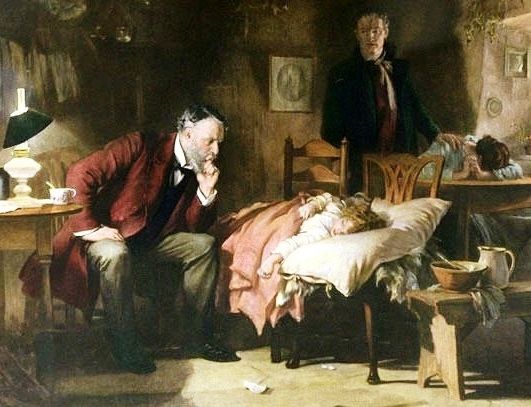 |
| "I wonder how I can lose less money?" |
The DMCB agrees with this important HealthHombre insight. In addition to the many "known unknowns" (including just how physician-hospital organizations will perform in managing insurance risk), there are also the "known known" year-to-year random fluctuations in claims expense. And, as the DMCB noted, theres the "unknown unknown" "antifragile" threats to a highly protected sector of the economy that could bring the whole ACO-thing down, 2008-style.
And heres a case in point that backs up HealthHombre. "Wellspan" is a highly regarded and well-run hospital system that is local to the DMCB. This recent news report is telling because Wellspans success and challenges probably apply to other emerging integrated institutions that have an appetite for risk contracting.
According to the press report, Wellspan garnered an excellent credit rating because...
"766 physicians — more than 75 percent of those in the hospitals market — are affiliated with WellSpan, which [was] counted as a key credit strength."
But the bad news is that the rating also....
.....noted that WellSpans physician group, which employs 411 of those doctors, generated losses of $19.6 million in 2011 and $21.4 million in 2012 (bolding DMCB).
The DMCB has heard similar statements from seasoned health system administrators both locally and nationally. If "physician integration" is supposed to be the bedrock of ACOs, how is it that the docs are responsible for millions of dollars in losses? What is the likelihood that these organizations will finish December 31, 2013 in the black?
Care Management Service Providers and the Potential of Accountable Prescribing
Tuesday, February 18, 2014
 In previous posts, the Disease Management Care Blog has repeatedly questioned the wisdom of a one-size-fits-all, top-down, blunt force and Ver 1.0 approach to measuring health care quality. Thats why its glad to see that the New England Journal of Medicine agrees with the DMCB in this Perspective by Nancy Morden and colleagues on the topic of Accountable Prescribing.
The authors point out that while blood pressure should be less than 140/90, LDL cholesterol less than 100 in persons with a history of heart attack and A1c should be less than 7% in persons with diabetes, its clear that the cure can be more costly than the disease.
For many individuals with mild elevations in blood pressure, diet and exercise can be enough and, if that doesnt work, cheap water pills often work great. Among persons with elevated cholesterol levels, inexpensive statin prescriptions can save lives. Metformin for diabetes has been around for decades and it a first line agent no matter what the A1c is.
As a result, they call for measuring and rewarding quality based on accountable prescribing that not only measures the numbers (blood pressure, blood cholesterol or diabetes control), but the percent of individuals receiving conservative or first line treatments. While this approach would require an even more detailed databases/registries, its within reach of most commercial insurers and advanced electronic record systems. We owe it to our patients to provide a tailored, bottom-up, nuanced and Ver. 2. approach to measuring health care quality.
Its also a concept that the population health and care management service providers could, with the right kind of clinical partners, lead. This calls for a pilot program and, in the DMCBs humble opinion, the sooner, the better.
For a better idea of how this might work, check out this table.
Image from Wikipedia
The Per Patient Monthly Cost of Care Coordination for Accountable Care Organizations ACOs
Thursday, January 16, 2014
 by Peter McMenamin, PhD Senior Policy Fellow, American Nurses Association
In a prior posting, the Disease Management Care Blog noted that nurse-to-patient ratios in outpatient care coordination programs run between 1:750 to 1:1500. Based on 2010 Bureau of Labor Statistics data, the average annual salary of a registered nurse (RN) (in hospitals) is $68,610. Fringe benefits for RNs add 46% for a total of $100,208.
Combine that ratio with the total compensation information and the per member per month (PMPM) cost for a care coordination nurse ranges from $5.57 to $11.13.
Obviously, a single RN does not care coordination make. There are other overhead expenses, such as administration, documentation and supervision. Assuming human resources account for the bulk of a program’s cost with an additional load of 25%, the total PMPM cost ranges goes from about $7 to $14, while 50% increases it to $8.35 to $16.70.
By my calculation, that puts monthly care coordination costs close to the CMS Innovation Center’s Comprehensive Primary Care Initiative (CPCi) within the “ballpark” of $15 to $20 per Medicare beneficiary per month (see page 3 here).
Based on these data:
1) CMS is being reasonable in offering a $20 monthly fee for care coordination. It falls within industry benchmarks and supports a competitive compensation package for a typical RN.
2) While CMS’ fee meets benchmarks, this is obviously meant to support a medical practice hiring additional personnel to take on the work of care coordination. As a result, the fee may offer some additional margin depending on additional overhead. Hopefully, the providers who participate in the initiative won’t assume that the $20 fee represents pure profit. Expecting RNs currently on staff to manage care coordination on top of existing duties means that the existing duties or care coordination (and the RNs) will suffer.
3) As the Disease Management Care Blog pointed out in a prior post, this may also represent an argument for the “central” hiring and administration and the “peripheral” distribution of the care coordination nurses. If administrative costs can be pooled and coordinated by a cluster of primary care sites, that could lower costs significantly.
4) Last but not least, this gives Accountable Care Organizations (ACOs) an important insight on one cost that they’ll need to take on if they are serious about care coordination.
A Generic Ready To Go Accountable Care Organization ACO Press Release
Thursday, December 19, 2013
 Is your health care organization about to launch an "accountable care organization" involving a commercial insurer? Welcome to the club, says the Disease Management Care Blog. Now that youve joined the hundreds of other providers in this latest craze, the first thing you need to do is to get your public relations folks to fashion a press release.
The DMCB feels your pain. Having to explain just how actuarial cost trend "accountability" really works to a public relations department that already has trouble telling the difference between diabetes and dialysis is bad enough. You dont understand it either!
The DMCB to your rescue with a generic press release. Its been reading a lot of these lately and has discovered that the ideal announcement 1) uses a lot of jargon and 2) offers no details on how the ACO will actually work.
Feel free to copy, cut and paste to your organizations letterhead as needed.
PRESS RELEASE
Media Contacts: Lotta Jargon
The Titan Clinic
noidea@monopolycare.com
Titan Clinic System and Behemoth Insurance Collaborate to Create Accountable Care Initiative
ROSY GLASSES, WT – Aug 7, 2012 – Behemoth Insurance (NYSE:TBTF) and the Titan Clinic System have initiated an epic collaborative accountable care initiative that will epicly initiate expanded patient-centered access to a triple-aim focused and consumer-centric health care initiative. This collaboration will drive health outcomes, utilize the patient centered medical home neighborhood, maximize self-care, prevent chronic conditions, achieve wellness, reduce medical costs, lower admissions, improve quality of life, grow community partnerships, measure patient satisfaction, invent shared savings, boost consultant employment levels and return honor to the sport of badminton.
Titan is a modern not-for-profit hospital and physician organization that is not the same as a 1990’s physician hospital organization (PHO) that coordinates, manages, disseminates and monetizes care resources and technology to maximize bottom-line tax-free surpluses. A pioneer in specialist-dominated medicine, Titan discovered that it had 5 primary care clinics all along. This insight led it to to buy another 40 to refer a patient base of 500,000 patients within a 3 hour driving radius to Titan.
"Titan’s CEO, Ivan Bigego, is a nationally recognized speaker on the topic of accountable care, which is why we think the Clinic is a good fit for our insurance company,” said Behemoth’s Chief Executive Officer Max Gains. “We believe this arrangement offers an opportunity for us to market that we improve health care quality, lower medical costs and help our patients lead healthier and more productive lives.”
"This accountable care program will coordinate a preexisting suite of integrated services that support and rebrand the electronic record, care management informatics and aligned reimbursement methodologies that we invested in years ago." declared Ed Vertising, Chief Marketing Officer of Titan.
"Were pleased to be part of the Behemoth family of nation-states," noted Dr. Ego. "By relabeling the services weve been providing all along, we can minimize disruption for both our patients and physicians." he said. "They wont notice a thing," he added.
“Like Facebook’s business model, claiming to enhance the patient care experience to the advantage of our organization will result in a strong patient-centric and outcomes-based cash flow,” noted Behemoth’s Board Chair Garner Shekels.
Subscribe to:
Posts (Atom)


