Showing posts with label money. Show all posts
Showing posts with label money. Show all posts
Sure Accountable Care Organizations ACOs Can Save Money But Can They MAKE Money
Tuesday, May 13, 2014
 |
| ACOs at work. |
All three institutions are using two key ingredients:
1) information technology-based risk stratification to identify the persons at greatest risk and
2) dedicated full-time nurses who perform telephonic and in-person outreach, coordinate care and provide patient coaching that, in turn, is tailored to that risk.
To the DMCB, the good news is that ACOs are using the two approaches that define modern-day disease and population health management. That industrys success will be Mt Sinais, Coastal Carolinas and Hackensacks success.
The bad news is that the news release only addresses half the question: did any savings exceed the institutions cost of the risk stratification and the nurse-FTEs? If the early answer is no, then avoided ER visits and reduced costs could turn out to be much like Governor Christies lap band: so far so good but its still risky and could ultimately be all for naught.
And on an unrelated note, this just-published New England Journal article makes note of "not made in America" health care innovations from overseas that could hold important lessons for the United States. In particular, the authors point out that Germanys DRG hospital payment system includes 30-days of post-discharge care and includes the physician payment. Readmissions within that 30 day window are, with a few exceptions, not covered and physician payment is possible because docs are often employees of the hospitals.
"Interesting!" says the DMCB, but is reminded that Germany is hardly a model for reducing inflationary cost trends. It also specifically recalls hearing Germanys Minister of Health, Daniel Bahr, express impatience with his countrys DRG system just last week. He criticized it for not advancing enough quality in his keynote address at the HauptKongress in Berlin.


Ask the Internet What DONT You Spend Money On
Thursday, May 8, 2014
Simple Organized Living started it. Then, Money Saving Mom picked it up. Today, Casual Kitchens Daniel puts his own twist on it. I think its officially a meme:
Q: What ten things DONT you spend money on?
A: Okay, here goes:
Want to ask the interweb a question? Post one in the comment section, or write to Cheaphealthygood@gmail.com. Then, tune in next Tuesday for an answer/several answers from the good people of the World Wide Net.
Q: What ten things DONT you spend money on?
A: Okay, here goes:
- Beef (Thank you, chickens.)
- Bottled water and soda (Thank you, tap.)
- Lawn care (Thank you, Brooklyn concrete.)
- Mayonnaise, radishes, scallops, cauliflower, and anise. (Thank you, food aversions.)
- Name brand clothes (Thank you, lack of fashion sense.)
- Cable TV (Thank you, Netflix.)
- DVDs (Thanks again, Netflix.)
- Books (Thank you, public library.)
- A car (Thank you, feet.)
- Kitchen gadgets (Thank you, limited cabinet space.)
Want to ask the interweb a question? Post one in the comment section, or write to Cheaphealthygood@gmail.com. Then, tune in next Tuesday for an answer/several answers from the good people of the World Wide Net.
Nutritionism Your Health and Your Money
Monday, April 21, 2014

But what is Nutritionism? Why does it get a bad rap? Who is affected by it? What does it cost us? How does it affect our health?
There are many answers to these questions, and well try to address them as best we can here. As always, if you have more to say or I get something wrong, the comment section is wide open.
WHAT is Nutritionism?
According to food guru/Omnivore’s Dilemma author Michael Pollan, who picked up the term from scientist Gyorgy Scrinis, Nutritionism is, “the widely shared but unexamined assumption that the key to understanding food is indeed the nutrient.”
In other words, it dismisses a whole food’s composition to focus on its individual components, which are assumed to be most important to your body. A tomato isn’t necessarily valuable because it’s a tomato. It’s valuable because it’s a vessel for lycopene.
WHY is Nutritionism a not-so-good thing?
In many cases, there’s little research showing these nutrients are beneficial when found outside their native whole foods. The tomato is a complex structure, see, with its own biology and ways of interacting with other produce, grains, and meats. Take the lycopene out, stick it in a supplement, and theres scant evidence to show how it might affect you.
Have doubts? It’s understandable. Billions of dollars are spent telling us how wonderful certain nutrients are, no matter the form. Just remember, as Pollan highlights: “Indeed, in the case of beta carotene ingested as a supplement, scientists have discovered that it actually increases the risk of certain cancers.” Yikes.
Beyond that, there’s another issue. Manufacturers add nutrients to otherwise nutritionally bet foods, which entice buyers to believe those products are healthier. The Lucky Charms with Calcium and Vitamin D? Likely do jack-all for your wellbeing. In fact, now that you’re eating Lucky Charms every morning, you’re probably worse off.
[Apropos of nothing, as much as I dig Jamie Lee Curtis for A Fish Called Wanda (and adore her husband), I’m pretty sure Activia is just yogurt with a weak laxative.]
WHERE can I find evidence of Nutritionism?
All over the supermarket, man. Specifically in the center aisles. More specifically, on the labels of processed food: “probiotic yogurts; whole grain cookies that are high in fiber; orange juice with added calcium, and so on,” as Kerry Trueman of The Green Fork puts it.
WHO’S pushing Nutritionism?
With apologies to Don Draper, marketers and advertisers.
Why? Well, buyers will pay more for processed food they believe to be healthy, whether or not it’s actually so. The food industry takes advantage of this like you wouldn’t believe.
Consider the granola bar.
Your everyday Kellogg’s Nutri-Grain bar, no health promises included, costs $3 for a box of eight. The ingredient list is gigantic, and four of the top seven are some form of modified sugar.
Across the aisle, Kellogg’s Fiber Plus Antioxidants Chewy Bars costs $2.50 for a box of five. With a name like that – all those nutrients! – you’d expect a healthier snack, right? Here’s what you’re paying 33% more for:
Chicory Root Fiber, Rolled Oats, Crisp Rice Cereal (Rice Flour, Sugar, Malt Extract, Salt, Caramel Color, Mixed Tocopherols for Freshness), Sugar, Semisweet Chocolate Drops (Sugar, Chocolate, Cocoa Butter, Dextrose, Milk Fat, Soy Lecithin, Confectioners Glaze [Shellac, Hydrogenated Coconut Oil]), Inulin from Chicory Root, Vegetable Oil (Hydrogenated Palm Kernel, Coconut and Palm Oil), Canola Oil, Fructose, Contains Two Percent or Less of Honey, Cocoa (Processed with Alkali), Glycerin, Tricalcium Phosphate, Whey, Chocolate, Salt, Gum Arabic, Baking Soda, Soy Lecithin, Sorbitan Monostearate, Polysorbate 60, Vitamin E Acetate, Natural And Artificial Flavor, Zinc Oxide, Almond Flour, Nonfat Dry Milk, Whole Wheat Flour, Partially Defatted Peanut Flour, Soy Protein Isolate, BHT (for Freshness).
Mmm … Partially defatted peanut flour.
(All prices and ingredient lists taken from Peapod.com on 8/11/10.)
HOW are they getting away with this?
Federal regulation of food labels is misguided at best, and at worst, damn negligent. Otherwise, how can you explain VitaminWater?
Not to mention, according to Pollan, “The American Heart Association charges food makers for their endorsement.” So there’s that.
WHEN will Nutritionism change?
I don’t know.
I’m not trying to be flip there. Awareness is on the rise, MObama’s programs are receiving a lot of positive attention, and the FDA is trying to do better. So labeling changes may occur in the near future.
How effective will they be? Will they help spawn greater initiatives? Can concern for the greater good overcome the money thrown into advertising? Those questions are harder to answer.
HOW can I avoid being snowed by Nutritionism?
There are three big ways you can avoid the dubious health claims and high prices associated with Nutritionism:
- Buy whole foods. They’re healthier and cost way less.
- Read a product’s ingredient list, rather than the flashy claims on the front of the box.
- Enact change in a positive way. Cook for your friends. Talk to your school boards. Start sentences with, “Oh! You know what I read about CalciPuffs? They’re 0.1% added calcium and 99.9% recycled atomic cardboard.”
Community Care North Carolina Style Medical Home Saves Money
Thursday, April 3, 2014
 So, does the medical home "save money?" A recent publication in Population Health Management about Community Care of North Carolina (CCNC) says "yes." Thats important, because CCNC program has had more than its fair share of controversy.
 You can read more about CCNC here. According to the Commonwealth Fund, Raleigh pays CCNCs 14 non-profit regional networks $3 per member per month (PMPM) for medical home services for over a million Medicaid and CHIP beneficiaries. In exchange, the 1300 clinics provide preventive care services, 24 hour coverage services, coordinating access to specialty services, care management and quality improvement. To do all that, CCNC uses a "medical home model" with "specialized chronic care programs" staffed by teams of docs, pharmacists and care managers.
The quasi-experimental evaluation published in PHM used "hierarchical modeling" to evaluate the impact of CCNC on two different samples of non-elderly (ages 0 to 64) disabled Medicaid patients who had no other insurance:
Model 1: compared the medical home patients claims expense within and outside the enrollment periods "after controlling for other covariate values"
Model 2 created matched cohorts of enrolled and non-enrolled patients to compare pre-post differences in insurance claims expense. Matching was based on pre-enrollment pharmacy use, race, age, enrollment duration, clinical risk and behavioral health burdens. For every enrolled patient, ten non-enrolled comparison patients were selected.
The study period was January 1 2007 through Sept. 30, 2011. Any single months of disenrollment were "filled in" if there was enrollment 2 months per and 2 months post.
Results?
Model 1: This used insurance claims data for over 169,000 patients with an average age of 35 years. 52% were male with a 24% rate of mental illness and an 8% rate of chemical dependency. Compared to the time of not being enrolled in a program, claims expense was statistically significantly $190 per member per month (PMPM) cheaper in the first year; that declined to $64 PMPM cheaper in the last ear of study. Persons with a higher burden of illness had even greater savings.
Model 2: This studied claims from approximately 102,000 enrolled patients with pretty much the same baseline characteristics in Model 1. Savings achieved statistical significance in the 3rd, 4th and 5th years of study: $81, $73 and $121 PMPM, respectively.
The DMCBs take:
While it can get lost in the sublime minutiae of hierarchical modeling, the DMCB finds the methodology and the numbers to be credible. It has used the same Model 2 style of matching in its own studies. Since a pristinely conducted prospective randomized control clinical study is functionally impossible in a state-wide Medicaid program, quasi-experimental study designs like this are a good window into figuring out what happened.
And what happened is that they saved a lot of money. Assuming CCNC was paid $3 PMPM or $36 million per year for a about a million beneficiaries, avoided claims expense appeared to be well north of that.
While CCNC has a lot of moving pieces, the DMCB believes the key success factor was based on identifying the most vulnerable patients and then using nurses to intervene on the them.
The average caseload per nurse ranges from 150 to 200 patients. As the Commonwealth Fund summary describes.....
"Case managers... work with primary care providers (“medical homes”) to identify patients who will benefit most from targeted care management interventions, such as patients making repeated ER visits; patients diagnosed with asthma, diabetes, or heart failure; and patients who have two or more chronic conditions (including mental health conditions) with high service use or activity limitations indicating complex care needs. Care managers identify high-risk patients through the CMIS and from case-identification lists provided by the CCNC central office, notifications of admissions provided by hospitals, and physician errals."
CCNC is to be congratulated for moving from opaque actuarial studies to the harsh glare of peer-reviewed publications. While some critics may pounce on some of the weaknesses inherent in any retrospective analysis of subpopulations, the observations from two "Model 1 and Model 2" vantage points are sufficiently positive to believe that North Carolinas taxpayers got their moneys worth.
The DMCB would point out two caveats:
The disabled Medicaid beneficiary population is a notoriously high utilization group that is a classic example of the return on investment from "low hanging fruit." A little coordination goes a long way in a population with a baseline of high utilization. The same approach may not work in other populations with different patterns of claims expense.
Unfortunately, this gives us little insight about the potential impact of a similar medical home model in commercially insured populations or among Medicare beneficiaries. Thats doubly true for fee-for-service beneficiaries who are outside of any managed care networks.
Nutritionism Your Health and Your Money
Sunday, February 23, 2014
You’ve heard of it. Maybe in a magazine. Maybe in a Michael Pollan or Marion Nestle talk. Maybe on a recent newscast about the lawsuit leveled at Coca-Cola over VitaminWater.
But what is Nutritionism? Why does it get a bad rap? Who is affected by it? What does it cost us? How does it affect our health?
There are many answers to these questions, and well try to address them as best we can here. As always, if you have more to say or I get something wrong, the comment section is wide open.
WHAT is Nutritionism?
According to food guru/Omnivore’s Dilemma author Michael Pollan, who picked up the term from scientist Gyorgy Scrinis, Nutritionism is, “the widely shared but unexamined assumption that the key to understanding food is indeed the nutrient.”
In other words, it dismisses a whole food’s composition to focus on its individual components, which are assumed to be most important to your body. A tomato isn’t necessarily valuable because it’s a tomato. It’s valuable because it’s a vessel for lycopene.
WHY is Nutritionism a not-so-good thing?
In many cases, there’s little research showing these nutrients are beneficial when found outside their native whole foods. The tomato is a complex structure, see, with its own biology and ways of interacting with other produce, grains, and meats. Take the lycopene out, stick it in a supplement, and theres scant evidence to show how it might affect you.
 Have doubts? It’s understandable. Billions of dollars are spent telling us how wonderful certain nutrients are, no matter the form. Just remember, as Pollan highlights: “Indeed, in the case of beta carotene ingested as a supplement, scientists have discovered that it actually increases the risk of certain cancers.” Yikes.
Beyond that, there’s another issue. Manufacturers add nutrients to otherwise nutritionally bet foods, which entice buyers to believe those products are healthier. The Lucky Charms with Calcium and Vitamin D? Likely do jack-all for your wellbeing. In fact, now that you’re eating Lucky Charms every morning, you’re probably worse off.
[Apropos of nothing, as much as I dig Jamie Lee Curtis for A Fish Called Wanda (and adore her husband), I’m pretty sure Activia is just yogurt with a weak laxative.]
WHERE can I find evidence of Nutritionism?
All over the supermarket, man. Specifically in the center aisles. More specifically, on the labels of processed food: “probiotic yogurts; whole grain cookies that are high in fiber; orange juice with added calcium, and so on,” as Kerry Trueman of The Green Fork puts it.
WHO’S pushing Nutritionism?
With apologies to Don Draper, marketers and advertisers.
Why? Well, buyers will pay more for processed food they believe to be healthy, whether or not it’s actually so. The food industry takes advantage of this like you wouldn’t believe.
Consider the granola bar.
 Your everyday Kellogg’s Nutri-Grain bar, no health promises included, costs $3 for a box of eight. The ingredient list is gigantic, and four of the top seven are some form of modified sugar.
Across the aisle, Kellogg’s Fiber Plus Antioxidants Chewy Bars costs $2.50 for a box of five. With a name like that – all those nutrients! – you’d expect a healthier snack, right? Here’s what you’re paying 33% more for:
Mmm … Partially defatted peanut flour.
(All prices and ingredient lists taken from Peapod.com on 8/11/10.)
HOW are they getting away with this?
Federal regulation of food labels is misguided at best, and at worst, damn negligent. Otherwise, how can you explain VitaminWater?
 Essentially, it boils down to this: while the FDA is a little cautious about labels making outright health claims (i.e. “Cheerios prevents cancer!”), it’s generally okay with labels that list food contents (i.e. “Pop Tarts! 20% Daily Value of Fiber!”). So consumers are tricked into thinking an item is healthy, when really it’s the nutritional equivalent of wall insulation.
Not to mention, according to Pollan, “The American Heart Association charges food makers for their endorsement.” So there’s that.
WHEN will Nutritionism change?
I don’t know.
I’m not trying to be flip there. Awareness is on the rise, MObama’s programs are receiving a lot of positive attention, and the FDA is trying to do better. So labeling changes may occur in the near future.
How effective will they be? Will they help spawn greater initiatives? Can concern for the greater good overcome the money thrown into advertising? Those questions are harder to answer.
HOW can I avoid being snowed by Nutritionism?
There are three big ways you can avoid the dubious health claims and high prices associated with Nutritionism:
HOW can I learn more about Nutritionism?
First, read Michael Pollan’s "Unhappy Meals" article in the New York Times. He explains things far, far more thoroughly than I ever could. Then, check out any of the journal pieces written by Gyorgy Scrinis, a huge influence on Pollan, and the originator of this whole Nutritionism thing. Finally, head over to Marion Nestle’s Food Politics blog, which discusses the relationship between advertising, Nutritionism, and our health almost everyday.
And that’s it. Readers, what do you think? Did I miss anything or make any errors? (Please tell me if it’s the latter.) I’d love read comments.
~~~
If you dig this piece, you might also enjoy:
But what is Nutritionism? Why does it get a bad rap? Who is affected by it? What does it cost us? How does it affect our health?
There are many answers to these questions, and well try to address them as best we can here. As always, if you have more to say or I get something wrong, the comment section is wide open.
WHAT is Nutritionism?
According to food guru/Omnivore’s Dilemma author Michael Pollan, who picked up the term from scientist Gyorgy Scrinis, Nutritionism is, “the widely shared but unexamined assumption that the key to understanding food is indeed the nutrient.”
In other words, it dismisses a whole food’s composition to focus on its individual components, which are assumed to be most important to your body. A tomato isn’t necessarily valuable because it’s a tomato. It’s valuable because it’s a vessel for lycopene.
WHY is Nutritionism a not-so-good thing?
In many cases, there’s little research showing these nutrients are beneficial when found outside their native whole foods. The tomato is a complex structure, see, with its own biology and ways of interacting with other produce, grains, and meats. Take the lycopene out, stick it in a supplement, and theres scant evidence to show how it might affect you.
Have doubts? It’s understandable. Billions of dollars are spent telling us how wonderful certain nutrients are, no matter the form. Just remember, as Pollan highlights: “Indeed, in the case of beta carotene ingested as a supplement, scientists have discovered that it actually increases the risk of certain cancers.” Yikes.Beyond that, there’s another issue. Manufacturers add nutrients to otherwise nutritionally bet foods, which entice buyers to believe those products are healthier. The Lucky Charms with Calcium and Vitamin D? Likely do jack-all for your wellbeing. In fact, now that you’re eating Lucky Charms every morning, you’re probably worse off.
[Apropos of nothing, as much as I dig Jamie Lee Curtis for A Fish Called Wanda (and adore her husband), I’m pretty sure Activia is just yogurt with a weak laxative.]
WHERE can I find evidence of Nutritionism?
All over the supermarket, man. Specifically in the center aisles. More specifically, on the labels of processed food: “probiotic yogurts; whole grain cookies that are high in fiber; orange juice with added calcium, and so on,” as Kerry Trueman of The Green Fork puts it.
WHO’S pushing Nutritionism?
With apologies to Don Draper, marketers and advertisers.
Why? Well, buyers will pay more for processed food they believe to be healthy, whether or not it’s actually so. The food industry takes advantage of this like you wouldn’t believe.
Consider the granola bar.
Your everyday Kellogg’s Nutri-Grain bar, no health promises included, costs $3 for a box of eight. The ingredient list is gigantic, and four of the top seven are some form of modified sugar.Across the aisle, Kellogg’s Fiber Plus Antioxidants Chewy Bars costs $2.50 for a box of five. With a name like that – all those nutrients! – you’d expect a healthier snack, right? Here’s what you’re paying 33% more for:
Chicory Root Fiber, Rolled Oats, Crisp Rice Cereal (Rice Flour, Sugar, Malt Extract, Salt, Caramel Color, Mixed Tocopherols for Freshness), Sugar, Semisweet Chocolate Drops (Sugar, Chocolate, Cocoa Butter, Dextrose, Milk Fat, Soy Lecithin, Confectioners Glaze [Shellac, Hydrogenated Coconut Oil]), Inulin from Chicory Root, Vegetable Oil (Hydrogenated Palm Kernel, Coconut and Palm Oil), Canola Oil, Fructose, Contains Two Percent or Less of Honey, Cocoa (Processed with Alkali), Glycerin, Tricalcium Phosphate, Whey, Chocolate, Salt, Gum Arabic, Baking Soda, Soy Lecithin, Sorbitan Monostearate, Polysorbate 60, Vitamin E Acetate, Natural And Artificial Flavor, Zinc Oxide, Almond Flour, Nonfat Dry Milk, Whole Wheat Flour, Partially Defatted Peanut Flour, Soy Protein Isolate, BHT (for Freshness).
Mmm … Partially defatted peanut flour.
(All prices and ingredient lists taken from Peapod.com on 8/11/10.)
HOW are they getting away with this?
Federal regulation of food labels is misguided at best, and at worst, damn negligent. Otherwise, how can you explain VitaminWater?
Not to mention, according to Pollan, “The American Heart Association charges food makers for their endorsement.” So there’s that.
WHEN will Nutritionism change?
I don’t know.
I’m not trying to be flip there. Awareness is on the rise, MObama’s programs are receiving a lot of positive attention, and the FDA is trying to do better. So labeling changes may occur in the near future.
How effective will they be? Will they help spawn greater initiatives? Can concern for the greater good overcome the money thrown into advertising? Those questions are harder to answer.
HOW can I avoid being snowed by Nutritionism?
There are three big ways you can avoid the dubious health claims and high prices associated with Nutritionism:
- Buy whole foods. They’re healthier and cost way less.
- Read a product’s ingredient list, rather than the flashy claims on the front of the box.
- Enact change in a positive way. Cook for your friends. Talk to your school boards. Start sentences with, “Oh! You know what I read about CalciPuffs? They’re 0.1% added calcium and 99.9% recycled atomic cardboard.”
HOW can I learn more about Nutritionism?
First, read Michael Pollan’s "Unhappy Meals" article in the New York Times. He explains things far, far more thoroughly than I ever could. Then, check out any of the journal pieces written by Gyorgy Scrinis, a huge influence on Pollan, and the originator of this whole Nutritionism thing. Finally, head over to Marion Nestle’s Food Politics blog, which discusses the relationship between advertising, Nutritionism, and our health almost everyday.
And that’s it. Readers, what do you think? Did I miss anything or make any errors? (Please tell me if it’s the latter.) I’d love read comments.
~~~
If you dig this piece, you might also enjoy:
- Angus Anguish: Is Angus Beef Worth the Money?
- COOL (Country of Origin Labeling) for You and Me
- The Junk Food Tax: Reader Ideas, Opinions, and Solutions
Electronic Health Records Not Only Dont Save Money They Increase Health Care Costs
Friday, February 21, 2014
 One outcome of the Disease Management Care Blogs authorship of this manuscript that questioned the merits of the electronic health record (EHR) was an enduring belief that these systems didnt save money. The DMCB doubted that it would increase provider efficiency, decrease avoidable complications, reduce duplicative testing or increase quality. Its best educated guess was that the impact on overall health care costs was neutral.
 According to six members of the United States Senate, the DMCB was wrong. They say the EHR may waste money and increase health care costs.
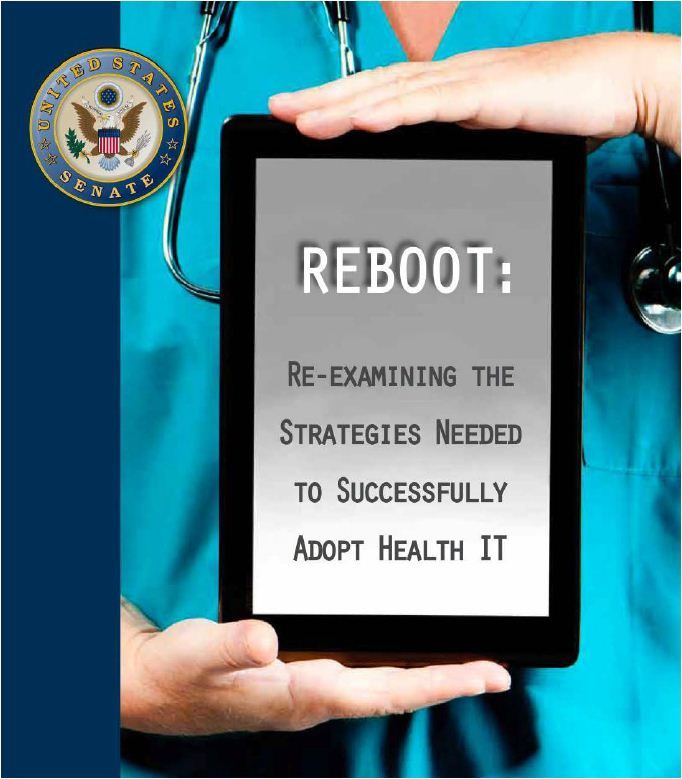
Thats among the conclusions of Senators Thune (R-S.D), Alexander (R-TN), Roberts (R-KAN), Burr (R-NC), Coburn (R-OK) and Enzi (R-WY) in their just-released report "Reboot: Re-examining the Strategies Needed to Successfully Adopt Health IT."
They point to the phenomenon of "code creep," which can result from using EHRs to document more extensive patient histories and physical examinations that, in turn, are used to justify an "upcoded" and theore richer bill with a higher payment. In addition, the Senators point to research that suggests code creep can be linked to an increased ordering of clinical testing and services. Last but not least, they point out that once an incorrect diagnosis enters the EHR, it is practically impossible to delete it, leading subsequent providers to mistakenly believe it is still active.
And to add insult to injury, Reboot describes the response of a "CMS official" who was asked about the above concerns. The answer was that it would take years for the Agency to better understand the phenomenon.
The DMCBs take?
Closer examination of the Senators report shows that much of the cost concerns are based on lay media reporting instead of any peer reviewed studies. That being said, there may be merit to the idea that EHRs can game billing systems. It warrants further research.
Is partisanship playing a role? The DMCB cant deny its a factor, but the same underlying motivation may be underlying CMSs unwillingness to do anything to diminish the Democrats health orm "branding."
Last but not least, the Agencys guess that it would take "years" to examine the concern is overly optimistic. There are outside analytic/research outfits that can do a faster, better and cheaper job of coming up with an answer.
The Senators and the U.S. taxpaying public deserve to know if this is true.
Pioneer ACO Program Results Why Saving Money for CMS Doesnt Mean The Business Model is Viable
Thursday, February 20, 2014
 According to South Dakota researchers, the predator status of Tyrannosaurus rex can no longer be questioned. After finding one of its teeth embedded in the healed spine of a Hadrosaurus, paleontologists now believe T rex was a fearsome hunter, not an carrion munching opportunist.
 But, asks the Disease Management Care Blog, how do we really know that that Hadrosaurus wasnt pretending to be dead when the T rex took its bite? Alternatively, the Hadrosaurus could have been sleeping and only looked dead to a slow-witted and lazy T rex.
Dino doubts, says the DMCB, remain.
Such is the level of skepticism that the DMCB is bringing to its reading of the recent CMS press release describing the initial results of the Pioneer ACO program. CMS says "positive" and "promising." The DMCB says "problematic" wonders if, like the T rex dilemma, there isnt an alternative interpretation.
The DMCB explains.
Recall that the Pioneer ACO program is designed to test whether large integrated organizations can be successfully rewarded for reducing health care costs through a program of "shared savings." Under the program, if the savings exceed a minimum threshold, CMS will remit a portion of the upside savings back to the participating organizations.
According to the press release, the health care costs for the 669,000 Medicare beneficiaries cared for by the 32 Pioneer ACO program providers grew only .3% versus .8% for a parallel group of "similar beneficiaries." 13 organizations exceeded the savings threshold, which will lead to Uncle Sam writing checks for $76 million in shared savings.
This front page article in The Wall Street Journal has more detail. It says 18 of the 32 reduced health care costs, which leads the DMCB to conclude that five otherwise "successful" participants did not cross the required savings threshold. Two participants lost money. That, in turn, suggests the remainder, or twelve, broke even.
Details on how each individual institution fared are not readily available. According to WSJ, Bostons Partners Healthcare reduced Medicare claims expense by $14 million. They will be rewarded with a shared savings check of $7 million. Wisconsins Bellin-ThedaCare will get "several million."
Good "win-win" news for the Pioneer organizations, CMS, Uncle Sam and U.S. taxpayers, right? A critical mass (40%) achieved millions in shared savings, which means proof of concept met and that a key part of Obamacare is successful, right?
"Not exactly," says the DMCB.
It figures 100% of the participating organizations had to each invest millions for personnel and other infrastructure to pursue the Medicare savings in the first place. In other words, they were in the red before Pioneer even began. That means that, in addition to the two participating organizations that lost money, the 12 that "broke even" as well as the 5 that did not make threshold also lost millions.
Thats 19 losers or almost 60% of the participating organizations.
In addition, its possible that for some of the 13 "winners" that the shared savings awards wont match their up-front multi-million dollar investment either. Assuming thats true, its possible that as many as two thirds of the Pioneer organizations lost money. No wonder 9 of the participants have signaled a desire to exit the program.
The DMCBs dinosaur analogy may be apt. Given a two out of three likelihood of losing millions in the first year of operations, ACOs may just be too big and complicated to survive in the current health care environment. Nonetheless, the Pioneer program will continue and the DMCB will stay tuned for the Year 2 results.
In the meantime, the DMCB wishes CMS good luck in using these "positive" and "promising" results to expand the program anytime in the near - or distant - future.
More on the Debate on Whether the Community Care of North Carolina CCNC Approach to the Patient Centered Medical Home PCMH Saves Money
 |
| ...and you can take that to the bank? |
Or does it? For a readable discussion of why CCNC may or may not have saved money, check out this four pager by Joseph Burns appearing in March 2012 issue of Managed Care Magazine. Skeptics point out numerous inconsistencies, including North Carolinas lingering high costs and little change in inpatient utilization. MCM asked analytics impresario Ariel Linden to take a look at CCNC and, after using a time series analysis, he was unable to find evidence of savings.
Nothing new, says the Disease Management Care Blog, which has long been unable to make much sense of the consultants reports either. What is new are the responses of CCNCs Paul Mahoney, founding physician Charles Wilson and advocate Adam Searing. It seems North Carolinas fee schedule is complicated, physician buy-in is high, something must be working because the Medicaid program has avoided making fee schedule cuts and, last but not least, the States legislature never intended the consultants evaluations to meet the exacting standards of the DMCB readership.
The DMCB doubts the controversy will go away. What we can learn from the CCNC imbroglio is how important it is to think about the analysis early in the planning process. In the meantime, PCMH advocates will probably have to look elsewhere if they want to er to studies that are understandable, transparent and convincing.
Coda: By the way, whatever its imperfections, the CCNC is a good example of a "shared resources" approach to nurse care management. As the DMCB understands it, in CCNC, the primary care sites do not hire their own nurses. Rather, the costs of the nurses are regionally supported and the nurses are, in effect, loaned out to the clinics.
The DMCB argues that there is little difference between this and hiring a disease management/population health service provider. To paraphrase Comrade Deng again, the color of the cat may be different, but it still catches mice.
The 10 Cheapest Healthiest Foods Money Can Buy
Saturday, February 15, 2014
This originally ran in May 2010.
Whether you’re broke and waiting for the next paycheck, or simply trying to cut back on your grocery bill, it’s vital to choose foods that give you the healthiest bang for your hard-earned buck.
These ten foods do just that. They’re nutritional powerhouses for pennies on the dollar. Many could be considered superfoods, and have long been staples of frugal households. I included almost all of them (sorry, lentils) for CHGs $25 Challenge, and you’ll see that Hillbilly Housewife uses quite a few in her famous $45 Emergency Menu, as well.
To compile the final list, there were three main criteria. Each food is:
- Versatile. It can be eaten on it own or used as an ingredient in other dishes.
- Inexpensive. A serving will cost a few dimes or nickels.
- Nutritious. It packs high percentages of vitamins, minerals, protein, fiber, and/or calories. (Note: To be totally honest, some important, but fairly obscure minerals are included here. Manganese? I thought it was a capital in Southeast Asia. It is not, and oatmeal has 147% of the USDA-recommended daily allowance.)
Of course, your opinion on some of these foods (particularly the first) might differ, and I’d love to hear what you would have included instead. But first, before we get started, two quick notes:
- All prices are the lowest available from Peapod (Stop & Shop) on 4/6/10.
- All nutrition data comes from, uh, Nutrition Data and is approximate. Serving sizes are noted.
 BANANAS
Are there better-rounded fruits? Absolutely. Berries will single-handedly protect you from every known disease and fight off communism. But they are inordinately pricey little buggers (especially out of season), and for the money, don’t compare to a good ol’ Cavendish banana. Lesson: Always listen to the monkeys.
Serving size: One large (5oz) banana.
Peapod/Stop & Shop cost: $0.33 each
Good source of: Fiber (14% of a 2000-calorie diet), Vitamin C (20%), Vitamin B6 (25%), Potassium (14%), Manganese (18%)
Suggested recipe: Three-Ingredient Banana, Honey, and Peanut Butter Ice Cream
BEANS
We’ve discussed beans ad nauseum here on CHG, and for good reason: there are fewer cheaper sources of protein and fiber found on Earth. (Maybe Mars?) Their mutability means you can pack them into just about any recipe, and with a range of flavors and sizes, everyone’s palate will be equally pleased. Plus: hilarious farting.
Serving size: Half a cup of cooked black beans.
Peapod/Stop & Shop cost, canned: $0.21 per serving ($0.75/15oz can)
Peapod/Stop & Shop cost, dried: $0.15 per serving ($1.50/1lb bag)
Good source of: Fiber (30% of a 2000-calorie diet), Iron (10%), Protein (15%), Thiamin (14%), Folate (32%), Magnesium (15%), Phosphorus (12%), Manganese (19%)
Suggested recipe: Black Bean Soup with a Fried Egg on Top
 CANNED TOMATOES
Canned tomatoes are here not as a snack or a stand-alone food, but an ingredient. Simply, they’re the basis for innumerable recipes across countless cuisines; sauces, soups, stews, and chilis wouldn’t exist was it not for the humble tomato. And yeah, if you’re the type to dig in a can of Progresso with a spoon, that’s okay too.
Serving size: One cup canned whole peeled tomatoes
Peapod/Stop & Shop cost: $0.48 per serving ($1.67/28oz can)
Good source of: Fiber (10% of a 2000-calorie diet), Vitamin C (37%), Iron (13%), Vitamin B6 (13%), Potassium (13%), Sodium (14%)
Suggested recipe: Tomato and Bread Soup
CARROTS
Bugs Bunny was on to something. But while carrots can be eaten raw to great merriment, they’re also excellent roasted, braised, in soups, and mixed with other foods. Hint: for snacking purposes, skip the bags of baby carrots ($1.50), buy a pound of full growns ($0.66), and chop ‘em up yourself. You save $0.84 every time.
Serving size: One cup raw carrot sticks.
Peapod/Stop & Shop cost: $0.13 per serving ($0.50/lb)
Good source of: Fiber (14% of a USDA 2000-calorie diet), Vitamin A (408%), Vitamin C (12%), Vitamin K (20%), Potassium (11%)
Suggested recipe: Honey-glazed Roasted Carrots
 FROZEN SPINACH
Apparently, Popeye was on to something, too. (What is it with these cartoon characters?) Spinach is just about the healthiest food you can buy, and it’s easy to sneak little bits into a plethora of different dishes. Here, I’m going for frozen spinach over fresh for two reasons. First, it’s generally cheaper, and you can find better sales. Second, it takes up less space. For those of us with limited rigerator storage, that’s important.
Serving size: Five ounces unprepared frozen spinach.
Peapod/Stop & Shop cost: $0.50 per serving ($1.00/10oz bag)
Good source of: Fiber (16% of a 2000-calorie diet), Vitamin A (333%), Vitamin C (13%), Calcium (18%), Iron (15%), Protein (10-11%), Vitamin K (660%), Vitamin E (20%), Riboflavin (18%), Vitamin B6 (12%), Folate (51%), Magnesium (26%),. Manganese (50%), Copper (10%), Potassium (14%), Selenium (112%)
Suggested recipe: Italian White Bean and Spinach Soup
LENTILS
Full disclosure: I knew lentils were good for you, but didn’t have any idea HOW good until researching this piece. And $0.11 per serving? My god. No wonder they’re eaten for breakfast, lunch, and dinner around the world.
Serving size: One-quarter cup of lentils, unprepared.
Peapod/Stop & Shop cost: $0.11 per serving ($0.79/1lb bag)
Good source of: Fiber (58% of a 2000-calorie diet), Iron (20%), Protein (25%), Thiamin (28%), Vitamin B6 (13%), Folate (57%), Pantothenic Acid (10%), Magnesium (14%), Phosphorus (22%), Potassium (13%), Zinc (15%), Copper (12%), Manganese (32%)
Suggested recipe: Red Lentil Soup with Lemon
 OATMEAL
Here’s a riddle: what comes in a can, goes in a muffin, or can be boiled with raisins? (If you said “bunnies,” you are sick in the head.) It’s oatmeal, folks! High in fiber and all kinds of exciting minerals, it’s appropriate for every meal. Combine it with sweeter flavors for breakfast, or soy sauce and scallions for a strangely delicious lunch.
Serving size: Half a cup unprepared old-fashioned rolled oats:
Peapod/Stop & Shop cost: $0.12 per serving ($3.69/42oz canister)
Good source of: Fiber (16% of a 2000-calorie diet), Protein (10%), Thiamin (12%), Iron (10%), Magnesium (14%), Phosphorus (11%), Zinc (10%), Manganese (73%), Selenium (16%)
Suggested recipe: Banana Oatmeal Muffins
PEANUT BUTTER
Throughout childhood, peanut butter was as universal as Sesame Street and possibly even my mother. Even today, spooning some out of the jar is a good time, and adding a dollop into stew or oatmeal positively feels like a treat. And though PB is high in fat, it’s a good kind.
Serving size: Two tablespoons chunky peanut butter.
Peapod/Stop & Shop cost: $0.15 per serving ($2.39/18oz jar)
Good source of: Calories (9% of a 2000 calorie diet), fat (25%), fiber (10%), protein (15%, Niacin (22%), vitamin E (10%), Manganese (29%), phosphorus (10%), Magnesium (13%)
Suggested recipe: Indonesian Bean Stew
PEAS
Yes, peas.
Serving size: Half a cup frozen peas, unprepared
Peapod/Stop & Shop cost: $0.23 per serving ($3.00/2lb bag)
Good source of: Fiber (12% of a 2000-calorie diet), Vitamin A (22%), Vitamin C (20%), Vitamin K (23%), Thiamin (11%), Manganese (11%)
Suggested recipe: Easy Pea Soup
 SWEET POTATOES
Rounding out the list, it’s the tastiest of all natural starches: the sweet potato (or yam, if you’re feeling semantic). Sweet potatoes have all the benefits and cooking versatility of regular potatoes, plus lots of fiber, a metric ton of Vitamin A, and an alluring orange color. Enter their world, and you will never want to leave.
Serving size: One cup cubed (about 4.75 oz).
Peapod/Stop & Shop cost: $0.50 per potato
Good Source of: Fiber (16% of 2000-calorie diet), Vitamin A (377%), Vitamin B6 (14%), Potassium (13%), Copper (10%), Manganese (17%)
Suggested recipe: Sweet Potato and Chickpea Puree
Readers, what do you think of the list? What would you add? What would you leave off? The comment section is ready and waiting.
(Photos courtesy of Human 2.0, Real Simple, Zeer, Converting Magazine, and How Stuff Works.)
~~~
If you like this post, you might also be enamored by:
- 10 Foods You Should Always Splurge On
- Lighten Any Meal: 10 Easy, Inexpensive Steps to Healthier Recipes
- Touch of Class: 10 Thrifty, Healthy Ingredients to Improve the Quality of Your Meals
Subscribe to:
Posts (Atom)


