Showing posts with label style. Show all posts
Showing posts with label style. Show all posts
I Dont Need a Better Style of Eating What I need is a Style of Not Eating
Friday, April 4, 2014
In his PDF book, "Eat Stop Eat" Brad Pilon makes the following statement:
"While you may find this guideline overly simplistic at first, the truth is there is NO normal or perfect way to eat for weight loss. This is the great fallacy behind most diet books. The fact is, and always will be, it is calorie restriction that causes weight loss."
I am amazed that this statement is so amazing to me. I hope you are getting the double whammy that is in that statement. It does not say you have to count calories, he says you have to restrict them... in other words: eat less. I know. I know. Whats so unusual about that? Everybody knows that! If you want to lose weight you have to eat less. Point made. Point taken. Lose the food, lose the weight.
I have spent so much time trying to figure out what to eat to lose weight that this simple truth somehow whizzed right over my head. Brads statement brought it down in front of my eyes. I dont like to think of myself as "simple minded" but, darn, maybe I am. I worked hard to find a style of eating that would help me lose weight and what I really needed was a style of not eating. Oh my.
The "double" part is that eating "low carb" or "low fat" or "high protein" is not the point. The point is less food. What my mother used to say. All this time, Ive been avoiding it, but it turns out she was right. It is the one thing that works. Just eat smaller portions. It is not even important how much smaller, just smaller than what youve been eating. You dont need "guidelines" from someone else. Just make your portions smaller than what you usually eat. Start where you are and trim a little off the contents of the plate. Drink plenty of water, too.
Surprise. You dont need to fill up all the spaces in your stomach. Once it becomes a habit, it will not seem unusual or strange to you.
I think the thing I feared was not having food to eat. Or eating less. Or being deprived. Somehow. I know... I feared "hunger." Is that possible? Yes, I think it is. I feared being hungry. I dont know why... and Im not even interested in finding out why. Im just glad that Ive already discovered that "hunger" is nothing to fear!! That is the major lesson I learned from fasting. It is not the overpowering, all consuming, scary thing that I seemed to think it was. Hunger. Wow. Starvation? Yes, that should be feared and worked against. But, simple ordinary every day hunger? What is there to fear in that. It is almost silly. Funny.
I worked so hard to avoid the fact of simply eating less that I went round in circles over and over again. I did not think I could control the quantity of food that I eat in a session, so avoided attempting something at which I believed I would fail. I believed I could not simply eat smaller portions and be satisfied. I was used to dealing with the eating machine which is the antithesis of portion control. The eating machine is portion out of control.
But Ive been fasting for 24 hour periods for a while now so I know I can do it and love it. Not that every time I try it, it is successful. Just today I was going to do a spur of the moment fast, but I petered out later and ate. But ESE is flexible and I know I can do it tomorrow and if I prepare for it, I will do it.
Fasting has shown me there is a different way to approach food and eating. You do know those are two different things. Food. And eating. Food is simply a substance. Eating is an act that is performed. If you want to lose weight, you have to eat less.

The other day I had gotten out one of my mothers old dessert dishes (picture above). I dont remember what for. But as I walked across the floor I stopped and looked at the size of this tiny dish that had the name "dessert dish." It fit in the palm of my hand. I thought about the gargantuan bowls of ice cream I used to eat when I was a kid. I remember my Dad teasing that I would "make a good step mother" because I served everyone large portions. They never used them. And here in my hand was this tiny little cut glass dessert dish. If every dessert I had would fit in that small dish, I would probably be thin.
It is almost as if the size of the bowl creates the size of the person.
I was recently watching episodes of the BBC program call "Supersize vs. Super Skinny" where one humongous person and one tiny person swapped meals for a certain amount of time in what they call their feeding clinic. They have to sit across the table from one another, after preparing a meal from a day in their own food diary, and then when they sit down to eat, they trade meals. The big person eats the small persons meal and the small person eats the big persons meal for a few days in a row.
They are both flabbergasted at what the other one eats and they have conversations about this experiment as they do it. Often the big person quickly eats the little persons meal and then sits and watches the tiny person struggle to eat their gigantic portions of food which they almost never finish. Each one feels responsible for the other ones discomfort. When they see how the other person has to struggle to do what they do on a regular basis, they begin to realize what they have been doing to themselves. The big person realizes just how unrealistically large their portions are. The thin person realizes that the tiny meals they eat are not enough for an adult to live on.
The supersize person gets a trip to America that the skinny person does not get. They go to visit a person who can be as much as a couple hundred pounds larger than they are for the purpose of seeing, for themselves, what the effects of continuing to pack on the pounds does to a human body. The people they visit often have many ailments and they often are not doing anything to curb their appetites and lose weight, although not all of them are like that. They suffer from immobility, pain, seeping legs, high blood pressure, diabetes, sleep apnea and all kinds of weight related problems. They often need help, just to go to the bathroom. This is the "wake up" call for the English participant. They get to be up close and personal with what it really means to continue doing what they are doing. It works. They get it.
From having watched many episodes this feeding clinic exercise seems to help the overly slim or super skinny person get in touch with their hunger, which for whatever reason, got turned off sometime in the past. When they return to the show about 8 weeks later they look more normal sized and not so skinny, even though they worked hard, ate lots, and put on about 3 pounds they look like theyve put on 15 or 20. The fat person also looks different. They often lose quite a bit of weight and feel very good about themselves and they look good too. But... a year later the formerly super skinny person now looks like a normal human being, the fat person looks like a smaller fat person. Sometimes the "one year later" show has three of the participants back and very often it is two of the ormed super skinnies, and one of the somewhat smaller fat people. Makes me wonder if the fatties got lost somewhere, or put their weight back on again, so they are not on the show. They never say anything like that. You just never see them again.
All of these prove that we have perceptions about food and eating that show up as body size. Sometimes they are easy to change and sometimes they are not. I find that the twice weekly fasting has taught me some things about me that I did not know before. For one thing, I can now skip a meal and not have a cow. In fact, it really is rather simple and very easy to skip a meal, or two, or three in a row, and not die. It does not make me sick. I dont get light headed. I dont feel faint. I dont get tired. In fact, just the opposite happens. I feel lighter on my feet, awake and alert and, dare I say it: happy. I still know where my next meal is coming from. Im not starving. I dont go into starvation mode and my metabolism is not harmed in any way. Studies on fasting prove this is true. (You can read about it in ESE.)
You wont go into starvation mode until about 72 hours of not eating. The body also knows how to maintain your metabolism. If it is not getting food to run on, it uses the storage of fat. A fat belly really is like a pantry for the body to feed itself, but if you keep eating continually, it never gets the opportunity to use up the one year supply of food on your back. This makes it very hard to lose weight and very easy to pack on more pounds. It is not the style of eating that needs to be changed. It is the style of not eating!!
Short, 24-hour fasts for one, two, or even three days in a week gives your body the chance to go into fat burning mode. In between you can eat what you normally eat but in a responsible manner. Brad suggests that you eat more fruit and vegetables, which will replace a lot of processed foods. If you are conscious enough to be eating more fruit and veggies you probably are already not eating as much sugar and starchy foods. Brad says that the key to making this work for you is "self control." You cannot eat like a sumo wrestler and expect to look like a super model. On the days you eat, eat sensibly. Eat enough. And then move on.
So the new thing for me in this is the dessert dish. Now I know what size a dessert should be for a normal sized human being. With the combination of 24 hour fasts, and in between, sensible eating, I should be able to speed up the weight loss thingy.
Wonder what people will think when I bring my dessert dish with me as a reminder for myself that I can have dessert as long as it fits in my dessert dish? I picture holding it up and saying (more to myself than to anyone else), "As long as it fits in here, I can eat it. If it does not fit in here, then I dont eat it."
I guess Ill find out.
Be back soon,
Marcia
"While you may find this guideline overly simplistic at first, the truth is there is NO normal or perfect way to eat for weight loss. This is the great fallacy behind most diet books. The fact is, and always will be, it is calorie restriction that causes weight loss."
I am amazed that this statement is so amazing to me. I hope you are getting the double whammy that is in that statement. It does not say you have to count calories, he says you have to restrict them... in other words: eat less. I know. I know. Whats so unusual about that? Everybody knows that! If you want to lose weight you have to eat less. Point made. Point taken. Lose the food, lose the weight.
I have spent so much time trying to figure out what to eat to lose weight that this simple truth somehow whizzed right over my head. Brads statement brought it down in front of my eyes. I dont like to think of myself as "simple minded" but, darn, maybe I am. I worked hard to find a style of eating that would help me lose weight and what I really needed was a style of not eating. Oh my.
The "double" part is that eating "low carb" or "low fat" or "high protein" is not the point. The point is less food. What my mother used to say. All this time, Ive been avoiding it, but it turns out she was right. It is the one thing that works. Just eat smaller portions. It is not even important how much smaller, just smaller than what youve been eating. You dont need "guidelines" from someone else. Just make your portions smaller than what you usually eat. Start where you are and trim a little off the contents of the plate. Drink plenty of water, too.
Surprise. You dont need to fill up all the spaces in your stomach. Once it becomes a habit, it will not seem unusual or strange to you.
I think the thing I feared was not having food to eat. Or eating less. Or being deprived. Somehow. I know... I feared "hunger." Is that possible? Yes, I think it is. I feared being hungry. I dont know why... and Im not even interested in finding out why. Im just glad that Ive already discovered that "hunger" is nothing to fear!! That is the major lesson I learned from fasting. It is not the overpowering, all consuming, scary thing that I seemed to think it was. Hunger. Wow. Starvation? Yes, that should be feared and worked against. But, simple ordinary every day hunger? What is there to fear in that. It is almost silly. Funny.
I worked so hard to avoid the fact of simply eating less that I went round in circles over and over again. I did not think I could control the quantity of food that I eat in a session, so avoided attempting something at which I believed I would fail. I believed I could not simply eat smaller portions and be satisfied. I was used to dealing with the eating machine which is the antithesis of portion control. The eating machine is portion out of control.
But Ive been fasting for 24 hour periods for a while now so I know I can do it and love it. Not that every time I try it, it is successful. Just today I was going to do a spur of the moment fast, but I petered out later and ate. But ESE is flexible and I know I can do it tomorrow and if I prepare for it, I will do it.
Fasting has shown me there is a different way to approach food and eating. You do know those are two different things. Food. And eating. Food is simply a substance. Eating is an act that is performed. If you want to lose weight, you have to eat less.
The other day I had gotten out one of my mothers old dessert dishes (picture above). I dont remember what for. But as I walked across the floor I stopped and looked at the size of this tiny dish that had the name "dessert dish." It fit in the palm of my hand. I thought about the gargantuan bowls of ice cream I used to eat when I was a kid. I remember my Dad teasing that I would "make a good step mother" because I served everyone large portions. They never used them. And here in my hand was this tiny little cut glass dessert dish. If every dessert I had would fit in that small dish, I would probably be thin.
It is almost as if the size of the bowl creates the size of the person.
I was recently watching episodes of the BBC program call "Supersize vs. Super Skinny" where one humongous person and one tiny person swapped meals for a certain amount of time in what they call their feeding clinic. They have to sit across the table from one another, after preparing a meal from a day in their own food diary, and then when they sit down to eat, they trade meals. The big person eats the small persons meal and the small person eats the big persons meal for a few days in a row.
They are both flabbergasted at what the other one eats and they have conversations about this experiment as they do it. Often the big person quickly eats the little persons meal and then sits and watches the tiny person struggle to eat their gigantic portions of food which they almost never finish. Each one feels responsible for the other ones discomfort. When they see how the other person has to struggle to do what they do on a regular basis, they begin to realize what they have been doing to themselves. The big person realizes just how unrealistically large their portions are. The thin person realizes that the tiny meals they eat are not enough for an adult to live on.
The supersize person gets a trip to America that the skinny person does not get. They go to visit a person who can be as much as a couple hundred pounds larger than they are for the purpose of seeing, for themselves, what the effects of continuing to pack on the pounds does to a human body. The people they visit often have many ailments and they often are not doing anything to curb their appetites and lose weight, although not all of them are like that. They suffer from immobility, pain, seeping legs, high blood pressure, diabetes, sleep apnea and all kinds of weight related problems. They often need help, just to go to the bathroom. This is the "wake up" call for the English participant. They get to be up close and personal with what it really means to continue doing what they are doing. It works. They get it.
From having watched many episodes this feeding clinic exercise seems to help the overly slim or super skinny person get in touch with their hunger, which for whatever reason, got turned off sometime in the past. When they return to the show about 8 weeks later they look more normal sized and not so skinny, even though they worked hard, ate lots, and put on about 3 pounds they look like theyve put on 15 or 20. The fat person also looks different. They often lose quite a bit of weight and feel very good about themselves and they look good too. But... a year later the formerly super skinny person now looks like a normal human being, the fat person looks like a smaller fat person. Sometimes the "one year later" show has three of the participants back and very often it is two of the ormed super skinnies, and one of the somewhat smaller fat people. Makes me wonder if the fatties got lost somewhere, or put their weight back on again, so they are not on the show. They never say anything like that. You just never see them again.
All of these prove that we have perceptions about food and eating that show up as body size. Sometimes they are easy to change and sometimes they are not. I find that the twice weekly fasting has taught me some things about me that I did not know before. For one thing, I can now skip a meal and not have a cow. In fact, it really is rather simple and very easy to skip a meal, or two, or three in a row, and not die. It does not make me sick. I dont get light headed. I dont feel faint. I dont get tired. In fact, just the opposite happens. I feel lighter on my feet, awake and alert and, dare I say it: happy. I still know where my next meal is coming from. Im not starving. I dont go into starvation mode and my metabolism is not harmed in any way. Studies on fasting prove this is true. (You can read about it in ESE.)
You wont go into starvation mode until about 72 hours of not eating. The body also knows how to maintain your metabolism. If it is not getting food to run on, it uses the storage of fat. A fat belly really is like a pantry for the body to feed itself, but if you keep eating continually, it never gets the opportunity to use up the one year supply of food on your back. This makes it very hard to lose weight and very easy to pack on more pounds. It is not the style of eating that needs to be changed. It is the style of not eating!!
Short, 24-hour fasts for one, two, or even three days in a week gives your body the chance to go into fat burning mode. In between you can eat what you normally eat but in a responsible manner. Brad suggests that you eat more fruit and vegetables, which will replace a lot of processed foods. If you are conscious enough to be eating more fruit and veggies you probably are already not eating as much sugar and starchy foods. Brad says that the key to making this work for you is "self control." You cannot eat like a sumo wrestler and expect to look like a super model. On the days you eat, eat sensibly. Eat enough. And then move on.
So the new thing for me in this is the dessert dish. Now I know what size a dessert should be for a normal sized human being. With the combination of 24 hour fasts, and in between, sensible eating, I should be able to speed up the weight loss thingy.
Wonder what people will think when I bring my dessert dish with me as a reminder for myself that I can have dessert as long as it fits in my dessert dish? I picture holding it up and saying (more to myself than to anyone else), "As long as it fits in here, I can eat it. If it does not fit in here, then I dont eat it."
I guess Ill find out.
Be back soon,
Marcia


Community Care North Carolina Style Medical Home Saves Money
Thursday, April 3, 2014
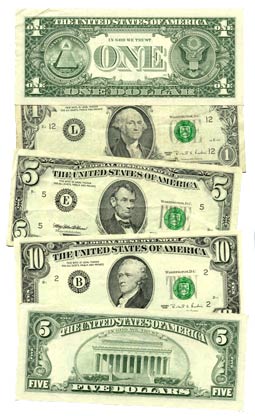 So, does the medical home "save money?" A recent publication in Population Health Management about Community Care of North Carolina (CCNC) says "yes." Thats important, because CCNC program has had more than its fair share of controversy.
 You can read more about CCNC here. According to the Commonwealth Fund, Raleigh pays CCNCs 14 non-profit regional networks $3 per member per month (PMPM) for medical home services for over a million Medicaid and CHIP beneficiaries. In exchange, the 1300 clinics provide preventive care services, 24 hour coverage services, coordinating access to specialty services, care management and quality improvement. To do all that, CCNC uses a "medical home model" with "specialized chronic care programs" staffed by teams of docs, pharmacists and care managers.
The quasi-experimental evaluation published in PHM used "hierarchical modeling" to evaluate the impact of CCNC on two different samples of non-elderly (ages 0 to 64) disabled Medicaid patients who had no other insurance:
Model 1: compared the medical home patients claims expense within and outside the enrollment periods "after controlling for other covariate values"
Model 2 created matched cohorts of enrolled and non-enrolled patients to compare pre-post differences in insurance claims expense. Matching was based on pre-enrollment pharmacy use, race, age, enrollment duration, clinical risk and behavioral health burdens. For every enrolled patient, ten non-enrolled comparison patients were selected.
The study period was January 1 2007 through Sept. 30, 2011. Any single months of disenrollment were "filled in" if there was enrollment 2 months per and 2 months post.
Results?
Model 1: This used insurance claims data for over 169,000 patients with an average age of 35 years. 52% were male with a 24% rate of mental illness and an 8% rate of chemical dependency. Compared to the time of not being enrolled in a program, claims expense was statistically significantly $190 per member per month (PMPM) cheaper in the first year; that declined to $64 PMPM cheaper in the last ear of study. Persons with a higher burden of illness had even greater savings.
Model 2: This studied claims from approximately 102,000 enrolled patients with pretty much the same baseline characteristics in Model 1. Savings achieved statistical significance in the 3rd, 4th and 5th years of study: $81, $73 and $121 PMPM, respectively.
The DMCBs take:
While it can get lost in the sublime minutiae of hierarchical modeling, the DMCB finds the methodology and the numbers to be credible. It has used the same Model 2 style of matching in its own studies. Since a pristinely conducted prospective randomized control clinical study is functionally impossible in a state-wide Medicaid program, quasi-experimental study designs like this are a good window into figuring out what happened.
And what happened is that they saved a lot of money. Assuming CCNC was paid $3 PMPM or $36 million per year for a about a million beneficiaries, avoided claims expense appeared to be well north of that.
While CCNC has a lot of moving pieces, the DMCB believes the key success factor was based on identifying the most vulnerable patients and then using nurses to intervene on the them.
The average caseload per nurse ranges from 150 to 200 patients. As the Commonwealth Fund summary describes.....
"Case managers... work with primary care providers (“medical homes”) to identify patients who will benefit most from targeted care management interventions, such as patients making repeated ER visits; patients diagnosed with asthma, diabetes, or heart failure; and patients who have two or more chronic conditions (including mental health conditions) with high service use or activity limitations indicating complex care needs. Care managers identify high-risk patients through the CMIS and from case-identification lists provided by the CCNC central office, notifications of admissions provided by hospitals, and physician errals."
CCNC is to be congratulated for moving from opaque actuarial studies to the harsh glare of peer-reviewed publications. While some critics may pounce on some of the weaknesses inherent in any retrospective analysis of subpopulations, the observations from two "Model 1 and Model 2" vantage points are sufficiently positive to believe that North Carolinas taxpayers got their moneys worth.
The DMCB would point out two caveats:
The disabled Medicaid beneficiary population is a notoriously high utilization group that is a classic example of the return on investment from "low hanging fruit." A little coordination goes a long way in a population with a baseline of high utilization. The same approach may not work in other populations with different patterns of claims expense.
Unfortunately, this gives us little insight about the potential impact of a similar medical home model in commercially insured populations or among Medicare beneficiaries. Thats doubly true for fee-for-service beneficiaries who are outside of any managed care networks.
Making Your Life Style Make a Difference in Your Life
Saturday, March 22, 2014
I have been inspired by the comments of a recent reader to get myself centered on my program again. Tricia and I have been sharing back and forth on the blog post just previous to this one and I must say that it really is nice to feel the power of partnership with her. It just seems so much richer to know that she is there, in the same boat that I am in, and we are not alone in our struggles. I desire for both of us to be successful. We share life-long weight problems, pre-diabetes, and the desire to make the kind of lifestyle changes that will help us rid ourselves of the diagnosis of "pre-diabetes." If you need to get back in the swing, please join us in stepping out on a ten-day getting started commitment.
My last official post was dated the day before Thanksgiving in November and I had plans to stay on track for Christmas and New Years, too... but somewhere things got foggy for me. Even my daily record has a few "missing days." But the past, is the past. I now must face forward and decide what my next step is.
The advice that I shared is the advice that I need. Here are the summary guidelines that I had come up with to get re-motivated and make a simple ten-day step in the right direction:
1. Read your book again for motivation.
2. Set a date to begin your change.
3. Prepare by removing what you dont need from your house
4. Prepare by providing what you do need for healthy eating
5. Do your plan for ten days
6. Then see where you are and decide what you will do for the next ten days.
1. Read your book again for motivation.
Many of us have been inspired by some book or program or idea that has helped us do the right stuff in the past, but we are no longer in that space right now. One way of getting back into that space of inspiration is to read the same book again. I did that a while back with the "Carbohydrate Addicts Lifespan Program." I was also very inspired by the "30 Day Diabetes Cure" with which I started this blog. I also have been inspired by and gleaned a lot of good information from the vegan culture that is very active on the internet (Ive shared about all this before.)
If you know of a program that you were successful on, then go back, read it again, and begin to get your mind focused on the right stuff for you. Rekindle your passion. Get reacquainted with the guidelines you already know work for you. Allow yourself to be inspired.
2. Set a date to begin your change.
At some point, often while you are getting re-acquainted with the details, you will feel inspired to begin doing your program again. At that moment, set your date to begin doing the program. It is all well and good to read it... but you will only get results by doing it. Pick a date that is not too far away, but is far enough away that you can make the kinds of preparations that you need to make.
I know that when Ive been off my program for any length of time (be it weeks or be it years) it can seem overwhelming to even consider going back and doing it all again. It is "so much easier" to simply lolly-gag and continue stuffing all the standard stuff into my mouth while pretending that it does not make a difference what I eat. The point is, we begin to lie to ourselves. It is hard to admit that, but the addiction takes over and lulls me into "never-never land" -- you know -- the place where things never change?
Nothing can knock the block off the addiction lies like setting a date to begin. A starting date is concrete. It is a day on a calendar and no matter what your addiction says, that day will show up in your life. It is marching down the daily track in your direction. Your own personal day of reckoning will definitely arrive. If you can see it coming, that, all by itself, will motivate you to begin taking preparatory actions.
3. Prepare by removing what you dont need from your house
The most obvious first step is to get rid of all the stuff that you know you should not be eating, before your start date gets here. You will only make yourself sick if your method of getting rid of it is to eat it -- but this is your life and your choice. The better method of getting rid of stuff is to recognize it for what it is (toxic) and throw it into the trash. Do not leave even one spoonful of ice cream in your freezer. Simply wash it down the sink and toss the box out. You will be making space for the next step in the plan.
4. Prepare by providing what you do need for healthy eating
Using your program as a guideline, purchase the kinds of foods that you know will give your body health. Stock up on good healthy food. Some things will need to be divided into individual healthy meal portions and stored either in the freezer or the rigerator. These will be your new "convenience" foods.
In my case, that means that I need to purchase fresh raw vegetables and salad fixings. I also need to get good protein in the form of eggs, beef, pork, and chicken. Since I also have gout I need to be caul with animal protein (especially fish) but not extremely so. Ive been reading the book "Beating Gout" by Victor Konshin and have discovered that limiting animal proteins will only drop uric acid levels by two points at best, the rest must be done with medication. Ive been on the medication (Allopurinol) for about six months now and have not had a "flare" in quite some time. To me, this means that the guidelines Victor has given are working for me. Im going on Medicare on the first of March and when I get my new doctor (my old one does not take Medicare patients) and my new insurance, I will be having my uric acid levels checked to make sure Im on track.
I am going to be eating my food in the form that God gave it to me with my focus on raw vegetables and cooked meat. Im also toying with the idea of trying the "seventh-day cheat meal" as a standard procedure. I may use my next post, to describe that program in more detail. I have it written out for myself and may simply post it so others can see or use it also. It may be that I am not able to do that. I will find out, once and for all, if I can really do it. More on that another day.
5. Do your plan for ten days
I chose ten days because that is the time increment that was used in the "30 Day Diabetes Cure" and it really worked great for me. What I saw happening was that a ten-day span appeared to me to be a short do-able not-overwhelming time span. It was easy to think of doing something for only 10 days. The first challenge was to stop eating sugar of any kind, no sweets, and no sugar substitutes for 10 days. Then, once I accomplished that task, and saw how easy it really was, and how much better I felt, I simply continued.
Three days would not have been long enough to see the good results you would want. Three days is almost exactly the amount of time it takes to go through sugar withdrawals, so they are the hardest days to accomplish -- but since you have made a commitment, the first three days are done by having made the decision to do it. By day four, things begin to lighten up and you no longer even crave sugary items. From day four on, things get easier -- and they happen almost on their own. No will power is needed after day 4 because your body will no longer be pushing you. So... if you had only chosen to do the plan for three days, you would have shot yourself in the foot and not allowed the change to actually take affect in your body. You would never have gotten to "easy street." After youve lived the results for ten days, it would be insanity to go back -- but the choice is still yours.
6. Then see where you are and decide what you will do for the next ten days.
By the time you finish the first 10 days the second 10 days will look really easy to accomplish. The hard part is over and the only thing you need to do is keep doing what you are already doing. But you have the option. That option lets you be in charge of your own life. You decide what you will be doing next. And there it is: commitment -- and your "self" is fully engaged in the battle once again.
If you look at what has happened in your own life and you see a need to tweak something, now is your opportunity -- but do not let that interfere with your next step. Make any adjustments and then make your new commitment to continue on to bigger and better results.
Dont forget the "see where you are" part. On day 11 take stock and ask yourself some questions. Did your blood sugar numbers get better? (This also means that for the 10 days you did this, you kept track of your numbers.) Did you lose any weight? How do you feel? Where are your pain levels? I have found in the past that my pain levels seem to greatly diminish on day 6. I dont know if other people experience the same thing, but if you do, you need to make a note of your pain levels before and after that initial ten-day accomplishment.
When you answer the above questions, and any others that are pertinent to you and your situation, you will be looking at concrete evidence of your own success. Nothing motivates like success!! Use your success to continue moving you along in the right direction.
Heres to DOING!! Let me know how you are doing!!
Be back soon,
Marcia
My last official post was dated the day before Thanksgiving in November and I had plans to stay on track for Christmas and New Years, too... but somewhere things got foggy for me. Even my daily record has a few "missing days." But the past, is the past. I now must face forward and decide what my next step is.
The advice that I shared is the advice that I need. Here are the summary guidelines that I had come up with to get re-motivated and make a simple ten-day step in the right direction:
1. Read your book again for motivation.
2. Set a date to begin your change.
3. Prepare by removing what you dont need from your house
4. Prepare by providing what you do need for healthy eating
5. Do your plan for ten days
6. Then see where you are and decide what you will do for the next ten days.
1. Read your book again for motivation.
Many of us have been inspired by some book or program or idea that has helped us do the right stuff in the past, but we are no longer in that space right now. One way of getting back into that space of inspiration is to read the same book again. I did that a while back with the "Carbohydrate Addicts Lifespan Program." I was also very inspired by the "30 Day Diabetes Cure" with which I started this blog. I also have been inspired by and gleaned a lot of good information from the vegan culture that is very active on the internet (Ive shared about all this before.)
If you know of a program that you were successful on, then go back, read it again, and begin to get your mind focused on the right stuff for you. Rekindle your passion. Get reacquainted with the guidelines you already know work for you. Allow yourself to be inspired.
2. Set a date to begin your change.
At some point, often while you are getting re-acquainted with the details, you will feel inspired to begin doing your program again. At that moment, set your date to begin doing the program. It is all well and good to read it... but you will only get results by doing it. Pick a date that is not too far away, but is far enough away that you can make the kinds of preparations that you need to make.
I know that when Ive been off my program for any length of time (be it weeks or be it years) it can seem overwhelming to even consider going back and doing it all again. It is "so much easier" to simply lolly-gag and continue stuffing all the standard stuff into my mouth while pretending that it does not make a difference what I eat. The point is, we begin to lie to ourselves. It is hard to admit that, but the addiction takes over and lulls me into "never-never land" -- you know -- the place where things never change?
Nothing can knock the block off the addiction lies like setting a date to begin. A starting date is concrete. It is a day on a calendar and no matter what your addiction says, that day will show up in your life. It is marching down the daily track in your direction. Your own personal day of reckoning will definitely arrive. If you can see it coming, that, all by itself, will motivate you to begin taking preparatory actions.
3. Prepare by removing what you dont need from your house
The most obvious first step is to get rid of all the stuff that you know you should not be eating, before your start date gets here. You will only make yourself sick if your method of getting rid of it is to eat it -- but this is your life and your choice. The better method of getting rid of stuff is to recognize it for what it is (toxic) and throw it into the trash. Do not leave even one spoonful of ice cream in your freezer. Simply wash it down the sink and toss the box out. You will be making space for the next step in the plan.
4. Prepare by providing what you do need for healthy eating
Using your program as a guideline, purchase the kinds of foods that you know will give your body health. Stock up on good healthy food. Some things will need to be divided into individual healthy meal portions and stored either in the freezer or the rigerator. These will be your new "convenience" foods.
In my case, that means that I need to purchase fresh raw vegetables and salad fixings. I also need to get good protein in the form of eggs, beef, pork, and chicken. Since I also have gout I need to be caul with animal protein (especially fish) but not extremely so. Ive been reading the book "Beating Gout" by Victor Konshin and have discovered that limiting animal proteins will only drop uric acid levels by two points at best, the rest must be done with medication. Ive been on the medication (Allopurinol) for about six months now and have not had a "flare" in quite some time. To me, this means that the guidelines Victor has given are working for me. Im going on Medicare on the first of March and when I get my new doctor (my old one does not take Medicare patients) and my new insurance, I will be having my uric acid levels checked to make sure Im on track.
I am going to be eating my food in the form that God gave it to me with my focus on raw vegetables and cooked meat. Im also toying with the idea of trying the "seventh-day cheat meal" as a standard procedure. I may use my next post, to describe that program in more detail. I have it written out for myself and may simply post it so others can see or use it also. It may be that I am not able to do that. I will find out, once and for all, if I can really do it. More on that another day.
5. Do your plan for ten days
I chose ten days because that is the time increment that was used in the "30 Day Diabetes Cure" and it really worked great for me. What I saw happening was that a ten-day span appeared to me to be a short do-able not-overwhelming time span. It was easy to think of doing something for only 10 days. The first challenge was to stop eating sugar of any kind, no sweets, and no sugar substitutes for 10 days. Then, once I accomplished that task, and saw how easy it really was, and how much better I felt, I simply continued.
Three days would not have been long enough to see the good results you would want. Three days is almost exactly the amount of time it takes to go through sugar withdrawals, so they are the hardest days to accomplish -- but since you have made a commitment, the first three days are done by having made the decision to do it. By day four, things begin to lighten up and you no longer even crave sugary items. From day four on, things get easier -- and they happen almost on their own. No will power is needed after day 4 because your body will no longer be pushing you. So... if you had only chosen to do the plan for three days, you would have shot yourself in the foot and not allowed the change to actually take affect in your body. You would never have gotten to "easy street." After youve lived the results for ten days, it would be insanity to go back -- but the choice is still yours.
6. Then see where you are and decide what you will do for the next ten days.
By the time you finish the first 10 days the second 10 days will look really easy to accomplish. The hard part is over and the only thing you need to do is keep doing what you are already doing. But you have the option. That option lets you be in charge of your own life. You decide what you will be doing next. And there it is: commitment -- and your "self" is fully engaged in the battle once again.
If you look at what has happened in your own life and you see a need to tweak something, now is your opportunity -- but do not let that interfere with your next step. Make any adjustments and then make your new commitment to continue on to bigger and better results.
Dont forget the "see where you are" part. On day 11 take stock and ask yourself some questions. Did your blood sugar numbers get better? (This also means that for the 10 days you did this, you kept track of your numbers.) Did you lose any weight? How do you feel? Where are your pain levels? I have found in the past that my pain levels seem to greatly diminish on day 6. I dont know if other people experience the same thing, but if you do, you need to make a note of your pain levels before and after that initial ten-day accomplishment.
When you answer the above questions, and any others that are pertinent to you and your situation, you will be looking at concrete evidence of your own success. Nothing motivates like success!! Use your success to continue moving you along in the right direction.
Heres to DOING!! Let me know how you are doing!!
Be back soon,
Marcia
Subscribe to:
Posts (Atom)


