Showing posts with label eaters. Show all posts
Showing posts with label eaters. Show all posts
Saturday Throwback Learning to Love Foods You Hate a How to Guide for Frugal Eaters
Thursday, May 1, 2014
Every Saturday, we post a piece from the CHG archives. This one comes from March 2009. Enjoy!
Up until a few years ago, the list of foods I loathed was a long one. It included, but wasn’t limited to: spaghetti squash, broccoli, asparagus, red cabbage, ginger ale, cauliflower, radishes, lentils, beans, Brussels sprouts, fennel, eggplant, anise, scallops, figs, and of course, the dreaded mayonnaise. The list goes on (and on), but you get the idea: growing up, I wasn’t exactly a daring eater.
I still hate mayo. I will ALWAYS hate mayo. George Clooney could serve me mayo wrapped in chocolate bacon on a gold-plated re-issue of Who’s Next, and I would throw it back in his face. But my opinion’s changed on most of those other foods. These days, I’ll gladly scarf a floret of cauliflower. Brussels sprouts hold a special place on my dinner table. And eggplant? Well, eggplant is my favorite thing ever, aside from the panda song from Sifl and Olly. (In fact, you could say I’m drunk on eggplant mystery.)
Granted, part of it is just me aging. At 31-years-old, my palate’s matured a little, and my tastes now lean more toward savory than sweet. The other part, though, can be directly attributed to recent changes in my lifestyle.
See, a few years ago, I resolved to learn to cook, to eat healthier, and to better manage my money. As it turned out, vegetables and legumes were vital to making this work, since they’re exponentially cheaper than meat and much more nutritious than most starches. So, I had to confront my fears. I had to expand my produce repertoire beyond corn, carrots, corn, and carrots.
These strategies helped. I learned to tolerate, and even love, a lot of foods I had longstanding issues with. Try ‘em for yourself, and please add your own suggestions to the comment section.
Make it unrecognizable.
Case study: Eggplant
Seedy, mushy, and horrifically purple, eggplant appealed to me about as much as a drug-free colonoscopy. Then, in 1997, my friend H hid it in her homemade tomato sauce. And … revelation. Soon, I was on to eggplant dips, eggplant pastas, and finally, plain ol’ broiled eggplant. The trick was getting the image of the vegetable out of my head, and forcing me to associate it with otherwise good food. I suspect it would work beautifully with any vegetable that could be pureed or furtively included in a sauce (butternut squash, bell peppers, etc.).
Use it in a recipe with foods you love.
Case study: Brussels sprouts
As far as I was concerned, Brussels sprouts were tiny, bitter cabbages that masochists ate when they ran out of bigger bitter cabbages. Little did I know that slathering them in Parmesan would provide a delicious gateway into healthier, simpler preparations. See also: Red Cabbage (ew) with Honey (nice), Apples (yay!), and Bacon (king of cured meats). Its actually quite scrumptious.
Try it in an ethnic dish.
Case study: Broccoli
Broccoli: looks like trees, tastes like butt, right? Yeah, I used to think like that, too. But in high school, Ma ordered Chicken and Broccoli from our local Chinese joint, Da How. Suddenly, it was broccoli: looks like trees, tastes like HEAVEN (with garlic and brown sauce). Sometimes, a food is more appealing when its paired with flavors you’re not necessarily accustomed to. Like bean sprouts on top of Pad Thai. Or peas stuffed in a samosa. Or tomatillo sauce spread across an enchilada. Pick a cuisine and start experimenting.
Cook the best-reviewed recipe you can find featuring that food.
Case study: Cauliflower
Most aggregate recipe sites like Epicurious, Food Network, and All Recipes have sophisticated rating systems with which home cooks can evaluate any dish. If you’re feeling ambitious, plug an ingredient into one of their search engines. Then, prep the recipe with the best overall reviews. For example, Ina Garten has a Cauliflower Gratin that’s received an average of five stars from 132 people (which is outstanding). I’ve tried it myself, and without exaggeration, it changed the way I felt about cauliflower. I just … I just didn’t know it could taste that good. Now, stuff like Roasted Garlic Cauliflower and Curried Cauliflower Soup with Honey are making regular appearances in my mouth.
Understand you don’t have to eat it the way your Ma (or Pa) prepared it.
Case study: Spaghetti Squash
Across the country, millions of Irish-Americans loathe vegetables because growing up, produce was boiled beyond recognition and then forced by threat of death into their reluctant maws. But take heart, my freckled brethren! It doesn’t have to be this way. Did you know carrots can be roasted? And broccoli rabe, sauteed? And spaghetti squash, combined with red sauce, mozzarella, and pine nuts to create something COMPLETELY DELICIOUS? It’s true. So, love your Gaelic Ma. Embrace her. Call her often. Just … try to forget her cooking. It’ll make this whole process much easier.
Try a dish with a subtler incarnation of that food.
Case study: Tarragon
This one’s a little difficult to explain, so here’s an example: I despise anise. Even thinking about its black licorice flavor makes my tongue curl. Recently though, I discovered a White Bean and Tarragon Soup that I quite like. Tarragon, like fennel, possesses traits similar to anise, but it’s much, much subtler. In the soup, it was complemented so well by the other ingredients, I didn’t even taste the hate. Maybe Ill feel the same way about anise someday. Think of this principle like salsa: you start out mild, and work your way up to medium and hot varieties.
Give it just one more shot.
Case study: Beans
For some inexplicable reason, I always assumed I hated beans. As a kid, they looked funny to me. And in my six-year-old brain, funny-looking food = bad food. It wasn’t until I grew up, sacked up, ate one and didn’t throw up, that they became a regular part of my diet. (Okay, hummus helped.)
If you truly hate it, let it go.
Case studies: scallops, figs, radishes, mayo
Scallops will never be my thing, no matter how fresh they are, how well they’ve been prepared, and how many times I try them. Figs, radishes, mayonnaise – still disgusting, as well. (Which, did I mention I hate mayonnaise? I did? Oh, good.) Sometimes, a certain food just won’t do it for you. And it’s okay. Just move on to the next one.
And that’s it. Readers? Suggestions?
~~~
If you like this article, you might also dig
Up until a few years ago, the list of foods I loathed was a long one. It included, but wasn’t limited to: spaghetti squash, broccoli, asparagus, red cabbage, ginger ale, cauliflower, radishes, lentils, beans, Brussels sprouts, fennel, eggplant, anise, scallops, figs, and of course, the dreaded mayonnaise. The list goes on (and on), but you get the idea: growing up, I wasn’t exactly a daring eater.
I still hate mayo. I will ALWAYS hate mayo. George Clooney could serve me mayo wrapped in chocolate bacon on a gold-plated re-issue of Who’s Next, and I would throw it back in his face. But my opinion’s changed on most of those other foods. These days, I’ll gladly scarf a floret of cauliflower. Brussels sprouts hold a special place on my dinner table. And eggplant? Well, eggplant is my favorite thing ever, aside from the panda song from Sifl and Olly. (In fact, you could say I’m drunk on eggplant mystery.)
Granted, part of it is just me aging. At 31-years-old, my palate’s matured a little, and my tastes now lean more toward savory than sweet. The other part, though, can be directly attributed to recent changes in my lifestyle.
See, a few years ago, I resolved to learn to cook, to eat healthier, and to better manage my money. As it turned out, vegetables and legumes were vital to making this work, since they’re exponentially cheaper than meat and much more nutritious than most starches. So, I had to confront my fears. I had to expand my produce repertoire beyond corn, carrots, corn, and carrots.
These strategies helped. I learned to tolerate, and even love, a lot of foods I had longstanding issues with. Try ‘em for yourself, and please add your own suggestions to the comment section.
Make it unrecognizable.
Case study: Eggplant
Seedy, mushy, and horrifically purple, eggplant appealed to me about as much as a drug-free colonoscopy. Then, in 1997, my friend H hid it in her homemade tomato sauce. And … revelation. Soon, I was on to eggplant dips, eggplant pastas, and finally, plain ol’ broiled eggplant. The trick was getting the image of the vegetable out of my head, and forcing me to associate it with otherwise good food. I suspect it would work beautifully with any vegetable that could be pureed or furtively included in a sauce (butternut squash, bell peppers, etc.).
Use it in a recipe with foods you love.
Case study: Brussels sprouts
As far as I was concerned, Brussels sprouts were tiny, bitter cabbages that masochists ate when they ran out of bigger bitter cabbages. Little did I know that slathering them in Parmesan would provide a delicious gateway into healthier, simpler preparations. See also: Red Cabbage (ew) with Honey (nice), Apples (yay!), and Bacon (king of cured meats). Its actually quite scrumptious.
Try it in an ethnic dish.
Case study: Broccoli
Broccoli: looks like trees, tastes like butt, right? Yeah, I used to think like that, too. But in high school, Ma ordered Chicken and Broccoli from our local Chinese joint, Da How. Suddenly, it was broccoli: looks like trees, tastes like HEAVEN (with garlic and brown sauce). Sometimes, a food is more appealing when its paired with flavors you’re not necessarily accustomed to. Like bean sprouts on top of Pad Thai. Or peas stuffed in a samosa. Or tomatillo sauce spread across an enchilada. Pick a cuisine and start experimenting.
Cook the best-reviewed recipe you can find featuring that food.
Case study: Cauliflower
Most aggregate recipe sites like Epicurious, Food Network, and All Recipes have sophisticated rating systems with which home cooks can evaluate any dish. If you’re feeling ambitious, plug an ingredient into one of their search engines. Then, prep the recipe with the best overall reviews. For example, Ina Garten has a Cauliflower Gratin that’s received an average of five stars from 132 people (which is outstanding). I’ve tried it myself, and without exaggeration, it changed the way I felt about cauliflower. I just … I just didn’t know it could taste that good. Now, stuff like Roasted Garlic Cauliflower and Curried Cauliflower Soup with Honey are making regular appearances in my mouth.
Understand you don’t have to eat it the way your Ma (or Pa) prepared it.
Case study: Spaghetti Squash
Across the country, millions of Irish-Americans loathe vegetables because growing up, produce was boiled beyond recognition and then forced by threat of death into their reluctant maws. But take heart, my freckled brethren! It doesn’t have to be this way. Did you know carrots can be roasted? And broccoli rabe, sauteed? And spaghetti squash, combined with red sauce, mozzarella, and pine nuts to create something COMPLETELY DELICIOUS? It’s true. So, love your Gaelic Ma. Embrace her. Call her often. Just … try to forget her cooking. It’ll make this whole process much easier.
Try a dish with a subtler incarnation of that food.
Case study: Tarragon
This one’s a little difficult to explain, so here’s an example: I despise anise. Even thinking about its black licorice flavor makes my tongue curl. Recently though, I discovered a White Bean and Tarragon Soup that I quite like. Tarragon, like fennel, possesses traits similar to anise, but it’s much, much subtler. In the soup, it was complemented so well by the other ingredients, I didn’t even taste the hate. Maybe Ill feel the same way about anise someday. Think of this principle like salsa: you start out mild, and work your way up to medium and hot varieties.
Give it just one more shot.
Case study: Beans
For some inexplicable reason, I always assumed I hated beans. As a kid, they looked funny to me. And in my six-year-old brain, funny-looking food = bad food. It wasn’t until I grew up, sacked up, ate one and didn’t throw up, that they became a regular part of my diet. (Okay, hummus helped.)
If you truly hate it, let it go.
Case studies: scallops, figs, radishes, mayo
Scallops will never be my thing, no matter how fresh they are, how well they’ve been prepared, and how many times I try them. Figs, radishes, mayonnaise – still disgusting, as well. (Which, did I mention I hate mayonnaise? I did? Oh, good.) Sometimes, a certain food just won’t do it for you. And it’s okay. Just move on to the next one.
And that’s it. Readers? Suggestions?
~~~
If you like this article, you might also dig
- Picky, Picky: Frugal, Healthy Menu Ideas for a Fussy Crowd
- 10 Foods You Should Always Splurge On
- Touch of Class: 10 Thrifty, Healthy Ingredients to Improve the Quality of Your Meals


Veggie Might Vegetarian Meal Planning for Meat Eaters
Friday, February 21, 2014
Written by the fabulous Leigh, Veggie Might is a weekly Thursday column about all things Vegetarian.
Meal planning is a hot topic ‘round these parts; you’d think we’d covered it all. But what if you’re a mostly vegetarian, or a family of omnis trying to work in a few vegetarian meals a week? A reader wrote in asking specifically how to plan for vegetarian meals that don’t involve tapas.
This Veg is here to help. Here are some tips and tricks to help you plan weekly meals that will improve your health, reduce your budget, and satisfy everyone at the table.
 Decide How Many Vegetarian Meals/Week
Decide how many times a week you want to eat vegetarian meals and to what degree. Will you eschew all animal products (like dairy and eggs) or just meat?
Mark Bittman endorses a “vegan before dinnertime” lifestyle, only eating meat for his evening meals. The Johns Hopkins Bloomberg School of Public Heath suggests giving Meatless Mondays a try. Take a poll of your household (or rule like the theistic monarch you were born to be) and decide what works best for you and yours.
Take a Look at Your Pantry
All those staple items are about to come in very handy. Grains, beans, and pastas are your friends when you go veg. If you’re not already stocked, don’t worry: dried beans and rice are about as inexpensive as foodstuffs come.
Compare what you have to the recipes you want to make, and then supplement with fresh or frozen vegetables. You’ll be amazed at how far your food budget goes.
 Tweak Your Favorite Recipes
There are probably dozens of meals you love that are already vegetarian or can easily become so: spaghetti with marinara sauce, macaroni and cheese, peanut butter and jelly sandwiches…and those are just the beginning.
With minimal effort, you can convert your and your family’s favorite meals into vegetarian delights. Swap meat with spinach or zucchini, and you’ll have a killer veggie lasagna. Chili sin carne is just as delicious as con; and don’t forget, every kid’s favorite: pizza. Just load up the pie with cheese and veggies, like mushrooms, peppers, and spinach.
Try Something New
A common myth about vegetarians is that our diets are very limited. “What can you eat?” I’m often asked. “EVERYTHING!” I say, “except four things: beef, poultry, pork, and seafood. All the other food in the word is available to me.”
Eliminating one type of food forces creativity in other areas. I’ve tried things I never would have otherwise, just to keep things interesting. Explore foods of other cultures or experiment with spices. Vegetable curries, beans and rice, and stir fries are among the most versatile and delicious dishes in my repertoire. Try adding them to yours.
 Forget the Food Myths
Worried about carbs? Fear not: complex carbohydrates are energy. Stick with whole grains and you’re golden. “But what about protein?” you ask. “What about it?” I answer. Allow me to put to rest another myth: that of the anemic, peaked vegetarian/vegan. Protein is available in variety of plant-based sources, the key being variety. Ingest a combination of grains, legumes, and nuts throughout the day, and you’ll be mighty and strong.
Know Your Audience
Some meat eaters want a meat replacement with their veggie meals. Some don’t. If you decide to go the meat analog route, please head this warning: Fake meat does not taste like real meat. If you can appreciate the fake meat on its own, you’ll be a much happier omni on the vege path.
That said, don’t fear the bean curd. It’s a beautiful, misunderstood food, and, in the right hands, can make your vegetarian day. Other meat subs, like tempeh or seitan, can add protein and B vitamins, not to mention texture and pizzazz, to your playlist.
Save Money, Eat Well, and Be Healthy
Planning ahead saves time in the long run and money at the market. It curbs impulse buying and keeps you on budget. Decide what you’ll make before you head to the store. Armed with your shopping list and empowered with a plan, you’ll be ready to make healthy, delicious vegetarian meals as often as you like...and hopefully more and more.
Did I leave any unanswered questions? Would you do anything differently? Do you need a recipe for something amazingly veg you’d like to see here? Let us know in the comments.
Happy Earth Day!
~~~
If you like this piece, you might also enjoy:
Meal planning is a hot topic ‘round these parts; you’d think we’d covered it all. But what if you’re a mostly vegetarian, or a family of omnis trying to work in a few vegetarian meals a week? A reader wrote in asking specifically how to plan for vegetarian meals that don’t involve tapas.
This Veg is here to help. Here are some tips and tricks to help you plan weekly meals that will improve your health, reduce your budget, and satisfy everyone at the table.
Decide how many times a week you want to eat vegetarian meals and to what degree. Will you eschew all animal products (like dairy and eggs) or just meat?
Mark Bittman endorses a “vegan before dinnertime” lifestyle, only eating meat for his evening meals. The Johns Hopkins Bloomberg School of Public Heath suggests giving Meatless Mondays a try. Take a poll of your household (or rule like the theistic monarch you were born to be) and decide what works best for you and yours.
Take a Look at Your Pantry
All those staple items are about to come in very handy. Grains, beans, and pastas are your friends when you go veg. If you’re not already stocked, don’t worry: dried beans and rice are about as inexpensive as foodstuffs come.
Compare what you have to the recipes you want to make, and then supplement with fresh or frozen vegetables. You’ll be amazed at how far your food budget goes.
- Lentil, Spinach, and Bulgur Stew
- Quinoa with Mustard Greens and Mushrooms
- Kasha with Root Veg and Dill
Tweak Your Favorite RecipesThere are probably dozens of meals you love that are already vegetarian or can easily become so: spaghetti with marinara sauce, macaroni and cheese, peanut butter and jelly sandwiches…and those are just the beginning.
With minimal effort, you can convert your and your family’s favorite meals into vegetarian delights. Swap meat with spinach or zucchini, and you’ll have a killer veggie lasagna. Chili sin carne is just as delicious as con; and don’t forget, every kid’s favorite: pizza. Just load up the pie with cheese and veggies, like mushrooms, peppers, and spinach.
- Camp Stove Veggie Chili
- Meatless Shepherd’s Pie
- Fresh Tomato Lasagna
Try Something New
A common myth about vegetarians is that our diets are very limited. “What can you eat?” I’m often asked. “EVERYTHING!” I say, “except four things: beef, poultry, pork, and seafood. All the other food in the word is available to me.”
Eliminating one type of food forces creativity in other areas. I’ve tried things I never would have otherwise, just to keep things interesting. Explore foods of other cultures or experiment with spices. Vegetable curries, beans and rice, and stir fries are among the most versatile and delicious dishes in my repertoire. Try adding them to yours.
- Pindi Chana
- Smokin’ Summer Stir Fry
- Summertime Gazpacho
Forget the Food MythsWorried about carbs? Fear not: complex carbohydrates are energy. Stick with whole grains and you’re golden. “But what about protein?” you ask. “What about it?” I answer. Allow me to put to rest another myth: that of the anemic, peaked vegetarian/vegan. Protein is available in variety of plant-based sources, the key being variety. Ingest a combination of grains, legumes, and nuts throughout the day, and you’ll be mighty and strong.
- Vegetable Lo Mein
- Nuyorican Beans and Rice
- Collard Greens and Black-eyed Peas
Know Your Audience
Some meat eaters want a meat replacement with their veggie meals. Some don’t. If you decide to go the meat analog route, please head this warning: Fake meat does not taste like real meat. If you can appreciate the fake meat on its own, you’ll be a much happier omni on the vege path.
That said, don’t fear the bean curd. It’s a beautiful, misunderstood food, and, in the right hands, can make your vegetarian day. Other meat subs, like tempeh or seitan, can add protein and B vitamins, not to mention texture and pizzazz, to your playlist.
- Mighty Good Veggie Burgers
- Seitan O’Greatness
- Falafel in Love
Save Money, Eat Well, and Be Healthy
Planning ahead saves time in the long run and money at the market. It curbs impulse buying and keeps you on budget. Decide what you’ll make before you head to the store. Armed with your shopping list and empowered with a plan, you’ll be ready to make healthy, delicious vegetarian meals as often as you like...and hopefully more and more.
Did I leave any unanswered questions? Would you do anything differently? Do you need a recipe for something amazingly veg you’d like to see here? Let us know in the comments.
Happy Earth Day!
~~~
If you like this piece, you might also enjoy:
- 20 Cheap, Healthy Dishes Made From 10 Pantry Staples
- Cheap, Healthy Zucchini and Eggplant: 134 Recipes
- Reaching Into the Mailbag - Mom Seeks Help with Teen Veg
Vegetarians Live Longer than Meat Eaters
Wednesday, February 19, 2014
You may be shocked by the title of this post. Have I changed my tune? Am I finally giving up meat and going vegan?? Fear not, my friends, its simply a catchy title I used to draw you in. But it is the topic of an article I read today entitled "Vegetarians have longer life expectancy than meat eaters, study finds". The study theyre erring to is one that followed 96,000 Canadian citizens, thousands of which were Seventh-day Adventists, who are vegetarians (supposedly). The study isnt yet complete, but the preliminary results were reported at last weekends Food and Nutrition Conference and Exposition (FNCE) in Philadelphia. Although I was in attendance at the conference, I did not see the presentation on this Seventh-day Adventist study. I would have loved to be there, but instead I chose to see a lecture on food blogging, which, incidentally, I am doing right now. Unfortunately I couldnt be everywhere at once... and Im fresh out of time travel crystals.

So I was happy to come across this article today and find out what I missed. Heres the lowdown... Seventh-day Adventist men lived on average 9.5 years longer than other men, and women lived on average 6.1 years longer than other women. Thats a pretty significant chunk of extra life. But is it the vegetarian diet? Or is is something else that keeps them truckin? Maybe we should learn a little more about these Adventists...
What is a Seventh-day Adventist?
According to Wikipedia, the Seventh-day Adventist church is a Protestant Christian denomination that really loves Saturday, among other things. Adventists abstain from secular work on Saturdays, and spend their day resting, hanging with the family, going on hikes, doing charitable work, and just generally taking it easy. Many Adventists will meet after sundown on Friday night for worship to begin their Sabbath (Saturday).

Interestingly, though, according to Wikipedias sources, only about 35% of Seventh-day Adventists actually eat a vegetarian diet... what gives??
Okay, so check this out. There are several reasons for these long lifespans that have nothing to do with vegetarianism.
1. The church strongly discourages smoking.
Smokers die. And they die younger than everyone else. The life expectancy for a smoker in the United States is about 64 years... 14 years younger than the national average (1). Even former smokers who quit experience significant life extension. One study found the following: "Life expectancy among smokers who quit at age 35 exceeded that of continuing smokers by 6.9 to 8.5 years for men and 6.1 to 7.7 years for women." Even quitting at age 65 adds years back onto your life (2). But we dont have to stop there...
2. The church discourages alcohol consumption.
To be fair, moderate alcohol consumption is associated with longevity (3). But excessive alcohol consumption clearly is not. In fact, according to this article, alcoholism takes 10-12 years off of ones life (4). And in Canada, where this Adventist study is being conducted, about 7.7% of ALL deaths from ages 0-64 are due to alcohol (5). No these Adventists arent your typical Canadian folk. I find it highly unlikely that any of these people were binge-drinking on Sabbath.
3. They take Saturday off.
Stress is bad. We all know it. If youre spreading yourself too thin, theres never enough time to get things done, you go home feeling like all you have time to do is sleep and get up for the next day and do it all over again... that stuff will kill ya (6). But not our Seventh-day Adventists. Because on their seventh day, they relax. They rest their mind and their body, and they do it because God said so... and God was right. A day of de-stressing is no doubt beneficial for longevity, regardless of why you do it.
4. A sense of community.
Seventh-day Adventists are typically active in their local church. They may spend Friday night and part of their Saturday at church, where they worship, sing, and hang with their buddies. They typically have strong family structure as well. In short, they have strong ties to those around them, and thats an important factor in health and longevity.
Is the picture starting to look a little different at this point??
Soooo conclusion. Despite that articles willingness to use the terms "Adventist" and "vegetarian" interchangeably as if theyre the same thing, theyre clearly not. There is a lot more going on here than just a propensity to be vegetarian. There are a whole host of other reasons why these people live long lives, and they have nothing to do with abstaining from meat. No smoking, no drinking, rest on the weekends, and a strong sense of community. Thats more of a key to a long, healthy life than a vegetarian diet will ever be.
But I want to hear from you. What are your thoughts on this article? Agree or disagree?
So I was happy to come across this article today and find out what I missed. Heres the lowdown... Seventh-day Adventist men lived on average 9.5 years longer than other men, and women lived on average 6.1 years longer than other women. Thats a pretty significant chunk of extra life. But is it the vegetarian diet? Or is is something else that keeps them truckin? Maybe we should learn a little more about these Adventists...
What is a Seventh-day Adventist?
According to Wikipedia, the Seventh-day Adventist church is a Protestant Christian denomination that really loves Saturday, among other things. Adventists abstain from secular work on Saturdays, and spend their day resting, hanging with the family, going on hikes, doing charitable work, and just generally taking it easy. Many Adventists will meet after sundown on Friday night for worship to begin their Sabbath (Saturday).
Interestingly, though, according to Wikipedias sources, only about 35% of Seventh-day Adventists actually eat a vegetarian diet... what gives??
Okay, so check this out. There are several reasons for these long lifespans that have nothing to do with vegetarianism.
1. The church strongly discourages smoking.
Smokers die. And they die younger than everyone else. The life expectancy for a smoker in the United States is about 64 years... 14 years younger than the national average (1). Even former smokers who quit experience significant life extension. One study found the following: "Life expectancy among smokers who quit at age 35 exceeded that of continuing smokers by 6.9 to 8.5 years for men and 6.1 to 7.7 years for women." Even quitting at age 65 adds years back onto your life (2). But we dont have to stop there...
2. The church discourages alcohol consumption.
To be fair, moderate alcohol consumption is associated with longevity (3). But excessive alcohol consumption clearly is not. In fact, according to this article, alcoholism takes 10-12 years off of ones life (4). And in Canada, where this Adventist study is being conducted, about 7.7% of ALL deaths from ages 0-64 are due to alcohol (5). No these Adventists arent your typical Canadian folk. I find it highly unlikely that any of these people were binge-drinking on Sabbath.
3. They take Saturday off.
Stress is bad. We all know it. If youre spreading yourself too thin, theres never enough time to get things done, you go home feeling like all you have time to do is sleep and get up for the next day and do it all over again... that stuff will kill ya (6). But not our Seventh-day Adventists. Because on their seventh day, they relax. They rest their mind and their body, and they do it because God said so... and God was right. A day of de-stressing is no doubt beneficial for longevity, regardless of why you do it.
4. A sense of community.
Seventh-day Adventists are typically active in their local church. They may spend Friday night and part of their Saturday at church, where they worship, sing, and hang with their buddies. They typically have strong family structure as well. In short, they have strong ties to those around them, and thats an important factor in health and longevity.
Is the picture starting to look a little different at this point??
Soooo conclusion. Despite that articles willingness to use the terms "Adventist" and "vegetarian" interchangeably as if theyre the same thing, theyre clearly not. There is a lot more going on here than just a propensity to be vegetarian. There are a whole host of other reasons why these people live long lives, and they have nothing to do with abstaining from meat. No smoking, no drinking, rest on the weekends, and a strong sense of community. Thats more of a key to a long, healthy life than a vegetarian diet will ever be.
But I want to hear from you. What are your thoughts on this article? Agree or disagree?
Veggie Might Cooking for Survival Eaters
Wednesday, February 5, 2014
Written by the fabulous Leigh, Veggie Might is a weekly Thursday column about all things Vegetarian.
Survival eaters are the opposite of foodies. They eat because, as humans, our bodies require calories to function. When they are not hungry, food doesnt enter a survival eaters mind.
Ive known a few survival eaters in my time, folks who can subsist on bits of fruit and bread and dont get excited about steaming plate of enchiladas or a decadent apple pie a la mode. My friend C will eat five M&Ms, fold the packet-top down, and put the rest away for later. It could take her days to eat a single-serving size.
 Its not that survival eaters dont like food; they just dont think about food before they need it. By then its too late to go to the store and, perhaps obviously, nothing has been prepared in advance. The solution is eating out, convenience food, or repeat appearances of PB&J or cereal for dinner. Theres nothing wrong with any of those things on occasion, but these can get expensive and unhealthy over time.
Perhaps its telling that most of the survival eaters I know work in the food service industry and get fed by their jobs. However, my charming boyfriend, CB, is a survival eater and not a waiter. He recently asked me to give him the basics of grocery shopping and cooking. He wants to be able to make healthy and delicious meals without too much advanced preparation, but hes willing to put in some effort.
I think the results of our first few lessons apply to survival eaters and anyone who is planning-challenged. Its easier to plan meals when youre constantly thinking about food, like I am. But what if you only think about food when your stomach tells your brain youre hungry?
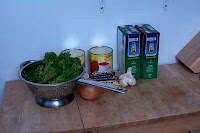
The secret is keeping a well-stocked kitchen. Buy these items any time you see them on sale to save money as well as time.
1. Stockpile staple items.
Grains, pasta, and beans are a survival eaters friend. Canned beans are okay if you are time-crunched and really cant get a handle on dried beans. Dried beans will save you money, and if you have a crock pot, can cook while you sleep. Grains like rice, quinoa, and bulgar, cook up quickly and add fiber, protein, and heft to veggie-laden meals. Pasta, especially whole-grain varieties, fill the same void, in your diet and your belly.
Other pantry items that will make your life easier include vegetable oils like canola, safflower, and extra virgin olive oil; kosher salt or sea salt; black pepper; red wine vinegar or apple cider vinegar; and low-sodium vegetable bullion cubes.
2. Fill up on frozen vegetables and fruits.
If youre concerned about rotting vegetables and fruit, go frozen! Frozen vegetables and fruit are often fresher than fresh, depending on where you buy your produce, and will keep for months. Keep your favorites on hand and youll never miss your 5-a-day.
3. Keep a supply of canned tomatoes.
Canned tomatoes can become pasta sauce or salsa, flavor vegetable dishes and soups, and anchor chili and pizza. Canned tomatoes, whether they be crushed, diced, whole or sauce, will keep you cooking all week long.
4. Rock the root vegetables.
Potatoes, yams, turnips, carrots, and other root vegetables have a nearly eternal shelf life. Pick up a few tubers at the market, and chances are, theyll be there when youre ready.
5. Have a few fresh items.
Garlic, onions, and lemons will rarely go bad in a well-used kitchen. These items are inexpensive, long-lasting, and essential in nearly every type of cuisine. Keep a few of each on hand.
6. Update your spices every now and then.
Spices are the spice of cooking. If your spices predate moving into your current dwelling and you dont remember when that was, its time for a change. Experts say spices have a one-year shelf life, but we both know that turmeric has been there for at least six, amirite?! A few staples to have on hand: thyme, oregano, paprika, garlic powder, onion powder, and red pepper flakes.
Once you have your ingredients, its just a matter of putting them together. Think about foods you like to eat and seek out recipes for those foods. Ask your friends and family, look at the Interwebs, or check out cookbooks from the library to get started. Having a few go-to recipes in your arsenal will keep survival eaters, like CB, from eating cereal and PB&J for dinner every night—or their loved ones for bearing the meal-prep burden alone.
 Before our first cooking lesson, I gave CB a shopping list for my Easy Tomato Sauce. (Since its winter, we made it with canned tomatoes.) He did all the work while I coached and we had a delicious meal, complete with a fresh salad, and bread. The next time I came over, the sauce was simmering when I arrived. Within a few minutes, dinner was on the table* and we were eating well before 10 p.m. I cried a little tear of joy and pride. (*laps on the couch)
For the next lesson, I showed CB a few variations by adding white beans to the sauce, tossing in some frozen spinach, and using the sauce on bread to make bruschetta. Everyone was happy; hunger was quickly satiated.
CB requested rice and beans for lesson three. Weve made them several ways over the last few weeks, since theyre a favorite for both of us. Rice and beans are a vegetarian staple customizable to every taste: spicy, smoky, mild; mashed or whole; over grains, with vegetables, as a dip, in a wrap, or on toast. Whatever your tummy desires.
Below is the simplest of beans and rice recipes. Alone it is a clean and flavorful dish that can easily become a favorite. Add chilies and spices and it becomes a canvas for more creative culinary adventures. You can use any type of bean, and I recommend brown rice as a stick-to-your-ribs base. For a change of pace, try quinoa or millet in place of rice.
With a well-stocked pantry, you need never eat cereal for dinner again. Unless you just want to.
~~~
If you dug this article, point your shovel toward:
- Vegetarian Meal Planning for Meat Eaters
- Converting Those Pesky Weights and Measures
- 20 Cheap, Healthy Dishes Made from 10 Pantry Staples
Simple Black Beans and Rice
Serves 4

1 cup dried black beans, washed and picked over
8 cups water
1 medium onion, peeled and cut in half
3 cloves garlic, crushed
salt to taste
black pepper to taste
1 cup brown rice
2 cups water
1 tsp salt
1) Wash and pick rocks from beans and place in a slow cooker with 6 cups of cold water. Set on low and cook for eight hours. Rinse well and place in a large sauce pan with 2 cups of water over medium high heat. Bring to a boil and reduce heat to medium.
2) Add to the beans the two onion halves, crushed garlic, salt, and pepper. Stir, cover, and simmer for 30 to 40 minutes or until beans are tender, but not mushy. (Cooking times depend on the type of bean you use.) Remove cover, remove from heat, and allow to rest for 5 minutes.
3) In the meantime, bring to boil 2 cups of salted water. Stir in rice. Bring to a boil again, reduce heat to medium-low, cover and simmer until the water is absorbed and rice is tender, about 20 minutes.
4) Whether beans are served over the rice, side-by-side, or mixed together is a matter of taste and cultural perence. Eat as your heart guides you, garnished with cilantro or a squeeze of lime juice.
Approximate Calories, Fat, Fiber, Protein, and Price per Serving
358.5 calories, 2g fat, 14.5g fiber, 12.75g protein, $.53
Calculations
1 cup dried black beans: 662 calories, 2g fat, 46g fiber, 39g protein, $0.73
1 medium onion: 40 calories, 0.2g fat, 0g fiber, 0g protein, $0.44
3 cloves garlic: 12 calories, 0g fat, 0g fiber, 0g protein, $0.04
1 cup brown rice: 720 calories, 6g fat, 12g fiber, 12g protein, $0.90
salt: negligible calories, fat, fiber, protein, $.02
black pepper: negligible calories, fat, fiber, protein, $.02
TOTALS: 1434 calories, 8.2g fat, 58g fiber, 51g protein, $2.15
PER SERVING (TOTALS/4): 358.5 calories, 2g fat, 14.5g fiber, 12.75g protein, $.53
Subscribe to:
Posts (Atom)


