Showing posts with label survival. Show all posts
Showing posts with label survival. Show all posts
High fat dairy products linked to poorer breast cancer survival
Tuesday, April 15, 2014
Patients who consume high-fat dairy products following breast cancer diagnosis increase their chances of dying from the disease years later, according to a study by Kaiser Permanente researchers.
The study, published in the Journal of the National Cancer Institute, is the first to examine the relationship between high-fat and low-fat dairy consumption following a diagnosis of breast cancer and long-term breast cancer survival.
Previous studies have shown that higher lifetime exposure to estrogen is a causal pathway to breast cancer. Estrogen levels are believed to be elevated in dairy products consumed in the Western world, because most of its milk comes from pregnant cows. Estrogenic hormones reside primarily in fat, so levels are higher in high-fat than in low-fat dairy products.
The researchers studied a cohort of women who were diagnosed with early-stage, invasive breast cancer between 1997 and 2000, primarily from Kaiser Permanentes Northern California region (83 percent) and the Utah Cancer Registry (12 percent).
Those consuming larger amounts of high-fat dairy (one serving or more per day) had "higher breast cancer mortality as well as higher all-cause mortality and higher non-breast cancer mortality," wrote lead author Candyce H. Kroenke, ScD, MPH, staff scientist with the Kaiser Permanente Division of Research, and co-authors.
"Specifically, women consuming one or more servings per day of high-fat dairy had a 64 percent higher risk of dying from any cause and a 49 percent increased risk of dying from their breast cancer during the follow-up period," said Kroenke. The category of high-fat dairy products researchers tracked included cream, whole milk, condensed or evaporated milk, pudding, ice cream, custard, flan, and also cheeses and yogurts that were not low-fat or non-fat.
In general, the women studied reported that they consumed low-fat milk and butter most often, and they consumed relatively limited amounts of low-fat dairy desserts, low-fat cheese and high-fat yogurt. Overall, low-fat dairy intake was greater (median 0.8 servings per day) than high-fat dairy (median 0.5 servings per day).
The study found an association between high-fat dairy and breast cancer mortality, but no association with low-fat dairy products and breast cancer outcomes.
"High-fat dairy is generally not recommended as part of a healthy diet," said senior author Bette J. Caan, DrPH, research scientist with the Kaiser Permanente Division of Research. "Switching to low-fat dairy is an easy thing to modify."
Women entered into the cohort approximately two years after their breast cancer diagnosis. At the beginning of the study, 1,893 women completed a self-administered food-frequency questionnaire, and 1,513 of these women completed a follow-up questionnaire six years later. They were followed for 12 years on average following study entry.
The women were asked how often they consumed dairy foods during the previous year; what portion sizes they generally consumed; which products they ate, including milk, cheese, dairy desserts, yogurt, and beverages made with milk (such as hot chocolate or lattes); and whether the dairy products were full fat, low fat or nonfat.
Of the total sample, 349 women had a recurrence of breast cancer and 372 died of any cause, 189 (50.8 percent) of them from breast cancer.
This research was part of the Life After Cancer Epidemiology (LACE) study, one of several efforts by investigators with the Kaiser Permanente Division of Research to consider the role of lifestyle factors such as nutrition, exercise and social support on long-term breast cancer survival and recurrence. While hundreds of studies have examined the role of lifestyle factors in cancer risk and prevention, this study is one of a small but growing number that focus on the role of lifestyle factors after a breast cancer diagnosis.
For example, the Pathways study of breast cancer survivorship, based at the Division of Research, is collecting and analyzing data about womens genetic background, tumor characteristics and lifestyle choices immediately after diagnosis. Findings from this study, along with the LACE study, are providing objective information to help guide women as they make decisions following a breast cancer diagnosis; among these findings are that soy decreases the risk of breast cancer recurrence, quality of life after diagnosis influences outcomes, and physical activity is beneficial.
Susan E. Kutner, MD, chair of the Kaiser Permanente Northern California Regional Breast Care Task Force, said that the new study bolsters the counseling that Kaiser Permanente gives breast cancer survivors about the importance of a low-fat diet, as well as exercise and weight management, in preventing recurrence of the disease. "Women have been clamoring for this type of information," Kutner said. "Theyre asking us, Tell me what I should eat? With this information, we can be more specific about recommending low-fat dairy products."


Marriage linked to better survival in middle age
Thursday, February 6, 2014
Study highlights importance of social ties during midlife
Could marriage, and associated companionship, be one key to a longer life? According to new research, not having a permanent partner, or spouse, during midlife is linked to a higher risk of premature death during those midlife years. The work, by Dr. Ilene Siegler and colleagues from Duke University Medical Center in the US, is published online in Springers journal Annals of Behavioral Medicine.
Survival through middle age to become elderly is expected; theore understanding who does not survive to become elderly and why is important. Siegler and colleagues looked at the effect of marriage history and timing of marriage on premature death during midlife. They were also interested in testing the role of pre-marital personality and quantifying the role of health behaviors.
The researchers analyzed data for 4,802 individuals who took part in the University of North Carolina Alumni Heart Study (UNCAHS) - an ongoing study of individuals born in the 1940s. The authors were particularly interested in stability and change in patterns of marital and non-marital status during midlife, controlling for personality at college entry (average age 18), socioeconomic status and health risk behaviors.
They found that having a partner during middle age is protective against premature death: those who never married were more than twice as likely to die early than those who had been in a stable marriage throughout their adult life. Being single, or losing a partner without replacement, increased the risk of early death during middle age and reduced the likelihood that one would survive to be elderly. Even when personality and risky behaviors were taken into account, marital status continued to have a major impact on survival.
The authors conclude: "Our results suggest that attention to non-marital patterns of partnership is likely to become more important for these Baby Boomers. These patterns appear to provide different levels of emotional and functional social support, which has been shown to be related to mortality. Social ties during midlife are important to help us understand premature mortality."
Reference:
Siegler IC et al (2012). Consistency and timing of marital transitions and survival during midlife: the role of personality and health risk behaviors. Annals of Behavioral Medicine; DOI 10.1007/s12160-012-9457-3
Veggie Might Cooking for Survival Eaters
Wednesday, February 5, 2014
Written by the fabulous Leigh, Veggie Might is a weekly Thursday column about all things Vegetarian.
Survival eaters are the opposite of foodies. They eat because, as humans, our bodies require calories to function. When they are not hungry, food doesnt enter a survival eaters mind.
Ive known a few survival eaters in my time, folks who can subsist on bits of fruit and bread and dont get excited about steaming plate of enchiladas or a decadent apple pie a la mode. My friend C will eat five M&Ms, fold the packet-top down, and put the rest away for later. It could take her days to eat a single-serving size.
 Its not that survival eaters dont like food; they just dont think about food before they need it. By then its too late to go to the store and, perhaps obviously, nothing has been prepared in advance. The solution is eating out, convenience food, or repeat appearances of PB&J or cereal for dinner. Theres nothing wrong with any of those things on occasion, but these can get expensive and unhealthy over time.
Perhaps its telling that most of the survival eaters I know work in the food service industry and get fed by their jobs. However, my charming boyfriend, CB, is a survival eater and not a waiter. He recently asked me to give him the basics of grocery shopping and cooking. He wants to be able to make healthy and delicious meals without too much advanced preparation, but hes willing to put in some effort.
I think the results of our first few lessons apply to survival eaters and anyone who is planning-challenged. Its easier to plan meals when youre constantly thinking about food, like I am. But what if you only think about food when your stomach tells your brain youre hungry?
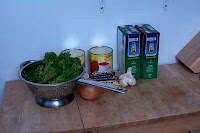
The secret is keeping a well-stocked kitchen. Buy these items any time you see them on sale to save money as well as time.
1. Stockpile staple items.
Grains, pasta, and beans are a survival eaters friend. Canned beans are okay if you are time-crunched and really cant get a handle on dried beans. Dried beans will save you money, and if you have a crock pot, can cook while you sleep. Grains like rice, quinoa, and bulgar, cook up quickly and add fiber, protein, and heft to veggie-laden meals. Pasta, especially whole-grain varieties, fill the same void, in your diet and your belly.
Other pantry items that will make your life easier include vegetable oils like canola, safflower, and extra virgin olive oil; kosher salt or sea salt; black pepper; red wine vinegar or apple cider vinegar; and low-sodium vegetable bullion cubes.
2. Fill up on frozen vegetables and fruits.
If youre concerned about rotting vegetables and fruit, go frozen! Frozen vegetables and fruit are often fresher than fresh, depending on where you buy your produce, and will keep for months. Keep your favorites on hand and youll never miss your 5-a-day.
3. Keep a supply of canned tomatoes.
Canned tomatoes can become pasta sauce or salsa, flavor vegetable dishes and soups, and anchor chili and pizza. Canned tomatoes, whether they be crushed, diced, whole or sauce, will keep you cooking all week long.
4. Rock the root vegetables.
Potatoes, yams, turnips, carrots, and other root vegetables have a nearly eternal shelf life. Pick up a few tubers at the market, and chances are, theyll be there when youre ready.
5. Have a few fresh items.
Garlic, onions, and lemons will rarely go bad in a well-used kitchen. These items are inexpensive, long-lasting, and essential in nearly every type of cuisine. Keep a few of each on hand.
6. Update your spices every now and then.
Spices are the spice of cooking. If your spices predate moving into your current dwelling and you dont remember when that was, its time for a change. Experts say spices have a one-year shelf life, but we both know that turmeric has been there for at least six, amirite?! A few staples to have on hand: thyme, oregano, paprika, garlic powder, onion powder, and red pepper flakes.
Once you have your ingredients, its just a matter of putting them together. Think about foods you like to eat and seek out recipes for those foods. Ask your friends and family, look at the Interwebs, or check out cookbooks from the library to get started. Having a few go-to recipes in your arsenal will keep survival eaters, like CB, from eating cereal and PB&J for dinner every night—or their loved ones for bearing the meal-prep burden alone.
 Before our first cooking lesson, I gave CB a shopping list for my Easy Tomato Sauce. (Since its winter, we made it with canned tomatoes.) He did all the work while I coached and we had a delicious meal, complete with a fresh salad, and bread. The next time I came over, the sauce was simmering when I arrived. Within a few minutes, dinner was on the table* and we were eating well before 10 p.m. I cried a little tear of joy and pride. (*laps on the couch)
For the next lesson, I showed CB a few variations by adding white beans to the sauce, tossing in some frozen spinach, and using the sauce on bread to make bruschetta. Everyone was happy; hunger was quickly satiated.
CB requested rice and beans for lesson three. Weve made them several ways over the last few weeks, since theyre a favorite for both of us. Rice and beans are a vegetarian staple customizable to every taste: spicy, smoky, mild; mashed or whole; over grains, with vegetables, as a dip, in a wrap, or on toast. Whatever your tummy desires.
Below is the simplest of beans and rice recipes. Alone it is a clean and flavorful dish that can easily become a favorite. Add chilies and spices and it becomes a canvas for more creative culinary adventures. You can use any type of bean, and I recommend brown rice as a stick-to-your-ribs base. For a change of pace, try quinoa or millet in place of rice.
With a well-stocked pantry, you need never eat cereal for dinner again. Unless you just want to.
~~~
If you dug this article, point your shovel toward:
- Vegetarian Meal Planning for Meat Eaters
- Converting Those Pesky Weights and Measures
- 20 Cheap, Healthy Dishes Made from 10 Pantry Staples
Simple Black Beans and Rice
Serves 4

1 cup dried black beans, washed and picked over
8 cups water
1 medium onion, peeled and cut in half
3 cloves garlic, crushed
salt to taste
black pepper to taste
1 cup brown rice
2 cups water
1 tsp salt
1) Wash and pick rocks from beans and place in a slow cooker with 6 cups of cold water. Set on low and cook for eight hours. Rinse well and place in a large sauce pan with 2 cups of water over medium high heat. Bring to a boil and reduce heat to medium.
2) Add to the beans the two onion halves, crushed garlic, salt, and pepper. Stir, cover, and simmer for 30 to 40 minutes or until beans are tender, but not mushy. (Cooking times depend on the type of bean you use.) Remove cover, remove from heat, and allow to rest for 5 minutes.
3) In the meantime, bring to boil 2 cups of salted water. Stir in rice. Bring to a boil again, reduce heat to medium-low, cover and simmer until the water is absorbed and rice is tender, about 20 minutes.
4) Whether beans are served over the rice, side-by-side, or mixed together is a matter of taste and cultural perence. Eat as your heart guides you, garnished with cilantro or a squeeze of lime juice.
Approximate Calories, Fat, Fiber, Protein, and Price per Serving
358.5 calories, 2g fat, 14.5g fiber, 12.75g protein, $.53
Calculations
1 cup dried black beans: 662 calories, 2g fat, 46g fiber, 39g protein, $0.73
1 medium onion: 40 calories, 0.2g fat, 0g fiber, 0g protein, $0.44
3 cloves garlic: 12 calories, 0g fat, 0g fiber, 0g protein, $0.04
1 cup brown rice: 720 calories, 6g fat, 12g fiber, 12g protein, $0.90
salt: negligible calories, fat, fiber, protein, $.02
black pepper: negligible calories, fat, fiber, protein, $.02
TOTALS: 1434 calories, 8.2g fat, 58g fiber, 51g protein, $2.15
PER SERVING (TOTALS/4): 358.5 calories, 2g fat, 14.5g fiber, 12.75g protein, $.53
Subscribe to:
Posts (Atom)


