Showing posts with label tool. Show all posts
Showing posts with label tool. Show all posts
Conversion Tool A1C to Blood Glucose
Sunday, March 2, 2014
An A1C test is not a direct measure of blood glucose, although the two can be correlated. Because of differences among labs in how they calculate A1C, and differences among individuals, conversions of A1C to blood glucose arent exact. But they can give you an idea of what your average blood sugar has been over the last few months.
The Diabetes Tool Box, a service of the Diabetic Drug Store, has an online calculator that can convert your A1C reading to an average blood sugar reading. Try it!

Update - June 2008: If the above doesnt work, try ACCU-CHEKs:

Or you can get a sense of the relationship between A1C and blood glucose from the following table, excerpted from the American Diabetes Associations (ADA) 2005 position statement on Standards of Medical Care in Diabetes:
and Mean Plasma Glucose Levels
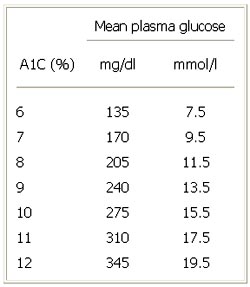
For the ADAs 2005 Position Statement:
Standards of Medical Care in Diabetes, Diabetes Care, 2005


CALCIUM SUPPLEMENTS REMAIN A VALUABLE TOOL FOR MAINTAINING BONE HEALTH
Thursday, January 16, 2014
Individuals who do not obtain recommended intake levels of calcium through dietary sources can safely utilize calcium supplements to achieve optimal bone health, an expert panel concludes. These findings appear in the November online edition of Advances in Nutrition, a journal that highlights the significance of recent research in nutrition and illustrates the central role of nutrition in the promotion of health and prevention of disease.
Responding to questions raised last year about a possible link between calcium supplements and a potential increased risk of cardiovascular disease, an expert panel composed of academic and industry experts in the fields of nutrition, cardiology, epidemiology, bone health, and integrative medicine convened on Nov. 10 and 11, 2011 in Washington, D.C.
The panel collected and examined the available body of scientific literature, including randomized controlled trials (RCTs) and observational data, assessing whether long-term use of calcium supplements could promote the occurrence of strokes, coronary heart disease, heart attacks and other forms of cardiovascular disease, and cross-referenced these findings with four of the Bradford-Hill criteria for causal interference: strength, consistency, dose-response and biological plausibility. The panel concluded that the available science does not suggest an increased risk for cardiovascular disease from calcium supplement use.
“There is a strong body of evidence from a variety of rigorous scientific studies reinforcing the benefits of calcium in promoting bone growth and maintenance. After reviewing the entire scope of scientific literature for calcium, we are now more confident than ever in both its health benefits and safety,” said panelist Robert P. Heaney, M.D., Osteoporosis Research Center, Creighton University Medical Center. “Consumers can feel confident about the safety of their calcium supplements and should continue taking them with confidence. They should, however, be aware of how much calcium their diets provide, and then supplement accordingly.”
In addition to Dr. Heaney, panel experts included: Stephen Kopecky, M.D., Division of Cardiovascular Diseases, Mayo Clinic; Kevin Maki, Ph.D., Provident-Biofortis; John Hathcock, Ph.D., former senior vice president, scientific and international affairs, Council for Responsible Nutrition (CRN); Douglas MacKay, N.D., vice president, scientific and regulatory affairs, CRN; and Taylor Wallace, Ph.D., senior director, scientific and regulatory affairs, CRN.
The CRN Foundation, the educational non-profit affiliate for CRN, the dietary supplement industry’s leading trade association, commissioned the panel after results from a meta-analysis of RCTs, and reanalysis of the Women’s Health Initiative by researchers at a New Zealand laboratory, prompted concern about a potential association between calcium supplement use and a small increase in risk for adverse cardiovascular events. However, a number of issues with the meta-analysis and accompanying studies—such as exclusion of the majority of RCTs which indicate calcium has no effect on the cardiovascular system; large reliance on unpublished data; failure to appropriately ascertain cardiovascular events; and a lack of information on known cardiovascular risk determinants—warranted a complete examination of the scientific literature. The CRN Foundation assembled the expert panel to study the findings of this analysis in context with the larger body of scientific research on calcium.
“In light of our safety findings combined with the well-documented benefits of calcium, we urge physicians to continue recommending calcium supplements to their patients as appropriate, as our review of the scientific literature further reinforces the valuable role of calcium in helping consumers maintain bone health,” said the Mayo Clinic’s Dr. Kopecky. “Building and maintaining calcium is vital for all age groups—young children to adolescents to adults and the elderly must obtain adequate amounts of calcium, either through diet or supplementation. For those who are unsure if they need to supplement their diets with additional calcium, make sure to discuss your current nutritional picture with your physician.”
Supporting the expert panel’s conclusion is the recent “Framingham Study,” published online in the Nov. 7 American Journal of Clinical Nutrition by Elizabeth Samelson, Ph.D., et al., which also looked at the association of calcium and coronary artery calcification and found that “…calcium intake from diet and supplements appeared to neither increase nor decrease vascular calcification, which is a measure of cardiovascular risk…The use of calcium supplements is important for many older adults to ensure adequate intake for bone health.”1
The Institute of Medicine currently suggests women ages 19 through 50 and men up to 71 obtain a Recommended Dietary Allowance (RDA) of 1,000 milligrams calcium daily; women over 50 and men 71 and older should obtain 1,200 milligrams daily to ensure they are meeting their daily needs for strong, healthy bones. Calcium is popular among U.S. consumers, and according to CRN’s most recent survey of U.S. adults, 17 percent indicate they take a calcium supplement.
Digestive Enzyme Bromelain is a Powerful Tool in the Fight against Cancer
Tuesday, December 17, 2013

Research published in Cancer Letters shows the protease enzyme to exhibit multiple actions including anti-inflammatory and immune cell activation that can deal a powerful blow to cancer development. Include bromelain in your supplemental regimen to benefit from the potent anti-cancer properties now attributed to this amazing pineapple enzyme.
Bromelain is Shown to Dissolve Unneeded Tissue throughout the Body

Enzymes such as bromelain are critical to break down proteins used to drive metabolic functions within the body. Processed and overcooked foods have been stripped of the natural enzymes that originally existed, and the pancreas is forced to work beyond its capacity to break down digested proteins. Cancer cells also use a protein shield to cloak themselves and avoid detection from the immune system. Protease enzymes help destroy the protein bond around cancer clusters so the body can destroy developing tumor wall structures and thwart cancer initiation.
Potent Enzyme Uncloaks Protein Sheath Protecting Cancer Cells from Detection

Further scientific documentation is published in the journal Molecular Carcinogenesis to support the cancer-killing ability of bromelain, independent of other therapies. Cancer is fueled by systemic inflammation and out of control gene activity from the protein complex, NF-KappaB (nuclear factor kappa beta). Bromelain inhibits the activity of NF-KappaB, significantly lowering cellular free radical damage causing cancer cells to undergo normal cell death (apoptosis).
Research continues to uncover the amazing health-promoting benefits of natural enzymes such as bromelain in the fight against inflammatory and immune-deficiency diseases like cancer. You can dramatically lower your risk by supplementing with 50 mg of bromelain extract daily, taken with meals to aid protein digestion and on an empty stomach to uncloak rogue cancer cell development..
Subscribe to:
Posts (Atom)


