Showing posts with label cms. Show all posts
Showing posts with label cms. Show all posts
Who Is CMS Administrator Marilyn Tavenner and What Does Her Nomination Mean
Wednesday, April 23, 2014
 |
| Say hello to the CMS Administrator |
So who, asks the Disease Management Care Blog, is she?
According to this biosketch (scroll down, youll find her), Ms. Tavenner has a 25 year hospital administrator pedigree that includes being CEO at two Virginia Hospital Corporation of America hospitals (Chippenham and Johston Willis). That part of her career culminated in her being the companys "President of Outpatient Services." As the DMCB understands it, she entered the major leagues of public service in 2006 when Democratic Governor Tim Kaine tapped her as Virginias Secretary of Health and Human Resources. Thanks in part to her links with Mr. Kaine, she later jumped to CMS, where she became the "Principal Deputy Administrator and Chief Operating Officer." Unsurprisingly, her duties have included loyally defending the Affordable Care Act (ACA). You can see her in action here on C-SPAN.
By the way, did the DMCB mention that Ms. Tavenner is a registered nurse?
She has an Virginia Commonwealth University BSN undergraduate degree and apparently climbed the HCA ranks one patient care unit at a time. Somewhere along the line she also nabbed a Masters in Health Administration.
Four initial thoughts from the DMCB:
1. The new CMS nominee is another example of the emergence of nurses as go-to health leaders. Not only does the public trust them, theyre able to bring a real-world understanding of hands-on patient care to the high falutin mix of operations, policy, politics and finance. The good ones know how to deal with grumpy doctors and neutralize clueless administrators. That being said, the physician DMCB cant help it and still wishes there was a doc at CMS helm.
2. In its long career, DMCB has witnessed the Dark Side Transformation of many well-meaning physician or nurse administrators to a type that places profits over patients. Whats more, few have become hospital CEOs without making some enemies along the way. Will any past foes come forward with unpleasant anecdotes from an otherwise forgotten past? Stay tuned.
3. Despite lots of searching, the DMCB couldnt find much of a track record outside some speaking gigs and serving on some boards. As far as it can tell, she has no peer-reviewed publications and her public statements have been pretty vanilla. While that may impair Mr. Obamas foes ability to attack Ms. Tavenners record, the DMCB wants to know more about someone who is going to be leading the worlds largest health insurer.
4. The absence of a track record doesnt mean that the nomination process isnt an opportunity for politically motivated mischief. It remains to be seen how well Ms. Tavenner testimony holds up to the Republicans intense "gotcha" scrutiny and whether her nomination ultimately becomes a toxic partisan (re)hearing on the merits of the ACA.


Pioneer ACO Program Results Why Saving Money for CMS Doesnt Mean The Business Model is Viable
Thursday, February 20, 2014
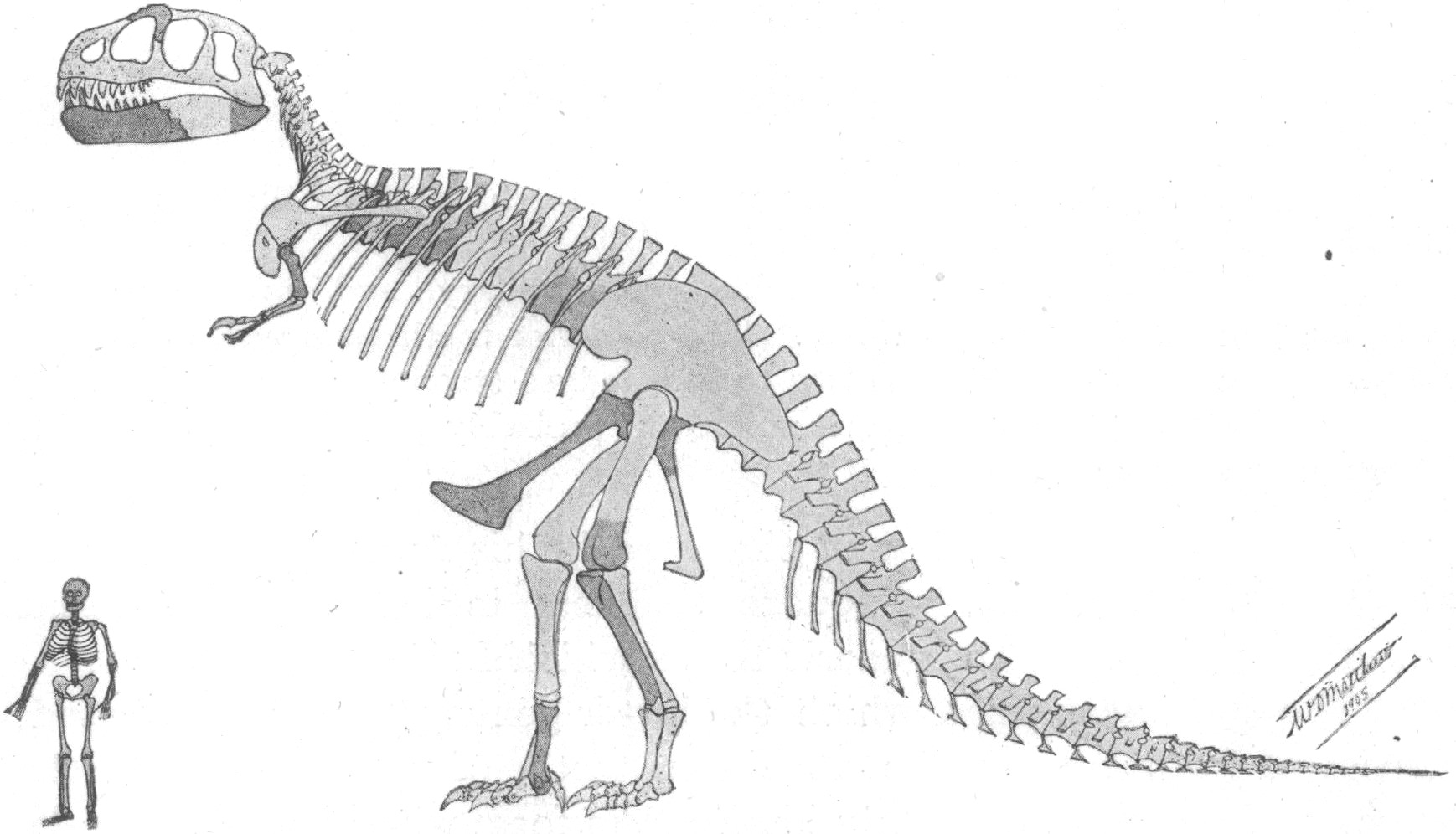 According to South Dakota researchers, the predator status of Tyrannosaurus rex can no longer be questioned. After finding one of its teeth embedded in the healed spine of a Hadrosaurus, paleontologists now believe T rex was a fearsome hunter, not an carrion munching opportunist.
But, asks the Disease Management Care Blog, how do we really know that that Hadrosaurus wasnt pretending to be dead when the T rex took its bite? Alternatively, the Hadrosaurus could have been sleeping and only looked dead to a slow-witted and lazy T rex.
Dino doubts, says the DMCB, remain.
Such is the level of skepticism that the DMCB is bringing to its reading of the recent CMS press release describing the initial results of the Pioneer ACO program. CMS says "positive" and "promising." The DMCB says "problematic" wonders if, like the T rex dilemma, there isnt an alternative interpretation.
The DMCB explains.
Recall that the Pioneer ACO program is designed to test whether large integrated organizations can be successfully rewarded for reducing health care costs through a program of "shared savings." Under the program, if the savings exceed a minimum threshold, CMS will remit a portion of the upside savings back to the participating organizations.
According to the press release, the health care costs for the 669,000 Medicare beneficiaries cared for by the 32 Pioneer ACO program providers grew only .3% versus .8% for a parallel group of "similar beneficiaries." 13 organizations exceeded the savings threshold, which will lead to Uncle Sam writing checks for $76 million in shared savings.
This front page article in The Wall Street Journal has more detail. It says 18 of the 32 reduced health care costs, which leads the DMCB to conclude that five otherwise "successful" participants did not cross the required savings threshold. Two participants lost money. That, in turn, suggests the remainder, or twelve, broke even.
Details on how each individual institution fared are not readily available. According to WSJ, Bostons Partners Healthcare reduced Medicare claims expense by $14 million. They will be rewarded with a shared savings check of $7 million. Wisconsins Bellin-ThedaCare will get "several million."
Good "win-win" news for the Pioneer organizations, CMS, Uncle Sam and U.S. taxpayers, right? A critical mass (40%) achieved millions in shared savings, which means proof of concept met and that a key part of Obamacare is successful, right?
"Not exactly," says the DMCB.
It figures 100% of the participating organizations had to each invest millions for personnel and other infrastructure to pursue the Medicare savings in the first place. In other words, they were in the red before Pioneer even began. That means that, in addition to the two participating organizations that lost money, the 12 that "broke even" as well as the 5 that did not make threshold also lost millions.
Thats 19 losers or almost 60% of the participating organizations.
In addition, its possible that for some of the 13 "winners" that the shared savings awards wont match their up-front multi-million dollar investment either. Assuming thats true, its possible that as many as two thirds of the Pioneer organizations lost money. No wonder 9 of the participants have signaled a desire to exit the program.
The DMCBs dinosaur analogy may be apt. Given a two out of three likelihood of losing millions in the first year of operations, ACOs may just be too big and complicated to survive in the current health care environment. Nonetheless, the Pioneer program will continue and the DMCB will stay tuned for the Year 2 results.
In the meantime, the DMCB wishes CMS good luck in using these "positive" and "promising" results to expand the program anytime in the near - or distant - future.
CMS and The Possible Obsolescence of Its Versions of the EHR PCMH and ACO
Wednesday, January 22, 2014
 |
| Let thousands bloom |
According to Dr. Choi, sometime last week, the White House hosted a meeting of national physician leaders to talk about the Affordable Care Act. HHS Secretary Sebelius was there along with other CMS administrators. The conversation focused on electronic health records (EHRs), the patient centered medical home (PCMH) and accountable care organizations (ACOs).
The DMCB is not worried about another Cabinet member blurring the line between policy and election-year political grandstanding. It is not concerned that naive ACA supporters are unwittingly being used to promote the Administrations health orm nostrums. It is not surprised that this flattering article seemed only fit for liberal HuffPo and is destined to reinforce the biases of an already committed base. It is not wondering about a curious commitment to care approaches that still are not conclusively backed up by a critical mass of peer-reviewed evidence. Finally, the DMCB isnt shocked that it was not invited to the White House.
Rather, says the DMCB, its worried that this is all the White House has. A precious day of CMS leadership attention spent in recycling stale EHR, PCMH and ACO acronyms and jargon with a fawning circle of fellow ideologues? What gives?
While the CMS EHRs meaningful use program continues, health care technology is evolving away from fixed desktops and mainframes toward mobile smart devices, apps, the cloud and social media. The transition is bound to shift doctors and patients highly personalized management of information in ways that we havent thought of.
CMS "PCMH Ver. 1" entails a wholly contained primary care provider team reimbursed with a monthly fee. In the meantime, other health systems and insurers are already figuring out how to simultaneously out and insource team members depending on local resources and patient risk.
CMS is just getting its ACO pilots and programs off the ground. In contrast, commercial insurers launched a host of "accountability" initiatives years ago. Many are focused on a single clinical domain (such as avoidable emergency use, patients who are high risk, or post-discharge readmissions) and are highly flexible and expandable.
The distinctly modular approach to health IT, medical homes and provider-insurer risk transfer certainly contrasts with CMS plodding one-size-fits-all and top-down planning. While a thousand commercial sector flowers bloom, CMS risks presiding over demos and pilots that could become obsolete before the the data collection has been completed. Why arent they meeting about that?
Last but not least, the Administration seems to be putting all of the ACAs eggs in the EHR, PCMH and ACO baskets. If they dont work out, it would further undermine the brand of the star-crossed Affordable Care Act.
Image from Wikipedia
Subscribe to:
Posts (Atom)


