Showing posts with label death. Show all posts
Showing posts with label death. Show all posts
4 lifestyle changes will protect heart reduce your risk of death
Saturday, May 17, 2014
Study shows clear benefits of a healthy diet, exercise, maintaining normal weight and not smoking
A large, multi-center study led by Johns Hopkins researchers has found a significant link between lifestyle factors and heart health, adding even more evidence in support of regular exercise, eating a Mediterranean-style diet, keeping a normal weight and, most importantly, not smoking.
The researchers found that adopting those four lifestyle behaviors protected against coronary heart disease as well as the early buildup of calcium deposits in heart arteries, and reduced the chance of death from all causes by 80 percent over an eight-year period. Results of the study, "Low-Risk Lifestyle, Coronary Calcium, Cardiovascular Events, and Mortality: Results from the Multi-Ethnic Study of Atherosclerosis," are described in an online article posted June 3, 2013 by the American Journal of Epidemiology.
"To our knowledge, this is the first study to find a protective association between low-risk lifestyle factors and early signs of vascular disease, coronary heart disease and death, in a single longitudinal evaluation," says Haitham Ahmed, M.D., M.P.H., the lead author who is an internal medicine resident with the Ciccarone Center for the Prevention of Heart Disease at Johns Hopkins.
"We evaluated data on more than 6,200 men and women, age 44-84, from white, African-American, Hispanic and Chinese backgrounds. All were followed for an average of 7.6 years. Those who adopted all four healthy behaviors had an 80 percent lower death rate over that time period compared to participants with none of the healthy behaviors," says Ahmed.
Study participants all took part in the ongoing Multi-Ethnic Study of Atherosclerosis (MESA), a prospective examination of the risk factors, prevalence and prevention of cardiovascular disease. MESA participants were recruited from six academic medical centers and did not have a diagnosis of cardiovascular disease when they were enrolled.
All participants had coronary calcium screening using computed tomography (a CT scan) when they were first enrolled in the study to see if there were early signs of calcium deposits in their heart arteries that are known to contribute to heart attack risk. As the study progressed, the researchers also assessed whether the participants had a heart attack, sudden cardiac arrest, chest pain, angioplasty or died due to coronary heart disease or other causes.
The researchers developed a lifestyle score for each of the participants, ranging from 0 (least healthy) to 4 (healthiest), based on their diet, body mass index (BMI), amount of regular moderate-intensity physical activity and smoking status. Only 2 percent, or 129 participants, satisfied all four healthy lifestyle criteria.
"Of all the lifestyle factors, we found that smoking avoidance played the largest role in reducing the risk of coronary heart disease and mortality," says Roger Blumenthal, M.D., a cardiologist and professor of medicine at the Johns Hopkins University School of Medicine, director of the Ciccarone Center and senior author of the study. "In fact, smokers who adopted two or more of the healthy behaviors still had lower survival rates after 7.6 years than did nonsmokers who were sedentary and obese."
Blumenthal, who is also the president of the American Heart Associations Maryland affiliate, says the findings "bolster recent recommendations by the American Heart Association, which call for maintaining a diet rich in vegetables, fruits, nuts, whole grains and fish, keeping a BMI of less than 25, being physically active and not smoking."
The researchers emphasize that their study shows the importance of healthy lifestyle habits not just for reducing the risk of heart disease, but also for preventing mortality from all causes.
"While there are risk factors that people cant control, such as their family history and age," says Ahmed, "these lifestyle measures are things that people can change and consequently make a big difference in their health. Thats why we think this is so important."


Old age offers no protection from obesitys death grip
Friday, May 2, 2014
Getting older increases Americans risk of death from excessive BMI, finds new study, correcting flaw in earlier obesity paradox research
Obesity kills, giving rise to a host of fatal diseases. This much is well known. But when it comes to seniors, a slew of prominent research has reported an "obesity paradox" that says, at age 65 and older, having an elevated BMI wont shorten your lifespan, and may even extend it. A new study takes another look at the numbers, finding the earlier research flawed. The paradox was a mirage: As obese Americans grow older, in fact, their risk of death climbs.
Ryan Masters, PhD, and Bruce Link, PhD, at Columbia Universitys Mailman School of Public Health, in collaboration with Daniel Powers, PhD, at the University of Texas published the results online in the American Journal of Epidemiology.
The researchers argue that past studies of longevity and obesity were biased due to limitations of the National Health Interview Survey, or NHIS, which provides information on obesity. The survey excludes individuals who are institutionalized, such as in a hospital or nursing home—a group largely made up of seniors. Consequently, the data is overrepresented by older respondents who are healthy, including the relatively healthy obese. Whats more, many obese individuals fail to make it to age 65—and thus do not live long enough to participate in studies of older populations.
"Obesity wreaks so much havoc on ones long-term survival capacity that obese adults either dont live long enough to be included in the survey or they are institutionalized and theore also excluded. In that sense, the survey data doesnt capture the population were most interested in," says Dr. Masters, a Robert Wood Johnson Foundation Health & Society Scholar at Columbias Mailman School and the studys first author.
In his analysis Dr. Masters matched NHIS data on obesity with corresponding records in the National Death Index using data from close to 800,000 adults surveyed between 1986 and 2004. Next he performed statistical adjustments to account for the survey selection biases. The result: risk for death from obesity increases with age.
The finding jibes with countless medical studies that document how obesity takes a cumulative, even compounding toll on the human body. (Exponents of the obesity paradox have explained their counterintuitive results by suggesting that obesitys extra padding protects seniors from fall-related injuries and provides energy reserves during illness.)
"This study should put to rest the notion that its possible to age out of obesity risk, and provides a powerful counterfactual against those who say concern over obesity is overhyped," says Dr. Link, a professor of Epidemiology and Sociomedical Sciences at the Mailman School.
Going forward, Dr. Masters has set his sites on another possible reason behind the obesity paradox—that some of the older obese captured in NHIS data only put on extra weight later in life.
"The recent obesity epidemic hit all age groups at the same time, meaning many of the elderly obese only gained their excess weight in the last 10 years or so," Dr. Masters says. "To account for this fact, I will take a page from studies of cigarette smokers by looking at life years to measure how long someone has been obese rather than whether or not they happen to be obese at the time of a single snapshot survey."
High Insulin Levels May Accelerate Death From Breast Cancer
Thursday, May 1, 2014
 Below is another presentation from the American Association for Cancer Researchs annual conference last week. (I posted another one from their conference about diabetes link to colon cancer here.)
Dr. Irwin and her colleagues found that high levels of fasting C-peptide (a marker for insulin*) was associated with a higher incidence of death from breast cancer in women in their 40s whose cancer was at an early stage. That association decreased as women entered their 50s and 60s. The women did not have diabetes.
They analyzed data from 689 women with breast cancer who were enrolled in the Health, Eating, Activity, and Lifestyle (HEAL) Study. The women were followed for up to 9 years, until 2004.
Insulin has been shown in clinical studies to stimulate the growth of breast cancer cells. This epidemiological study supported that association.
When Do Insulin Levels Rise?
Often, before a diagnosis of diabetes, the bodys cells become increasingly resistant to insulin. That sends a signal to the pancreas to secrete more. It isnt until the beta cells of the pancreas lose their ability to respond that insulin levels drop off. By that time, blood sugar levels are high and type 2 diabetes is well established.
The authors of this study recommended that younger women with breast cancer adopt lifestyle changes, such as exercise, that can moderate insulin levels.
* C-peptide is a protein fragment that splits from proinsulin after proinsulin is released from the pancreas. C-peptide levels lect insulin levels.
The Provider Version of a Death Spiral
Saturday, April 26, 2014
 The health care commentariat are all wee-weed up over the just-released Kaiser Family Foundation survey on employer health benefits. The report, based on telephone interviews of a representative sample of more than 2000 employers, shows that the cost of employer-provided insurance has increased by a whopping 8-9% this year.
Supporters of Mr. Obama and Affordable Care Act argue the increases have preceded the chief provisions of the ACA and are the best evidence to date that federally-led health orm is necessary. In the meantime, foes of Obamacare are glomming onto the increases as proof that current and anticipated federal mandates are doing nothing about the underlying causes of cost inflation and are ruining any hope of slowing it down.
And so the debate goes on and on.
Unlike the political class, the DMCB has never found that there is any "single" culprit or simple explantion when it comes to health care cost trends. In this instance, the 8-9% increase is likely due to variations in the underwriting cycle and a combination of insurance and provider market forces. They include new (and expensive) technology, an aging workforce, continued reliance on fee-for-service mechanisms, grabbing some additional rate before federal oversight increases, the cost of covering all those college students and other various mandates.
But the perceptive DMCB will offer up one more cause: the provider equivalent of the insurer "death spiral." If insurers are having a bad year thanks to increased claims, they can be forced to increase their prices. In response, persons who dont need insurance exit, leaving only the persons who must keep the insurance because they know they are a bad risk. That leads to another bad year, another price increase and more exits until the insurer is left with a small book of business that is unaffordable.
Thanks to 1) 9% unemployment leaving persons without health insurance, 2) high "under" employment also leaving persons without insurance and 3) high out of pocket expenses for those who do have insurance, the DMCB suspects many more persons with a choice are electing to not go to the hospital or the doctor. That leaves fewer persons, but theyre sicker, higher cost and unable to pay. Less margin, bad debt and fixed costs are forcing providers to increase their rates.
While this a arguably a form of cost shifting, the DCMB doesnt believe that term adequately captures what is going on. If its right, the lower frequency of claims with a much higher severity could point to a true spiral and next years increases will also be unexpectedly high. In addition, once the economy improves and all that pent-up demand can be addressed, itll get worse.
Combined with everything else going on, this doesnt bode well.
The Health Insurance Death Spiral Is High Health Insurance Exchange Use An Early Symptom
Tuesday, April 1, 2014
 According to the White House, the health insurance exchange glitches are a symptom of high demand from a grateful citizenry eager to embrace Obamacare. While articles like this and this suggest that sloppy and amateurish programming is really behind the website crashes, the Disease Management Care Blog is concerned that early high demand - if it exists - could be an early sign of a coming insurance death spiral.
"Death spirals" occur when persons with high levels of risk disproportionately enter an insured population. When that happens, premiums have to rise to match the increased expenses. That, in turn, causes persons with lower risk to drop their insurance, leading to an even higher proportion of high risk individuals, who drive prices even higher.
The DMCB intuitively doubts that the early high demand described by the White House is the result of healthy latte-sipping millenials and young invincibles having nothing better to do with their web-surfing time. Rather, the persons most likely to be in a rush to get into the web site are persons who really need insurance. Those would be the ones facing huge health care bills.
Another indication is the relative lack of the standard individual anecdote or "ledes" in media reports that hook the reader into paying attention. Used by politicians and journalists alike, ledes put a "human face" on a narrative by bridging the personal and the policy.
Supporters of exchanges would probably like to see something ledes along the lines of...
For years, 25 year old Ivanna Ceeadoc could only lurk outside the local health clinic and watch helplessly as her friends from the coffee shop down the street got free health communications from the nurse practitioners within. But after using the health insurance exchange....
or
Until he signed up in the health insurance exchange, part-time jazz drummer and retail specialist Hank Erinfersumburgers never had to see a health care provider. Previously unaware of a bleak future of fast food and tight clothes, Hanks zero dollar co-pay now lets him see a dietician and have enough money left over for a lunch......
Young Ivanna and Hank havent made an appearance in the national health insurance exchange narrative because they probably arent part of the story. More likely, its persons in their 50s and early 60s who have been hold they need a joint replacement, an angioplasty or back surgery....
Ima Medeesazter was looking at a stack of medical bills a mile high. Her surgeons plans included weeks in a hospital costing her hundreds of thousands of dollars. Ima put things off, but now that she used the exchange, she can look forward to getting to know her ICU nurses really well.......
Even more worrisome: this astonishing statement by HHS Administrator Kathleen Sebelius that she "doesnt know" how many have enrolled in health insurance since the October 1 opening date. If the experts running the shop are unaware the Insurance 101 principle of knowing who and why persons are signing up for health insurance, they have no idea about the spiral threat.
Image from Wikipedia
New Study Replacing Animal Fat with Vegetable Oil Death
Saturday, March 29, 2014
 Ahhh it was a good day today when I read this article... "Study raises questions about dietary fats and heart disease guidance". Heres the scoop... researchers from the United States and Australia have recovered missing data from an old study from the 1970s. The study, known as the Sydney Diet Heart Study, was a randomized controlled trial in which the participants were told to replace the saturated fats in their diets with polyunsaturated fats from vegetable oil. The 458 subjects were all men between ages 30-59 who had recently had a coronary event, defined as either a heart attack or angina (1).
Why was this data missing? Who knows. I cant find a good answer. But had these results been available in the mid 1970s as they should have been, it may have changed the course of the dietary guidelines on fat intake.
Okay so we had two groups, both groups are coming off of either a heart attack or angina. Let me break it down right quick...
Group 1: Control group
- Given no dietary advice at all
- Reduce dietary saturated fat (animal fats) to under 10% of calories
- Reduce dietary cholesterol to less than 300 mg/day
- Increase polyunsaturated fats (from safflower oil) to 15% of calories
The participants diets were reported through a daily food diary, and they reported to the lab for testing 2-3x per year for several years. Here are the results for all-cause death, cardiovascular disease, and coronary heart disease...

Here you can see the cumulative death rate over the course of 5 years of follow-up. The data is essentially the same for all-cause, cardiovascular, and heart disease deaths. Its also statistically significant and very, very clear. Those in the intervention group, who reduced their saturated fat and cholesterol intake while increasing their polyunsaturated fat intake, fared worse. In other words, the people eating more saturated fat and cholesterol lived longer, and they had a lower rate of heart disease.
This shouldnt come as a huge surprise if youre a reader of this here blog. You know saturated fat is wrongly accused... and that vegetable oils are the devil. Just further evidence here. But theres something else thats interesting about this study: the cholesterol levels. The data is only available for 1 year of follow up, and I had to make this graph myself for your viewing pleasure. Check it out...

Sorry about the colors... theyre actually the opposite of the graphs above and I hadnt realized it til now! But the point is that the intervention group in red, the group eating more vegetable oils, lowered their total cholesterol nearly 40 points!! They ended up at 243.9 mg/dl by the end of the first year. The control group? Well they lowered theirs a measly 15 points to 266.5 mg/dl. Both began at the same level. (There were no significant differences between groups in triglycerides, body mass index, or systolic or diastolic blood pressure at baseline or during follow-up.)
So based on this, you would assume that the intervention group would be better off, right? But they werent. They died far more often of heart disease than the control group did, and with lower cholesterol! Lesson #1: Arbitrarily lowering your cholesterol by any means necessary does not and will not lower your risk of heart disease!!! Cholesterol is just a semi-accurate risk factor... it is not the cause. Theore I dont necessarily give two shits if your diet lowers your total cholesterol.
But the worst part of all this? Replacing saturated animal fats with unsaturated vegetable fats has been a cornerstone of mainstream dietary advice for the past 40 years. I could cite any number of different sources here, like...
- The 2010 Dietary Guidelines: "Americans should replace solid fats with oils." pg. 40 (2)
- The American Heart Association: "Replacement of saturated fat and trans fat with monounsaturated fat and polyunsaturated fat might even help lower LDL cholesterol when eaten as part of a healthy diet." (3)
- The My Plate fats and oils info sheet I was forced to teach to teenagers last semester in my community rotation: "Replacing saturated fats with unsaturated fats lowers your cholesterol and reduces your risk for heart disease."
I, for one, have had enough of this shit. Its time this changes, and maybe this is the study to put it over the edge. Saturated fat isnt killing us. Vegetable oil is. Eat real food. Peace Im out.
Nut consumption reduced death rate
Tuesday, March 25, 2014
In a study published today in the New England Journal of Medicine, researchers looked at the association of nut consumption with total and cause-specific mortality among 76,464 women in the Nurses Health Study and 42,498 men in the Health Professionals Follow-up Study. Consumption of nuts, including tree nuts (such as almonds, Brazil nuts, cashews, hazelnuts, macadamias, pecans, pine nuts, pistachios and walnuts), was inversely associated with total mortality in both men and women, independent of other predictors for death. In addition, there were significant inverse associations for deaths due to cancer, heart disease and respiratory disease.
"Compared with those who did not eat nuts, individuals who consumed nuts (serving size of one ounce) seven or more times per week had a 20% lower death rate and this association was dose-dependent," stated lead author, Ying Bao, MD, ScD, from the Department of Medicine, Brigham and Womens Hospital and Harvard Medical School, Boston, MA. "Those who consumed more nuts were also leaner, and tended to have a healthy lifestyle, such as smoking less and exercising more," added Dr. Bao.
This is the largest study to date to examine the relation between nut consumption and total mortality, and the results are consistent with previous studies, according to senior author, Charles Fuchs, MD, MPH, from the Department of Medical Oncology, Dana-Farber Cancer Institute, Boston, MA. "The findings from our study and others suggest a potential benefit of nut consumption for promoting health and longevity," reported Dr. Fuchs.
Nuts contain important nutrients such as unsaturated fats, high quality protein, vitamins (i.e., vitamin E, folate and niacin) minerals (i.e., magnesium, calcium and potassium) and phytochemicals—all of which may offer cardioprotective, anticarcinogenic, anti-inflammatory and antioxidant properties. "With current nut consumption well below the recommended 1.5 ounces of nuts per day (in the FDA qualified health claim for nuts and heart disease) we need to continue to encourage people to have a handful of nuts every day," recommends Maureen Ternus, M.S., R.D., Executive Director of the International Tree Nut Council Nutrition Research & Education Foundation (INC NREF).
Obesity Leads to Premature Death Achieve Weight Loss Success for Life
Sunday, March 23, 2014
(Article first published as Prevent Obesity, Achieve Weight Loss Success for Life on Technorati.)
 Obesity rates continue to increase at a staggering rate, increasing the risk of heart attack, diabetes, stroke, Alzheimer’s disease and many cancers. In fact, obesity has surpassed smoking as the leading preventable cause of death in America. A study presented to the International Congress on Obesity reveals an even more sobering statistic – men who enter adulthood obese face a twofold increased risk of dying prematurely.
This underscores the critical importance of maintaining a healthy weight through childhood and into our teen years, as fat which is stored during the developmental years has a direct impact on our risk of illness and longevity as we phase through adulthood. Fortunately, by adopting a healthy lifestyle and weight loss program, we can reverse the risks which lead to an early demise, and avoid becoming a grim statistic.
Phase 1: Educate Children from an Early Age
 Information from this study makes it clear that the growing epidemic of overweight and obese children is leading to a shortened lifespan for our next generation. This problem is simply rooted in poor diet and lifestyle, as children are being raised with the notion that fast food through a drive thru window, sweetened beverages and sugary snacks make up a healthy diet.
The average family eats 4 or more times a week at a fast food restaurant, in many cases consuming more than twice the calories they should for a single meal. Couple this high calorie, low nutrition eating style with virtually no physical activity, and you have the recipe for a health disaster.
Children need to be educated on how to eat healthy and stay active in much the same way as they are taught to read. This class must be taught at home. A child’s mind is pliable, and adopting a diet of nutritionally balanced, reduced calorie meals prepared at home will become a life skill they’ll retain as they get older. Reserve dining out for special occasions only, allowing you to control meal ingredients and portion sizes. Limit television and video games while encouraging regular physical activity.
Phase 2: Use Motivation to Solidify Your New Lifestyle
 In order to hit your ideal weight loss goal, you need to master the mechanics of proper weight management. The tools are provided by eating a nutritionally balanced, calorie restricted diet with no junk food and participating in a regular exercise regimen. Beyond the basics, you also need to reward yourself for your accomplishments, and this requires motivation, driven by the knowledge that you’re working to improve the quality and length of your life.
The best motivation is to track your progress. Keep a daily record of the foods you eat, caully recording portion sizes, total calories and weigh food when applicable. When you estimate portions, you set yourself up for failure. Finally, weight yourself using a digital scale no more than twice each week, keeping a log of how you’re proceeding toward your weight loss goal. Remember, the excess weight didn’t suddenly appear overnight, and losing those extra pounds will take some time and effort.
Weight loss can be a matter of increased lifespan for many overweight and obese people. Depending on the amount of weight you need to lose, and when in life those extra pounds appeared, you may be able to make a significant impact on how long you live. Diet and exercise are important components to achieve your weight loss goal, and harnessing your psyche provides the necessary motivation to experience enhanced quality of life for many years to come.
This underscores the critical importance of maintaining a healthy weight through childhood and into our teen years, as fat which is stored during the developmental years has a direct impact on our risk of illness and longevity as we phase through adulthood. Fortunately, by adopting a healthy lifestyle and weight loss program, we can reverse the risks which lead to an early demise, and avoid becoming a grim statistic.
Phase 1: Educate Children from an Early Age
The average family eats 4 or more times a week at a fast food restaurant, in many cases consuming more than twice the calories they should for a single meal. Couple this high calorie, low nutrition eating style with virtually no physical activity, and you have the recipe for a health disaster.
Children need to be educated on how to eat healthy and stay active in much the same way as they are taught to read. This class must be taught at home. A child’s mind is pliable, and adopting a diet of nutritionally balanced, reduced calorie meals prepared at home will become a life skill they’ll retain as they get older. Reserve dining out for special occasions only, allowing you to control meal ingredients and portion sizes. Limit television and video games while encouraging regular physical activity.
Phase 2: Use Motivation to Solidify Your New Lifestyle
The best motivation is to track your progress. Keep a daily record of the foods you eat, caully recording portion sizes, total calories and weigh food when applicable. When you estimate portions, you set yourself up for failure. Finally, weight yourself using a digital scale no more than twice each week, keeping a log of how you’re proceeding toward your weight loss goal. Remember, the excess weight didn’t suddenly appear overnight, and losing those extra pounds will take some time and effort.
Weight loss can be a matter of increased lifespan for many overweight and obese people. Depending on the amount of weight you need to lose, and when in life those extra pounds appeared, you may be able to make a significant impact on how long you live. Diet and exercise are important components to achieve your weight loss goal, and harnessing your psyche provides the necessary motivation to experience enhanced quality of life for many years to come.
Eating Red Meat Increases Risk of Death from Heart Disease and Cancer by Twenty Percent
Thursday, March 20, 2014

Researchers from the Harvard School of Public Health have published the results of a twenty-two year study on red meat consumption in the journal Archives of Internal Medicine. The scientists found that red meat consumption is associated with an increased risk of total, cardiovascular, and cancer mortality, and that substituting other healthy protein sources, such as fish, poultry, nuts, and legumes, was associated with a lower risk of mortality.
Lead study author, Dr. Ann Pan noted “Our study adds more evidence to the health risks of eating high amounts of red meat, which has been associated with type 2 diabetes, coronary heart disease, stroke, and certain cancers in other studies.” Researchers reviewed the data supplied by two independent studies of 37,698 men and 83,644 women, each conducted over a period of 22 to 28 years, revealing data over a very long time frame. All participants were free of cardiovascular disease and cancer when the studies began, and diet was assessed through use of a questionnaire every four years.
Substituting Poultry, Nuts and Legumes for Red Meat Lowers Mortality Risk up to Nineteen Percent

For the duration of the two studies, a total of 23,926 deaths were recorded with 5,910 from cardiovascular disease and 9,464 from cancer. From the results, regular consumption of red meats, especially processed meats such as sausage, hot dogs and luncheon meats was associated with a significant increased mortality risk. A daily serving of unprocessed red meat (about three ounces, the size of a deck of cards) was found to increase mortality by thirteen percent. Processed meat consumption (the equivalent of one hot dog each day) increased death risk from all causes by twenty percent.
Limit Consumption of Red Meats to Ten Percent of Calories and Eliminate Processed Meats

Breaking the results down further, the researchers found that mortality risks were increased by 18% and 21% for cardiovascular diseases, and 10% and 16% for cancer mortality (unprocessed meat consumption compared to processed meats). Study authors took into account chronic disease risk factors such as age, body mass index, physical activity, family history of heart disease and other causes of cancer. The research team was quick to note that the results do not mean that meat must be eliminated from the diet, except for processed meats that are unhealthy at any level of consumption due to high concentrations of preservative nitrites.
Nutrition experts suggest limiting unprocessed red meats to several ounces, two or three days of the week. Always choose free-range, organic meats to avoid growth hormones and food-borne illnesses typically found in conventionally farmed animals. They suggest substituting fish, poultry (again, organically raised), nuts, legumes and whole grains to lower mortality risks by 7% to 19%. The study team concluded “choosing more healthful sources of protein in place of red meat can confer significant health benefits by reducing chronic disease morbidity and mortality.”
Aspirin use lower risk of death from chronic liver disease
Friday, March 7, 2014
Aspirin use is associated with a decreased risk of developing hepatocellular carcinoma and death from chronic liver disease (CLD), according to a study published November 28 in the Journal of the National Cancer Institute.
Hepatocellular carcinoma (HCC), the most common type of primary liver cancer, occurs mainly among patients with CLD. Previous reports have linked chronic inflammation due to CLD to cellular processes that could promote carcinogenesis. Because of their anti-inflammatory properties and widespread use to prevent cardiovascular and cerebrovascular disease, nonsteroidal anti-inflammatory drugs (NSAIDs) including aspirin and nonaspirin NSAIDs are being investigated as cancer chemopreventive agents. NSAIDs have been shown to have a beneficial effect in observational studies and clinical trials on risk of some cancers. However, the relationship between NSAID use and risk of HCC and death from CLD is unclear.
To investigate this relationship, Vikrant V. Sahasrabuddhe, M.B.B.S., Dr.P.H, from the Division of Cancer Epidemiology and Genetics at the National Cancer Institute, and colleagues, performed an observational study of 300,504 men and women aged 50 to 71 years enrolled in the National Institutes of Health-AARP Diet and Health Study who reported their aspirin and nonaspirin NSAID use and were followed-up for 10-12 years. The researchers linked the self-reported use of aspirin and nonaspirin NSAIDs to registry data on diagnoses of 250 cases of HCC and 428 deaths due to CLD to perform their study.
The researchers found that the use of NSAIDs was associated with a reduced risk of HCC and a reduced risk of death from CLD compared to non-users. Study participants who used aspirin had a 41% reduced risk of HCC and a 45% reduced risk of death from CLD, whereas those who used non-aspirin NSAIDs experienced a 26% reduced risk of CLD mortality but no reduced risk of HCC. The authors conclude that "these associations are prominent with the use of aspirin, and if confirmed, might open new vistas for chemoprevention of HCC and CLD."
In an accompanying editorial, Isra G. Levy, M.B., BCh., MSc., and Carolyn P. Pim, M.D., both from the Department of Epidemiology and Community Medicine at the University of Ottawa in Canada discuss how the known causes of chronic liver disease and primary liver cancer are hepatitis B and C virus infections, alcohol use, and a link between obesity and diabetes has been suggested. "We already have cheap, readily available interventions," such as vaccines for hepatitis B and C virus but "effective strategies for reduction of HBV and HCV are not always available or fully applied." Also, alcohol abuse and obesity are complex and multifactorial challenges that require interventions at the individual and system levels." They conclude that although we should study the potential of new chemopreventive strategies such as NSAID use, we should also continue to focus on improving the established practices and interventions.
Harms from breast cancer screening outweigh benefits if death caused by treatment is included
Sunday, March 2, 2014
Michael Baum, Professor emeritus of surgery at University College London says that, while deaths from breast cancer may be avoided, any benefit will be more than outweighed by deaths due to the long term adverse effects of treatment.
He estimates that, for every 10, 000 women invited for screening, three to four breast cancer deaths are avoided at the cost of 2.72 to 9.25 deaths from the long term toxicity of radiotherapy.
These figures contrast with an independent report on breast cancer screening, led by Sir Michael Marmot and published in November last year. Marmot and his committee were charged with asking whether the screening programme should continue, and if so, what women should be told about the risks of overdiagnosis.
They concluded that screening should continue because it prevented 43 deaths from breast cancer for every 10,000 women invited for screening.
The downside was an estimated 19% rate of overdiagnosis: 129 of the 681 cancers detected in those 10,000 women would have done them no harm during their lifetime. However, those women would have undergone unnecessary treatment, including surgery, radiotherapy and chemotherapy.
But despite this higher than previous estimate of overdiagnosis, they concluded that the breast screening programme should continue.
The report also judged that screening reduces the risk of dying from breast cancer by 20%. But Professor Baum disputes these figures, saying the analysis takes no account of improvements in treatment since these trials were done, which will reduce the benefits of screening. Nor does it make use of more recent observational data.
With these data included, estimated rates of overdiagnosis as a result of screening increase to up to 50%, he argues.
This is important because it can change the decisions women make when invited for screening. In a study also published today, researchers at the University of Sydney explored attitudes to screening in a sample of 50 women. Many of the women were surprised when they were told about overdiagnosis and most said they would attend screening if overdiagnosis rates were 30% or lower, but a rate of 50% made most of them reconsider.
An accompanying editorial points out that the harms of screening will reduce as more effective diagnostic processes develop to inform less harmful and more personalised treatments. In the meantime, it says women need up to date and transparent information about the benefits and harms of screening to help them make informed choices.
Dietary Fiber Shown to Lower All Cause Risk of Death
Sunday, February 16, 2014

Fiber is the inedible part of plants and whole grains that has been shown to lower the risk from certain cancers, heart disease, diabetes and assist with weight management. Fiber helps to control blood glucose as it is slowly broken down through digestion and also improves healthy cholesterol metabolism. Prior research indicates that it can also lower blood pressure, reduce systemic inflammation and bind with potential carcinogens for removal from the body.
High Fiber Intake Linked to Lower Disease Risk

Researchers found that fiber intake ranged from 13 to 29 grams per day for men and 11 to 26 grams for women. Over the nine year course of the study nearly 32,000 participants died. When the average amount of fiber consumed daily was analyzed by the researchers, they found a significantly decreased risk of death for those with the highest fiber consumption.
High Fiber Diet Shown to Lower Heart Disease Incidence by up to 59%

Based on the results of this study, researchers recommend a daily fiber intake of 14 grams for every 1,000 calories consumed. Vegetables, nuts, seeds and whole grains were found to provide optimal disease protection, while fruit consumption was not found to lower the risk of total, cardiovascular, cancer and respiratory disease deaths. Individuals looking to lower their disease risk profile will want to target 30 grams of fiber each day for optimal health.
Calcium Supplements May Raise Odds of Heart Death in Women
Wednesday, February 12, 2014
Women eating a high-calcium diet and taking calcium supplements adding up to more than 1,400 milligrams a day may be running nearly twice the risk of dying from heart disease, a large Swedish study suggests.
Both men and women take calcium supplements to prevent bone loss. The new findings come on the heels of another recent study that found a similar increased risk of death related to calcium intake among men.
"Many older adults increase dietary intake of calcium or take calcium supplements to prevent bone loss and there had been speculation that increased calcium intake with or without vitamin D could improve cardiovascular health," said Dr. Gregg Fonarow, an American Heart Association spokesman who wasnt involved in the study.
However, a number of recent studies have suggested that higher dietary intake or calcium supplementation may not only not improve cardiovascular health -- they may be associated with increased risk for cardiovascular events and mortality, said Fonarow, a professor of cardiology at University of California, Los Angeles.
The new report was published in the Feb. 12 online edition of the BMJ.
To see if calcium supplements raised the risk of dying from heart disease, a team led by Dr. Karl Michaelsson, a clinical professor in the department of orthopedic surgical sciences at Uppsala University in Sweden, analyzed data collected on more than 61,000 women enrolled in a study on mammograms.
Over 19 years of follow-up, nearly 12,000 women died -- almost 4,000 dying from cardiovascular disease, about 1,900 from heart disease and 1,100 from stroke, the researchers found.
The highest rates of death were seen among women whose calcium intake was higher than 1,400 milligrams a day, the researchers noted. On the other hand, women who took less than 600 milligrams of calcium a day were also at an increased risk of death.
Moreover, women taking 1,400 milligrams of calcium a day and also using a supplement had even a higher risk of dying than women not using supplements, Michaelssons group found.
All in all, women getting more than 1,400 milligrams of calcium a day were more than twice as likely to die than women getting 600 to 999 milligrams a day, the researchers said.
The U.S. Office of Dietary Supplements recommends 1,000 to 1,200 milligrams of calcium a day for most adults.
According to the study authors, diets very low or very high in calcium can override normal control by the body, causing changes in blood levels of calcium.
Rather than worry about increasing calcium intake of those getting enough through their diet, emphasis should be placed on people with a low intake of calcium, the authors suggest.
Taylor Wallace, a representative of the supplement industry, faults this study because, he said, it was not specifically meant to address calcium supplements and heart disease.
"We are comparing apples and oranges," said Wallace, who is senior director for Scientific & Regulatory Affairs at the Council for Responsible Nutrition. He noted that in the new study, the data that researchers used to draw their conclusions looked at diet and cancer, not whether calcium supplements were bad for the heart.
"Still, there is not a single human cause-and-effect study that demonstrates a hazard for calcium either from the diet or supplements and cardiovascular disease," he said.
Although the new study tied total calcium intake to increased risk of death from heart disease in women, it didnt establish a cause-and-effect relationship.
Wallace did say its important to know how much calcium a person is getting from diet and supplements. "It is important to talk with your doctor to make sure you are getting the right amount for you," he said.
For his part, heart association spokesman Fonarow said: "While further studies are needed, calcium supplements should be used only after caul consideration of whether the potential benefits in terms of bone health outweigh the potential cardiovascular risks."
Real News Headline Improved U S Health Care System Saves 28 000 Lives in 2010 Avoidable Death Rate is Decreasing
Sunday, February 9, 2014
 |
| Health reporters at work |
The information reported in the media was taken from the Centers for Disease Control and Preventions Sept. 3 Morbidity and Mortality Weekly Report. As the DMCB understands it, the CDC authors pulled 2001-2010 mortality data from the National Vital Statistics System. Once that was done, they counted up the number of persons aged less than 75 years who died of "ischemic heart disease," "cerebrovascular disease," hypertensive disease" or "chronic rheumatic heart disease."
So what did MMWR really say?
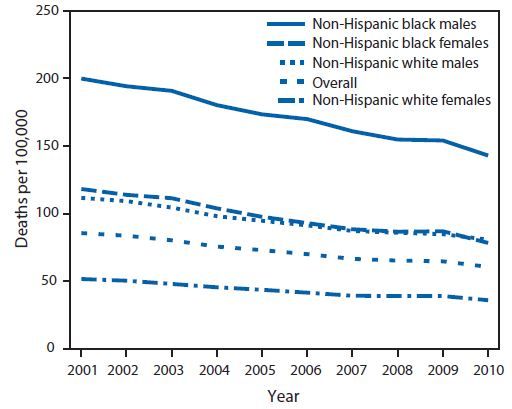
The total of "less-than-75" deaths in 2001 was 227,961. For 2010, it was lower at 200,070. Since the population in the U.S. has changed over the last decade, the totals for each of the two comparison years were then expressed as a "per 100,000" statistic.
Since 2001, the "less-than-75" death rate per 100,000 declined by 29%. The decline averaged 3.8% a year.* Persons age 65-74 years had an average decline of 5.1% vs. 3.3% persons between the ages of 55-64.
The good news is that Black (3.9%) and Hispanic (4.5%) persons had greater declines than whites (3.6%). The bad news is that they started and ended with a higher death rate.
Heres a visual display of the data:
The DMCBs take
1. "Avoidable?" The CDC definition implies that perfect control of all cardiac risk factors (for example, cholesterol and weight) for everyone under the age of 75 will result in a 0 per 100,000 cardiovascular death rate. Not so, because those risk classic factors capture some, but not all, persons who succumb to heart attack and stroke.
2. So, this is bad news? "200,000" deaths is an impressive number, but, on an unadjusted basis, thats about 28,000 fewer compared to 10 years ago. Some additional good news is that the U.S. rate of non-fatal heart attack and stroke appears to have dropped significantly also. We are making significant headway in the battle against heart disease.
3. The real story? Persons of color have had the greatest relative benefit but still have the greatest absolute need. That lingering health care disparity went shamefully unmentioned by CNN and was only briefly mentioned by USAToday.
4. Something for everyone: In their "Conclusions and Comments," the authors of the MMWR paper speculated on the benefits of the (still unproven) Million Hearts Initiative (a Berwick-era idea) as well as "health information technology" and various "community prevention strategies" The DMCBs colleagues in the care management service industry will really like the authors nods toward "team based care" and how "individuals can work toward reducing their own heart disease and stroke risk." If the CDC says so, it must be true - assuming theres a good business model.
5. Speaking of speculation, the authors wondered if the greater decline in the Medicare age group (65-74 years) versus the younger age group (55-64) was because of the presence of health insurance. Maybe, but maybe not. The DMCB also wonders if heart disease is more lethal and less amenable to intervention among younger persons, but cant find any literature to back that up.
6. Politics intrude: Naturally, the scientists who write MMWR are too classy than to curry favor with the appointees that populate the upper echelons of the federal bureaucracy, but that didnt stop the CDC Vital Signs from shamefully putting in a "making it easier for Americans to afford regular preventive health care through the Affordable Care Act" plug. The ACA was not mentioned in the MMWR report because the declines mentioned above occurred in the absence of the ACA.
The DMCB predicts that when the "avoidable" death rate continues to decline by 3.8% in the coming years, Obamacare advocates will take the credit.
*The DMCB isnt sure how 3.8% for 10 years makes for 29% either, but thats statistics for you.
Image from Wikipedia
A diet high in sugar and saturated fats increases the risk of premature death from any cause
Sunday, February 2, 2014
Chronic inflammation appears to play a key role in the development of cancer, along with heart disease and diabetes. Now a new study presented today suggests that eating a diet high in sugar, saturated fats and others foods that promote inflammation increases the risk of premature death from any cause, including cancers of the gastrointestinal tract.
The study was one of the approximately 130 poster presentations featured at the American Institute for Cancer Research (AICR) Annual Research Conference.
Study researchers used an inflammatory index of foods and nutrients developed by University of South Carolina (USC) researchers.
“Studies have shown that diet can modify inflammation, and inflammation can drive the growth of many cancers, such as colorectal cancer,” says Susan E. Steck, PhD, MPH, RD, USC Associate Professor and co-author of the study. “In previous studies, we found that dietary inflammatory index scores were associated with levels of C-reactive protein, a marker of inflammation.
This new study extends the research to examine disease outcomes, and suggests that consuming fewer pro-inflammatory dietary factors and more anti-inflammatory dietary factors may reduce risk of gastrointestinal tract cancer death.”
The study followed 10,525 men and women in the Aerobics Center Longitudinal Study from 1987 through 2003. Participants had completed three-day food records when the study began.
At the end of the study, 259 people had died; 30 from gastrointestinal tract cancers. Gastrointestinal tract cancers include cancers of the esophagus, stomach, colon and rectum.
Compared to those consuming the most anti-inflammatory diet, participants consuming the most pro-inflammatory diet had a 53 percent higher risk of mortality during the course of the study. (The risk slightly decreased after adjusting for cardiorespiratory fitness.)
For gastrointestinal tract cancers, there was a four-fold increase among the group consuming the most pro-inflammatory diet compared to the most anti-inflammatory.
Omega 3 Fats Help Lower Premature Death Risk by Eighty Percent
Thursday, January 30, 2014

Many people make the potentially fatal presumption that aging, chronic diseases and premature aging are natural events that come with advancing years. A plethora of current research studies confirm that nothing could be farther from the truth. In addition to super-nutrients such as resveratrol, curcumin and vitamin D optimization, researchers publishingin the American Journal of Clinical Nutrition and Clinical Cardiologyprovide documented evidencethat beneficial Omega-3 fatty acids from dietary sources and supplementation slash the overall risk of an early death.
The long-chain fats DHA and EPA elicit a profound effect on the heart and brain to ameliorate chronic diseases that bring an early demise to millions of unsuspecting individuals each year. Health-minded individuals today are used to hearing about the myriad of benefits associated with eating fish and supplementing with Omega-3 fats.
Omega-3 Fat Supplementation Slashes Risk of All-Cause Mortality in Half

A wealth of peer-reviewed studies provide solid evidence that the DHA and EPA fatty acids help to prevent heart disease and sudden death from a heart attack, lower depression incidence and reduce stroke and dementia risks as well. New research shows that optimal Omega-3 blood levels lower the risk of dying from all causes by 85% in high risk patients who had suffered a prior heart attack.
Intrigued by the result of this research, scientists wanted to understand if mortality was affected in individuals with no evident heart disease. A group of men aged 64 to 76 years were supplemented with Omega-3 fats (2.4 grams per day) for a period of 3 years. During that time, the participants showed a 47% reduction in risk of dying from any cause compared to a placebo group. Women experienced a 44% lower risk of death in a similar study.
Omega-3 Fats Lower Systemic Inflammation and Balance Omega-6 Ratios

Researchers from the American Heart Association journal Strokecommented on the ground-breaking conclusions of multiple Omega-3 studies, “Evidence from prospective secondary prevention studies suggests that EPA+DHA supplementation ranging from 0.5 to 1.8 g/d (either as fatty fish or supplements) significantly reduces subsequent cardiac and all-cause mortality.” Omega-3 enriched foods and supplements help to improve the critical balance with Omega-6 fats to lower systemic inflammation. This provides the primary risk-reduction mechanism associated with the long-chain fat.
In addition to fatty fish (salmon, snapper, scallops and shrimp), non-meat food sources of Omega-3’s include walnuts, flaxseeds, chia seeds, raw tofu and cooked soybeans. The body does not efficiently process EPA and DHA fats from vegetarian sources, though strong evidence exists that these food sources still provide exceptional health benefits. To be certain you achieve optimal Omega-3 blood saturation levels as erenced in these studies, nutrition experts recommend supplementing with 2.4 grams per day of combined EPA and DHA (read package labels to ensure proper dose). When supplementing, check that the fish oil (krill oil is also an excellent option) is molecularly distilled to avoid contamination.
Subscribe to:
Posts (Atom)


