Showing posts with label cooking. Show all posts
Showing posts with label cooking. Show all posts
Type of cooking oil and usefulness for health
Friday, April 18, 2014
Type of cooking oil and usefulness for health - With a wide range of existing oil, make you have the option of using oil. Oil has influence in health, as widely used as the main ingredient to cook. Here are different types of oils and their benefits reported by Times of India.
Peanut oil
This oil can be used in cooking such as frying or grilling. This oil is healthy because it can lower bad cholesterol. Peanut oil is also a source of vitamin E. This vitamin is known to act as anti-oxidants to protect the skin from acne or scars.
Canola oil
This oil is ideal for use at high temperatures such as sautéing, frying and grilling. Canola oil has a good content of Omega 3, 6 and 9 fatty acids which help in maintaining good cholesterol levels.
With just 7% saturated fat, canola cooking oil into one of the existing healthy. Coupled with a neutral taste and light texture, it is ideal to use for cooking because it does not overpower the taste or flavor ingredients.
Sunflower oil
This oil has polyunsaturated fat content is healthy. Because mild flavor, sunflower oil does not overpower the flavor of other ingredients. The presence of Omega-6 and vitamin E act as anti-oxidants, and lowering cholesterol.
Mustard oil
Distinctive flavor of this oil brings a unique flavor to the dish. The content of this oil is used as a stimulant to aid digestion and circulation. Because antibacterial properties, this oil can help protect the skin.
Olive oil
Monounsaturated fatty acids in olive oil such as Omega-3 provides anti-inflammatory properties. Vitamins, minerals and proteins that exist in this show that olive oil can be used for application on hair and skin care. Olive oil also helps in absorption of calcium along with lowering bad cholesterol.
Of oil on top, which you use most often?
Peanut oil
This oil can be used in cooking such as frying or grilling. This oil is healthy because it can lower bad cholesterol. Peanut oil is also a source of vitamin E. This vitamin is known to act as anti-oxidants to protect the skin from acne or scars.
Canola oil
This oil is ideal for use at high temperatures such as sautéing, frying and grilling. Canola oil has a good content of Omega 3, 6 and 9 fatty acids which help in maintaining good cholesterol levels.
With just 7% saturated fat, canola cooking oil into one of the existing healthy. Coupled with a neutral taste and light texture, it is ideal to use for cooking because it does not overpower the taste or flavor ingredients.
Sunflower oil
This oil has polyunsaturated fat content is healthy. Because mild flavor, sunflower oil does not overpower the flavor of other ingredients. The presence of Omega-6 and vitamin E act as anti-oxidants, and lowering cholesterol.
Mustard oil
Distinctive flavor of this oil brings a unique flavor to the dish. The content of this oil is used as a stimulant to aid digestion and circulation. Because antibacterial properties, this oil can help protect the skin.
Olive oil
Monounsaturated fatty acids in olive oil such as Omega-3 provides anti-inflammatory properties. Vitamins, minerals and proteins that exist in this show that olive oil can be used for application on hair and skin care. Olive oil also helps in absorption of calcium along with lowering bad cholesterol.
Of oil on top, which you use most often?


Veggie Might One for My Teetotalers How to Substitute Alcohol in Baking and Cooking
Monday, March 17, 2014
Written by the fabulous Leigh, Veggie Might is a weekly Thursday column about all things Vegetarian.
Gentle Readers, it’s St. Patrick’s day. In honor of the drinkingest holiday of the year, lets talk about booze. Sort of.
Here at CHG, we have a healthy appreciation for hootch, being responsible citizens and lovers of life. A glass of wine, a bottle of cold beer, orthe occasional Jager shot a well-crafted cocktail make an evening with friends or a holiday party that much more enjoyable/tolerable.
 The flavors of our favorite beverages are unmistakable, and we drink them for their good taste more than their soothing aftefects. Or so we tell Aunt Helen. Ingredients like wine and sherry and Grand Marnier are included in recipes for the same reason. Their flavors are unmatched and give our recipes that je ne se quois we seek.
Red and white wine, vermouth, sherry, beer, bourbon, brandy, and a flavored liqueurs like coffee (Kahula, Tia Maria), orange (Cointreau, Grand Marnier, Triple Sec), and anise/licorice (Ouzo, Pernoud) are commonly used in cooking and baking recipes. These are the staples to have on hand if you’re keeping a well-stocked culinary bar.
But while the we of CHG appreciates a nip with dinner and splash in the cream sauce, the me of CHG is a reluctant teetotaler. I’ve got this brain thing that doesn’t like it when I drink, and while a little bourbon in my pecan pie is probably okay, I just don’t keep the stuff around; it’s not worth the expense for the occasional recipe—or the risk of a trip to the emergency room.
“But Leigh,” you exclaim, “it’s not about the alcohol, it’s about the flavor! And all the alcohol evaporates during cooking!”
Yes: true and mostly true. Most people make tequila chicken for the enhanced flavor the liquor imparts, not to get one up on their friends at margarita night. And most, but not all alcohol is cooked away when booze is applied to recipes, though claims vary as to how much evaporates during cooking. According to Kevin Weeks at NPR.com, “depending on cooking method and time, you can reduce the alcohol by 60 percent by simmering for 15 minutes, or by as much as 90 percent after two hours of simmering.” But when cooking for children or people with health or addiction issues, even a little bit can be too much.
So what then? Weeks suggests choosing another recipe, and I agree if the liquor is the distinguishing feature of the dish, like Julia Child’s famous Boeuf Bourguignon—it’s meat soaked in red wine. Something tells me it would be an altogether different experience if you decided to let your boeuf braise in grape juice overnight.
 But if I passed up every fondue or stew that called for a splash of kirsch or a glug of beer, my repertoire would be quite limited—and I could toss away half of the recipes from France. So I improvise with what I have.
For example, broth or stock is an easy substitution for wine or beer in many savory dishes, like soups, sautés, and risottos. Fruit juices, like apple and grape, can replace wine in desserts. If you want a note of acid, add little vinegar. It won’t be the same, as I’m sure some would argue, but it will still be delicious.
In some cases you can just leave out the booze. Fondue will be just as good without kirsch, but keep an eye on it; the alcohol in the liqueur is there to lower the boiling point of the cheese.
In the last year I’ve made two outstanding dishes that were no worse for lack of wine. Both were from the fabulous Viva Vegan, which is still getting heavy play in my kitchen. Red Posole and Beans called for Mexican beer which I replaced in equal measure with vegetable stock, and the resulting stew was to die for.
For Quinoa-Millet Mushroom Risotto, I swapped the 1/2 cup of white wine, traditionally used in risottos, for 1/2 cup of apple juice + 1 tablespoon of apple cider vinegar. It remains one of the best things I’ve ever put in my mouth.
When baking, replace liqueurs with similarly flavored extracts and juices. Vanilla is the most commonly recommended stand in for bourbon; almond extract works great in place of amaretto; and brandy has its very own cooking extract. Orange, apple and grape, and pineapple juices fill the void left by orange liqueur, dry and sweet vermouth, and rum.
 Now, it must be said that extracts contain alcohol, which works as a solvent to break down the fruit or herb so that the maximum amount of flavor is obtained. Vanilla extract is 35% alcohol by volume, or 70 proof, not far off from vodka. But the minute amount used in baked goods, partnered with dilution and evaporation, will unlikely cause anyone to feel its effects.
According to Cook’s Thesaurus, 1 tablespoon of brandy extract replaces 5 tablespoons of the real deal, yet measure for measure, they have a similar alcohol content. Extract is a safe alternative unless you’re abstaining for religious reasons or are hypersensitive. Flavored oils, powders, and straight-up ingredients like vanilla beans, may be your best solution if you want to avoid alcohol altogether.
We all love charts, right? Well, here are some handy charts, fresh from the Internet machine, to guide your alcohol-free baking and cooking adventures:
~~~~
If these bubbles tickled your nose, you’ll lose your head over:
Gentle Readers, it’s St. Patrick’s day. In honor of the drinkingest holiday of the year, lets talk about booze. Sort of.
Here at CHG, we have a healthy appreciation for hootch, being responsible citizens and lovers of life. A glass of wine, a bottle of cold beer, or
The flavors of our favorite beverages are unmistakable, and we drink them for their good taste more than their soothing aftefects. Or so we tell Aunt Helen. Ingredients like wine and sherry and Grand Marnier are included in recipes for the same reason. Their flavors are unmatched and give our recipes that je ne se quois we seek.Red and white wine, vermouth, sherry, beer, bourbon, brandy, and a flavored liqueurs like coffee (Kahula, Tia Maria), orange (Cointreau, Grand Marnier, Triple Sec), and anise/licorice (Ouzo, Pernoud) are commonly used in cooking and baking recipes. These are the staples to have on hand if you’re keeping a well-stocked culinary bar.
But while the we of CHG appreciates a nip with dinner and splash in the cream sauce, the me of CHG is a reluctant teetotaler. I’ve got this brain thing that doesn’t like it when I drink, and while a little bourbon in my pecan pie is probably okay, I just don’t keep the stuff around; it’s not worth the expense for the occasional recipe—or the risk of a trip to the emergency room.
“But Leigh,” you exclaim, “it’s not about the alcohol, it’s about the flavor! And all the alcohol evaporates during cooking!”
Yes: true and mostly true. Most people make tequila chicken for the enhanced flavor the liquor imparts, not to get one up on their friends at margarita night. And most, but not all alcohol is cooked away when booze is applied to recipes, though claims vary as to how much evaporates during cooking. According to Kevin Weeks at NPR.com, “depending on cooking method and time, you can reduce the alcohol by 60 percent by simmering for 15 minutes, or by as much as 90 percent after two hours of simmering.” But when cooking for children or people with health or addiction issues, even a little bit can be too much.
So what then? Weeks suggests choosing another recipe, and I agree if the liquor is the distinguishing feature of the dish, like Julia Child’s famous Boeuf Bourguignon—it’s meat soaked in red wine. Something tells me it would be an altogether different experience if you decided to let your boeuf braise in grape juice overnight.
For example, broth or stock is an easy substitution for wine or beer in many savory dishes, like soups, sautés, and risottos. Fruit juices, like apple and grape, can replace wine in desserts. If you want a note of acid, add little vinegar. It won’t be the same, as I’m sure some would argue, but it will still be delicious.
In some cases you can just leave out the booze. Fondue will be just as good without kirsch, but keep an eye on it; the alcohol in the liqueur is there to lower the boiling point of the cheese.
In the last year I’ve made two outstanding dishes that were no worse for lack of wine. Both were from the fabulous Viva Vegan, which is still getting heavy play in my kitchen. Red Posole and Beans called for Mexican beer which I replaced in equal measure with vegetable stock, and the resulting stew was to die for.
For Quinoa-Millet Mushroom Risotto, I swapped the 1/2 cup of white wine, traditionally used in risottos, for 1/2 cup of apple juice + 1 tablespoon of apple cider vinegar. It remains one of the best things I’ve ever put in my mouth.
When baking, replace liqueurs with similarly flavored extracts and juices. Vanilla is the most commonly recommended stand in for bourbon; almond extract works great in place of amaretto; and brandy has its very own cooking extract. Orange, apple and grape, and pineapple juices fill the void left by orange liqueur, dry and sweet vermouth, and rum.
Now, it must be said that extracts contain alcohol, which works as a solvent to break down the fruit or herb so that the maximum amount of flavor is obtained. Vanilla extract is 35% alcohol by volume, or 70 proof, not far off from vodka. But the minute amount used in baked goods, partnered with dilution and evaporation, will unlikely cause anyone to feel its effects. According to Cook’s Thesaurus, 1 tablespoon of brandy extract replaces 5 tablespoons of the real deal, yet measure for measure, they have a similar alcohol content. Extract is a safe alternative unless you’re abstaining for religious reasons or are hypersensitive. Flavored oils, powders, and straight-up ingredients like vanilla beans, may be your best solution if you want to avoid alcohol altogether.
We all love charts, right? Well, here are some handy charts, fresh from the Internet machine, to guide your alcohol-free baking and cooking adventures:
- All Recipes: Common Ingredient Substitutions
- Uncle Phaedrus: Wine Substitute
- What’s Cooking America: Alcohol Substitutions
- Gourmet Sleuth: Alcohol Substitutes
- Recipe Tips: Alcohol Substitutions
~~~~
If these bubbles tickled your nose, you’ll lose your head over:
- Baking and Cooking for the Sensitive and Cleansing
- Converting Those Pesky Weights and Measures
- 10 Modern Food Myths, Busted
Announcing Cooking with Seeds Peanuts
Thursday, March 13, 2014
Am here again to host my own event Cooking with seeds, the host of this month was bit busy with her personal life and she couldnt able to guest host this months event. Obviously am hosting this months event, without any delay this months seed choice is Peanuts. You may think whether peanut is a seed or a legume,but peanut is a fruit,a seed and a legume at the same time.
Peanuts are well known as ground nuts, eventhough they have so many other names like earthnuts,monkey nuts,goober peas and pig nuts.Peanuts are not nut eventhough they looks like nuts but they are a legume.
Peanuts are rich in energy and have so many health benefits like nutrients,minerals,antioxidans,vitamins which are quite essential for our health. These nuts are excellent source of Vitamin E and minerals like manganese,copper,potassium,calcium,iron,selenium,magniesum and zinc.
If you are cooking anything with peanuts,dont forget to send me, so that many peoples around the world may learn to cook or bake with peanuts.
Peanuts either raw,cooked,roasted or as paste like peanut butter can be used.

Logo courtesy: Divya
Wat you need to do:
1)Cook, bake or create dishes with peanuts as anything(vegetarian, vegan or non-vegetarian are accepted)..
2)Many entries per person are allowed..
3)Link back ur entry to this announcement..
4)Ill accept the old entries, if they are linked with this page..
5)Using logo will be appreciated..
6)Once you are done with your peanut recipe, dont forget to link it back to the linky tool attached below.
Please take care to send all ur entries before 31st May 2013.
);Peanuts are well known as ground nuts, eventhough they have so many other names like earthnuts,monkey nuts,goober peas and pig nuts.Peanuts are not nut eventhough they looks like nuts but they are a legume.
Peanuts are rich in energy and have so many health benefits like nutrients,minerals,antioxidans,vitamins which are quite essential for our health. These nuts are excellent source of Vitamin E and minerals like manganese,copper,potassium,calcium,iron,selenium,magniesum and zinc.
If you are cooking anything with peanuts,dont forget to send me, so that many peoples around the world may learn to cook or bake with peanuts.
Peanuts either raw,cooked,roasted or as paste like peanut butter can be used.
Logo courtesy: Divya
Wat you need to do:
1)Cook, bake or create dishes with peanuts as anything(vegetarian, vegan or non-vegetarian are accepted)..
2)Many entries per person are allowed..
3)Link back ur entry to this announcement..
4)Ill accept the old entries, if they are linked with this page..
5)Using logo will be appreciated..
6)Once you are done with your peanut recipe, dont forget to link it back to the linky tool attached below.
Please take care to send all ur entries before 31st May 2013.
10 Cheap Shortcuts to Making Cooking Oh So Much Easier
Monday, February 17, 2014
When it comes to cooking, theres no doubt about it: time is the chief obstacle to getting started. If you’re pressed for it, whipping up a three-course meal can seem as overwhelming as running a marathon in a bunny suit.
That’s why it pays to know some tricks. Some cheap tricks. Specifically, ten cheap tricks. (Note: not including this Cheap Trick, though they are also quite enjoyable.)
 Some might find the following time-savers, like, “Oh, duh. I was born knowing this information. Get a job!” Others may be all like, “Oh, duh. I never thought of this. This is the most informative literature I’ve ever read, and that includes the ‘You’re a Woman Now’ pamphlet I got from my gym teachers in sixth grade.” Either way, they’re my story, and I’m sticking to em.
Readers, what did I miss? What are your easy shortcuts? Add ‘em in the comment section.
1) Wash fruit and veggies as soon as you get home from the supermarket.
It takes ten minutes and you can pick freely from your stash for the rest of the week. Don’t forget to dry the food completely, and include a paper towel in your storage vessel, perably lining the insides. This should extend the life of your produce by a few days, at least. And hey - if you want to chop, slice, or dice to prep for future dinners at the same time, more power to you.
2) Read the recipe (at least twice) beforehand.
Who here has been gotten all psyched up to make a delicious dinner at 6pm, only to find Step #4 takes two hours? (*raises hand*) Or that you’ve forgotten the tomatoes? (*raises both hands*) Or that you have no idea how to braise? (*raises both hands and foot*) Scanning the instructions can save you infinite failed meals, plus a few bucks on last-minute emergency purchases.
 3) Set out all your ingredients before you begin to cook.
Not only does it make reaching for stuff much simpler, but it ensures you have all the ingredients on hand. If you want to measure and chop as well, go crazy. Chefs and Frenchy types call this “mise en place,” and it streamlines the whole cooking process. Pretty prep bowls (a la Alton Brown) can make it look professional, too.
4) Take care of long-cooking items (rice, roasted veggies) first.
When I first began cooking, one of my biggest problems was timing every dish so they finished together. The chicken was ready 15 minutes before the broccoli, and the rice wouldn’t be good to go for another half-hour. Nowadays, I take a minute or two to think of cooking intervals: What will take the longest? What can be prepared relatively quickly? Then, I get going on the food that requires the many-est roasting/braising/steaming minutes. Dinner doesn’t always time out perfectly, but at least we’re not eating in installments anymore.
5) Learn how to chop an onion.
Onions are the basis for … every dish, ever. In history. Seriously. I can’t think of an ingredient I use more frequently. And in the olden days, dicing one would cost me ten minutes and two Kleenex. Mincing one? Fuggedaboudit. Now that I know the correct technique, it takes less than 60 seconds. I’m much happier. So are my sinuses.
6) Do dishes as you go along.
Let’s face it: if recipes listed “Dish Washing Time” along with “Cooking Time” and “Prep Time,” they would practically double in duration. (30-Minute Meals – ha!) And for those of us without dishwashers, scrubbing plates, pots, and forks can take all the fun out of cooking. However: if you clean as you go along, you’ll reduce back-end soaping tremendously. (Maybe entirely, even.) And then your night can be your own again. (For Lost, presumably. Did you SEE last night? Husband-Elect has been in the fetal position ever since.)
7) Fear not the eyeball.
We’re using the Rachael Ray-approved definition of “eyeball” here, meaning: approximating ingredient measurements based on what they look like in your hand, rather than precise recipe quantities. As you cook more frequently, you’ll get a feeling for how much chili powder or olive you need. Even better, you’ll be better able to customize to your tastes. Of course, if you’d rather go by specifics…
 8) Memorize measurements.
How many teaspoons are in a 1/4 cup? (Twelve.) How many cups are in a quart? (Four.) When a recipe calls for 2/3rd cup of flour, but you’re only making half a batch, how many tablespoons do you need? (A little less than six.) Knowing simple measurements by heart will make the scaling process go much faster. If this seems like too much to commit to memory…
9) Keep a calculator in the kitchen.
It could come in useful for a bunch o’ other things, anyway: estimating grocery bills, projecting portions, showing your roommates how much they owe you in back rent, etc.
10) Have a super-basic erence cookbook at the ready.
Whether it’s Betty Crocker or Better Homes and Gardens, owning a How To tome is invaluable. A good one will give you technique tutorials, cooking times and temperatures, measurements, substitutes, and plenty of pictures. And when you’re stuck, a quick flip-through will solve just about any problem.
BONUS
Get a garbage bowl.
Rachael Ray was right on this one, too; during your prep period, keep a large bowl at your side for scraps and garbage. It cuts down hugely on trips to the trash bin, plus a lot of leaning over. Great for people with bad backs and/or finite patience.
And that’s a wrap. Readers, the comment section awaits. Let’s compile the world’s greatest shortcut thread.
~~~
If you like this post, these might also delight you:
That’s why it pays to know some tricks. Some cheap tricks. Specifically, ten cheap tricks. (Note: not including this Cheap Trick, though they are also quite enjoyable.)
Some might find the following time-savers, like, “Oh, duh. I was born knowing this information. Get a job!” Others may be all like, “Oh, duh. I never thought of this. This is the most informative literature I’ve ever read, and that includes the ‘You’re a Woman Now’ pamphlet I got from my gym teachers in sixth grade.” Either way, they’re my story, and I’m sticking to em.Readers, what did I miss? What are your easy shortcuts? Add ‘em in the comment section.
1) Wash fruit and veggies as soon as you get home from the supermarket.
It takes ten minutes and you can pick freely from your stash for the rest of the week. Don’t forget to dry the food completely, and include a paper towel in your storage vessel, perably lining the insides. This should extend the life of your produce by a few days, at least. And hey - if you want to chop, slice, or dice to prep for future dinners at the same time, more power to you.
2) Read the recipe (at least twice) beforehand.
Who here has been gotten all psyched up to make a delicious dinner at 6pm, only to find Step #4 takes two hours? (*raises hand*) Or that you’ve forgotten the tomatoes? (*raises both hands*) Or that you have no idea how to braise? (*raises both hands and foot*) Scanning the instructions can save you infinite failed meals, plus a few bucks on last-minute emergency purchases.
3) Set out all your ingredients before you begin to cook.Not only does it make reaching for stuff much simpler, but it ensures you have all the ingredients on hand. If you want to measure and chop as well, go crazy. Chefs and Frenchy types call this “mise en place,” and it streamlines the whole cooking process. Pretty prep bowls (a la Alton Brown) can make it look professional, too.
4) Take care of long-cooking items (rice, roasted veggies) first.
When I first began cooking, one of my biggest problems was timing every dish so they finished together. The chicken was ready 15 minutes before the broccoli, and the rice wouldn’t be good to go for another half-hour. Nowadays, I take a minute or two to think of cooking intervals: What will take the longest? What can be prepared relatively quickly? Then, I get going on the food that requires the many-est roasting/braising/steaming minutes. Dinner doesn’t always time out perfectly, but at least we’re not eating in installments anymore.
5) Learn how to chop an onion.
Onions are the basis for … every dish, ever. In history. Seriously. I can’t think of an ingredient I use more frequently. And in the olden days, dicing one would cost me ten minutes and two Kleenex. Mincing one? Fuggedaboudit. Now that I know the correct technique, it takes less than 60 seconds. I’m much happier. So are my sinuses.
6) Do dishes as you go along.
Let’s face it: if recipes listed “Dish Washing Time” along with “Cooking Time” and “Prep Time,” they would practically double in duration. (30-Minute Meals – ha!) And for those of us without dishwashers, scrubbing plates, pots, and forks can take all the fun out of cooking. However: if you clean as you go along, you’ll reduce back-end soaping tremendously. (Maybe entirely, even.) And then your night can be your own again. (For Lost, presumably. Did you SEE last night? Husband-Elect has been in the fetal position ever since.)
7) Fear not the eyeball.
We’re using the Rachael Ray-approved definition of “eyeball” here, meaning: approximating ingredient measurements based on what they look like in your hand, rather than precise recipe quantities. As you cook more frequently, you’ll get a feeling for how much chili powder or olive you need. Even better, you’ll be better able to customize to your tastes. Of course, if you’d rather go by specifics…
8) Memorize measurements.How many teaspoons are in a 1/4 cup? (Twelve.) How many cups are in a quart? (Four.) When a recipe calls for 2/3rd cup of flour, but you’re only making half a batch, how many tablespoons do you need? (A little less than six.) Knowing simple measurements by heart will make the scaling process go much faster. If this seems like too much to commit to memory…
9) Keep a calculator in the kitchen.
It could come in useful for a bunch o’ other things, anyway: estimating grocery bills, projecting portions, showing your roommates how much they owe you in back rent, etc.
10) Have a super-basic erence cookbook at the ready.
Whether it’s Betty Crocker or Better Homes and Gardens, owning a How To tome is invaluable. A good one will give you technique tutorials, cooking times and temperatures, measurements, substitutes, and plenty of pictures. And when you’re stuck, a quick flip-through will solve just about any problem.
BONUS
Get a garbage bowl.
Rachael Ray was right on this one, too; during your prep period, keep a large bowl at your side for scraps and garbage. It cuts down hugely on trips to the trash bin, plus a lot of leaning over. Great for people with bad backs and/or finite patience.
And that’s a wrap. Readers, the comment section awaits. Let’s compile the world’s greatest shortcut thread.
~~~
If you like this post, these might also delight you:
- Cheap Healthy Master Recipes: Eight Versatile Dishes Entirely Adaptable to Your Tastes
- Frugal Food Hacks: 10 Tricks to Simplifying Online Recipe Searches
- Overcoming Your Cooking Obstacles
Cooking for Small Children 15 Hows Whens and … Honey Please Put That Cleaver Down
Monday, February 10, 2014
Yesterday, I asked parents* how they managed to cook with small children around the house. See, I babysat my two young (adorable, crystal-eyed) cousins last week, and couldn’t figure out where you might fit any slicing, sautéing, or saucing into the schedule. How did they not starve? How did their mom maintain her sanity? Is it okay to sit them in front of Snow White while you chop a cucumber?
Sweet readers, you came through like gangbusters.
As of this morning, we had 41 voluminous, information-packed comments from a plethora of parenting experts (a.k.a. parents). I included as many as I could in this post, editing only for length. The funny thing is, I’d give this advice to anyone, old or young, childless or childful, who is attempting to eat more wholesomely and frugally.
So, here they are: 15 strategies for feeding your small children without resorting to GoGurt or checking yourself into an asylum. As always, the comment section is open if you’d like to add anything.
1) Follow the Annie Jones Rule.
Many readers agreed with our first commenter, Annie Jones, whose advice could be summed up in a single sentence: “Basically, you just do it.”
2) Don’t worry about entertaining.
Babysitting and parenting are very different, in that moms and dads don’t have to supervise their children every second.
3) Keep ‘em where you can see ‘em.
Of course, if your children are younger and/or prone to hitting their heads on pointy things (*cough cough*), it helps to have them in your view.
4) Immobilize them.
By this, I mean “put them in a high chair,” not “shoot them with tranquilizer darts."
5) Cook when you can – especially naptime.
Ahh … those blessed two hours when children are totally unconscious. You can breathe, go to the bathroom, and maybe even chop a vegetable.
6) Get the timing down.
Every family lives by its own schedule, but setting a routine when a spouse is around and the kids are sedate (Note: not sedated) will help everyone in the long run.
7) Get the kids involved.
It ain’t no urban legend: When children pitch in with their own food prep, they’ll be more invested in their eating. Plus, it’s a good babysitting trick.
8) Enlist your spouse or a helper.
Four hands are better than two. Unless they’re all coming out of the same person. Then it gets kind of weird.
9) K.I.S.S.
If brevity is the soul of wit, than easy meals are the souls of parental sanity. Keeping things simple and quick will make everyone a little grinnier.
10) Don’t cook separate meals for them.
As a non-parent, this one surprised me the most, but in a good way. Bring on the osso bucco, junior.
11) Embrace the slow cooker.
All the flavor of braising with only a fraction of the mess. Plus, you can walk away from it for eight hours.
12) Explore big batch and weekend cooking.
Have a few hours to yourself? Start making some kid meals. It’s like meditation, but with meatballs.
13) Menu plan.
It works for everybody, whether you’re a single Brooklyn blogger or a ma of eight.
14) If all else fails, turn to Nickelodeon.
This does not make you a bad person. If anything, it makes you a really good person who wants to feed your kids right.
15) Don’t panic. It gets easier. I think. Maybe not.
I’ll let the commenters take it from here.
ADDITIONAL REFERENCES
Again: Best. Readers. Ever.
*Uh, actually, when I initially wrote the question, I addressed it to “moms” instead of “parents.” I try to keep it gender neutral here, because men and women should be equally invested in child raising and home affairs. That was just a huge oversight, and I apologize.
~~~
If you like this piece, you might also enjoy:
Sweet readers, you came through like gangbusters.
As of this morning, we had 41 voluminous, information-packed comments from a plethora of parenting experts (a.k.a. parents). I included as many as I could in this post, editing only for length. The funny thing is, I’d give this advice to anyone, old or young, childless or childful, who is attempting to eat more wholesomely and frugally.
So, here they are: 15 strategies for feeding your small children without resorting to GoGurt or checking yourself into an asylum. As always, the comment section is open if you’d like to add anything.
1) Follow the Annie Jones Rule.
Many readers agreed with our first commenter, Annie Jones, whose advice could be summed up in a single sentence: “Basically, you just do it.”
- Hillary: What Annie Jones said…
- Shris: Yeah, what Annie Jones said.
- Gabrielle: I agree with Annies comment. You just do it, and you make it a priority.
- TJ: I agree with the ‘just do it’. The first battle starts in your head, so don’t defeat yourself before starting!
- Heather: Ditto to Annie Jones.
- Kristen@TheFrugalGirl: I have 4 kids and I ditto Annie.
- Todd: The "just do it" answers speak to the reality of parenting. … There are nights where we eat cereal for dinner (which is also fun), but for the most part, you find ways to integrate your family into "life"; its no fun keeping them separate.
2) Don’t worry about entertaining.
Babysitting and parenting are very different, in that moms and dads don’t have to supervise their children every second.
- Amiyrah: I think when you are a babysitter compared to a parent, you think you just have to make it all work for the kid and move as fast as possible. When you are a parent, that aint the case.
- Kate Krebs: Its not your job as a parent to entertain your kids 24/7. Your job is to raise healthy, capable adults. That means providing good meals for your kids, and teaching them to entertain themselves quietly while you cook.
- Amy: When theyre in their own space, they can play unsupervised with a toy for a while from an astonishingly young age. Kids dont spontaneously combust when not directly observed, most of the time. :)
3) Keep ‘em where you can see ‘em.
Of course, if your children are younger and/or prone to hitting their heads on pointy things (*cough cough*), it helps to have them in your view.
- Rapha: I set up a play area in the kitchen - my daughter plays with her tool bench and the lazy susan is full of her cups/bowls as well as her kitchen toys.
- Lacey: We have a chalk board in the kitchen, which helps.
- Jennifer: The little baby usually sits in a bouncer in the kitchen (& at this point is usually sleeping). Also crayons at the table generally keep my older daughter occupied for a while.
4) Immobilize them.
By this, I mean “put them in a high chair,” not “shoot them with tranquilizer darts."
- Anonymous: The high chair - she can come in the kitchen, sit in her chair and "chop" ingredients, and be out of harms way.
- Hillary: My babies played on mats nearby when they were tiny and then in the kitchen "cooking," and now, sometimes my toddler watches or cooks with me on a chair strategically placed away from knives and the stove.
- Shris: As they get interested, you perch them on a stepstool/highchair in a safe spot so they can watch. Give them a little bite or pinch or taste of whatever youre adding to the dish to keep their interest.
5) Cook when you can – especially naptime.
Ahh … those blessed two hours when children are totally unconscious. You can breathe, go to the bathroom, and maybe even chop a vegetable.
- Kate E.: Nap time (or a quiet time when the child gets older) is essential for getting things done.
- Jen: Nap time is mostly dedicated to prepping dinner. Or making sauces to freeze, etc.
- Amybee: One thing that works for me is to cook after my kid is in bed for the evening. … Ill make the next nights supper, then all we have to do when we get home from work and school is pull it out and pop it in the microwave.
6) Get the timing down.
Every family lives by its own schedule, but setting a routine when a spouse is around and the kids are sedate (Note: not sedated) will help everyone in the long run.
- Erinlaughs: I think the most important thing is knowing what you can accomplish. We get home at 5:00 and need to be eating by 5:30 or so.
- Gabrielle: I aim for dinner on the table between 5:30 and 6, when my husband comes home. This insures that well be finished with dinner by 6:30, the kitchen will be cleaned by 7 (or earlier), and my child can be in bed between 7:30 and 8. But were flexible when we want to be.
- Hannah @CookingManager: Use a timer, not only to remind you when food is done, but for the next step. (and reset the timer if the food isnt done yet!)
7) Get the kids involved.
It ain’t no urban legend: When children pitch in with their own food prep, they’ll be more invested in their eating. Plus, it’s a good babysitting trick.
- Julie: Get them involved in safe but meaningful ways during meal prep. It is worth the extra time it WILL take to do it.
- Debbie: My 4yo does pretty well with a butter knife and a pile of mushrooms.
- Lindsey: The older one likes to hold the recipe card and pour out what I measure. I can also have him fetch ingredients from the pantry and lower shelves of the fridge.
- Todd: My 9-, 7-, and 5-year-olds all love to help in the kitchen. One will pour bread crumbs while another cracks an egg into the ground beef that the third is mixing with her hands (and they LOVE getting in there with their hands).
8) Enlist your spouse or a helper.
Four hands are better than two. Unless they’re all coming out of the same person. Then it gets kind of weird.
- Marcia: At 18 months...yeah, I wasnt doing much cooking. I waited until spouse got home to start it.
- Shris: If you have a housemate/partner/spouse/other, enlist them in kid-watching while you cook. … [Or] make *them* cook.
- Rachel: What works for me is serving the kids early - around 5:30 or so - and cooking our dinner after and eating later. That way my husband is home and he can hold the baby while I focus on the food.
9) K.I.S.S.
If brevity is the soul of wit, than easy meals are the souls of parental sanity. Keeping things simple and quick will make everyone a little grinnier.
- Milehimama: I have 8 children, age 1-12 … I dont prepare dishes that require constant, lengthy supervision. So Ill make rice - but not risotto. Its not difficult to find 5 minutes to measure water and grains and put it on for a boil, but standing at the stove for a long period of time just isnt going to happen.
- Debbie: Develop an arsenal of super-quick recipes. Bonus points if theyre pantry based.
- Jen: I do a lot with roasting vegetables, things I can start on the stove quickly and let simmer.
- Anonymous: Frozen spinach cubes (cooked spinach and cream cheese blended to puree) and sweet potato cubes, perfect for adding to sauces, in pizza or pasta, quesadillas, etc. for a little added boost of nutrition and no added cooking time/effort.
- Anonymous #2: Breakfasts are the hardest. Everyone is hungry RIGHT NOW and even cooking an egg takes too long. We keep it simple and marginally healthy - yogurt, cereal, toast, etc.
- Amy: Lunch is a sandwich and chips and fruit, or mac and cheese, or soup and grilled cheese.
- Katie Krebs: We keep alot of fruit on hand. It makes a good, healthy snack and doesnt require cooking.
- Lyn: I make a Kiddie Sampler Platter, which takes 5 minutes. Basically, little bits of things I know she will like on one plate and mostly finger food: rolled up slices of deli turkey or ham, pieces of fruit, a little bunch of grapes, applesauce, grape-size tomatoes, baby carrots, slices of bell pepper, avocado, cheese, a mini bagel with cream cheese, crackers, etc.
10) Don’t cook separate meals for them.
As a non-parent, this one surprised me the most, but in a good way. Bring on the osso bucco, junior.
- Gabrielle: I use to serve one dinner to my toddler and another dinner for my husband and I. I dont purchase fish sticks, chicken nuggets, and french fries because these become the fallbacks of many families with picky children.
- Ashley: Im a registered dietitian who works with families on limited incomes … Definitely only make one meal, not two separate meals for kids and adults. Offering kids "adult" foods over and over is helpful for dealing with picky eating behaviors.
- Rapha: If we were eating something like sweet potato curry, she would eat the sweet potato pureed. Now at age 3 she always eats what we eat - and shes an amazing eater as a result because she knows if she doesnt eat dinner she doesnt get anything else.
- Jen Blacker: I have a 19 month old … When we go out to dinner, if the place has crappy food to choose from on the kids menu, I just order off of the adult for him ... He eats what he can, then the rest is for leftovers.
11) Embrace the slow cooker.
All the flavor of braising with only a fraction of the mess. Plus, you can walk away from it for eight hours.
- Kathleen Bakka: I make my homemade spaghetti sauce and meatballs in the evening after he goes to bed so that I can just turn the crock pot on in the morning for a fantastic homemade dinner meal.
- DRosa: Good easy slow cooker recipe - slice up some chicken strips, pour in a can of coconut milk and a little thai red curry, let cook all day, serve over rice with steamed spinich. Get a rice cooker with a timer and you are golden.
12) Explore big batch and weekend cooking.
Have a few hours to yourself? Start making some kid meals. It’s like meditation, but with meatballs.
- Anonymous: I do the time consuming meals on the weekends when Im not working. And I make enough so we can eat it one night during the week.
- Anonymous #2: Sunday afternoons are a nice quiet time for me to help do some prep work.
- Anonymous #3: I can slow cooker a pork shoulder with some salsa and we have several nights of burritos, nachos, tacos, etc.
- Anonymous #4: [We] plan to have leftovers revamped from our weekend cooking … We may roast a chicken on Sunday and then plan to have chicken quesidillas one night (super quick to throw together) and chicken soup another (stock made over the weekend after roasting).
- Heather: I would do an entire box of whole wheat pasta tossed with olive oil and store it in the fridge. I could scope out as much as I needed for a meal and add goodies like chopped veggies, cheese, etc.
- Myrnie: We make a batch of goodies every week- cookies, brownies, muffins, etc. for snacks and when theyre gone, theyre gone.
- Sarah May: I often use church potlucks or family gatherings as an excuse to prepare something new or special. This lets me satisfy my fancy-cooking urges without stressing about it every day!
13) Menu plan.
It works for everybody, whether you’re a single Brooklyn blogger or a ma of eight.
- Jen Blacker: I plan what my family eats on a menu and stick to it. It saves us money and I create the menu with the sales going on at the grocery store. Its not difficult at all to feed your kids the right way.
- Erinlaughs: Menu plan! I cant stress that enough. It saves me every night.
- Kristen@TheFrugalGirl: Menu planning seriously saves my sanity.
- RaeBerry: Menu planning is the only way to survive.
14) If all else fails, turn to Nickelodeon.
This does not make you a bad person. If anything, it makes you a really good person who wants to feed your kids right.
- Marcia: At age 3 ... I used Dora the Explorer. I admit it. 1/2 hour is all I needed to get things going.
- Shris: Turn on their favorite video or TV show or whatever, and let them zombie-fy for a half hour while you get the dinner done. This is, of course, the least favorite option, but it works really well.
- Craftevangelist: All these other moms are super heroes. My TV goes on to a kids station at 4:00 if I need to focus on making dinner. Often, Im still interrupted and the kids love to "help" (usually in an effort to get a snack of what were preparing).
15) Don’t panic. It gets easier. I think. Maybe not.
I’ll let the commenters take it from here.
- Kathleen Bakka: I remember feeling very overwhelmed when he was first born and my husband feeling slightly jilted when it came to meals- but you get used to it and you begin to streamline your prep and meals.
- Amy: Seriously - kids start off small and immobile and sleepy, and they very g-r-a-d-u-a-l-l-y get mobile and require higher levels of attention. Its not like theyre born needing help with their homework. You come to that over a period of time, and there are lots of stages in between.
- DRosa: It isnt like it gets better. Monday night tennis, Tuesday baseball, Wednesday tennis, Thursday baseball, Friday the inevitable sleepover. By the time we pull in from work, we often have 45 minutes to eat and be out the door. And we only have two.
ADDITIONAL REFERENCES
- Heather: The book Child of Mine, Feeding with Love and Goodsense changed my life. I am so glad I found it when my son was an infant.
- Lindsey: For little little ones, realbabyfood.info is a good resource.
- Gabrielle: I used a cookbook that a friend gave me, called Cooking for Baby, a Williams Sonoma publication. I also erred to Wholesomebabyfood.com for ideas and recipes (and a great chart with age appropriate foods).
- Also, look for Debbie’s cookbook, due next year from Harper Collins. Her blog, Words to Eat By, is one of my dang favorites.
Again: Best. Readers. Ever.
*Uh, actually, when I initially wrote the question, I addressed it to “moms” instead of “parents.” I try to keep it gender neutral here, because men and women should be equally invested in child raising and home affairs. That was just a huge oversight, and I apologize.
~~~
If you like this piece, you might also enjoy:
- The Hour: How 60 Minutes a Week Can Save Hundreds of Dollars on Food
- Need a Weekly Meal Planner, a Grocery List, or Price Books? We Have 36 of ‘em.
- Understanding the Childhood Obesity Epidemic, Part 1: Causes and Effects
Cooking With Gram Post Workout Superfood Smoothie
Check out our new Cooking With Gram video, the Post-Workout Superfood Smoothie! Its a great way to kick start your recovery after a tough workout!
Subscribe on YouTube, dont miss a video!
Ingredients:
1 cup chopped kale
1 cup frozen blueberries
1 banana
1/2 avocado
1 tbsp maple syrup
2 scoops Standard Process Whey Pro (15 g protein)
Dash of salt
Nutrition Facts:
Calories: 418
Fat: 11 g
Carbs: 63 g
Fiber: 14 g
Sodium: 204 mg
Protein: 20 g
Subscribe on YouTube, dont miss a video!
Ingredients:
1 cup chopped kale
1 cup frozen blueberries
1 banana
1/2 avocado
1 tbsp maple syrup
2 scoops Standard Process Whey Pro (15 g protein)
Dash of salt
Nutrition Facts:
Calories: 418
Fat: 11 g
Carbs: 63 g
Fiber: 14 g
Sodium: 204 mg
Protein: 20 g
Guest Post Musings of a Healthy Cooking Teacher
Saturday, February 8, 2014

Stacey is a Registered Dietitian at a large Midwestern university. She teaches healthy cooking classes and is a working mom of four kids ages 10 and under.
Why did I start teaching healthy cooking classes? Simply put, there are too many people who don’t know how to read a recipe or use common kitchen appliances. (Microwaves don’t count.)
It’s becoming generational. I found that when I did demonstrational classes, people loved tasting the food, but never actually thought about making it at home. I call it the “Food Network Halo Effect,” in which viewers watch the network, but never end up cooking anything on screen. However, once they landed in a kitchen, participating in the process made them less afraid to make mistakes, and those small victories gave them confidence to start trying things on their own. As I tell my classes, “It’s only food, not rocket science.”
I had one college freshman approach me during a class, embarrassed he didn’t quite understand recipes. The five minutes we spent learning have unlocked a world of healthier eating and for him, not to mention several ways to save money.
Time and time again, when folks get together and cook, really cool things happen: community development, team building, the melding of cultures and camaraderie. Often they walk in with uncertainties, but walk out laughing, encouraging each other to try recipes. Either way, as an educator, I see behavioral changes happen faster than if they participated in any lecture or demo.
I personally believe food is meant to be enjoyed. It’s a part of our culture, our traditions, our memories. But I also realize that for health’s sake, we need balance, so we can simultaneously enjoy food and nourish our bodies. This is important whether you’re trying to maintain your weight, prevent medical issues, or if you are smack dab in the middle of a health crisis. I try to teach the concept of balance to my own children, as well. If they enjoy a double cheeseburger at lunch, you better believe they’re going to have more health-filled options for supper.
Enough of the sermon, and let’s get to a recipe! Here’s one of my favorites from the Frugal Healthy Foods class I teach. The secret ingredient is surprising and gets folks talking every time. Try it, and I betchyoo like it, too. Better yet, tinker around with the ingredients (I give some options below) and make it your own.
~~~
If you like this article, you might also enjoy:
- American Chop Suey
- Food, Finance, and Judging Others
- Free Cooking Lessons. No, Seriously.
Sloppy Jacks
Serves 4-6
NOTE: Creative commons photo is from Flickrs Word Ridden, and gives a pretty good idea of what the end product will look like.
1 pound ground turkey (or equivalent Soy Crumbles)
1 small onion, chopped
1/2 cup ketchup
1/4 cup water
1 teaspoon chili powder
1 15-ounce can plain pumpkin (not pie filling)
1 teaspoon apple cider vinegar
Pinch black pepper
Whole wheat buns
In a large nonstick skillet, cook meat and onion over medium heat until meat is no longer pink. Drain and return to pan. Add ketchup, water, chili powder, pepper and vinegar and mix well. Stir in pumpkin, cover, reduce heat to low, and simmer 10 minutes.
Options: Add brown sugar if you like it sweeter, hot sauce if you like it spicier, and chopped green pepper if you want a one-pot meal; you can also serve over baked potatoes.
NOTE: The pumpkin is a power-packed nutrition addition to this recipe as well. It is super high in vitamin A!
Approximate Calories, Fat, Fiber, Protein, and Price Per Serving
NOTE: Calculations do NOT include buns, since they numbers can vary wildly depending on brand.
Four servings: 236 calories, 8.5 g fat, 3.6 g fiber, 23.4 g protein, $1.24
Six servings: 157 calories, 5.6 g fat, 2.4 g fiber, 15.6 g protein, $0.82
Calculations
1 pound (93/7) ground turkey: 640 calories, 32 g fat, 0 g fiber, 88 g protein, $2.80
1 small onion, chopped: 29 calories, 0.1 g fat, 1 g fiber, 0.6 g protein, $0.15
1/2 cup ketchup: 120 calories, 0 g fat, 0 g fiber, 0 g protein,
1/4 cup water: negligible calories, fat, fiber, and protein, $0.00
1 teaspoon chili powder: 9 calories, 0.4 g fat, 0.9 g fiber, 0.3 g protein, $0.05
1 15-ounce can plain pumpkin (not pie filling): 145 calories, 1.3 g fat, 12.3 g fiber, 4.7 g protein,
1 teaspoon apple cider vinegar: negligible calories, fat, fiber, and protein, $0.02
Pinch black pepper: negligible calories, fat, fiber, and protein, $0.01
TOTALS: 943 calories, 33.8 g fat, 14.2 g fiber, 93.6 g protein, $4.94
PER SERVING (TOTAL/4): 236 calories, 8.5 g fat, 3.6 g fiber, 23.4 g protein, $1.24
PER SERVING (TOTAL/6): 157 calories, 5.6 g fat, 2.4 g fiber, 15.6 g protein, $0.82
_http://cheaphealthygood.blogspot.com/2011/01/guest-post-musings-of-healthy-cooking.html
Veggie Might Cooking for Survival Eaters
Wednesday, February 5, 2014
Written by the fabulous Leigh, Veggie Might is a weekly Thursday column about all things Vegetarian.
Survival eaters are the opposite of foodies. They eat because, as humans, our bodies require calories to function. When they are not hungry, food doesnt enter a survival eaters mind.
Ive known a few survival eaters in my time, folks who can subsist on bits of fruit and bread and dont get excited about steaming plate of enchiladas or a decadent apple pie a la mode. My friend C will eat five M&Ms, fold the packet-top down, and put the rest away for later. It could take her days to eat a single-serving size.
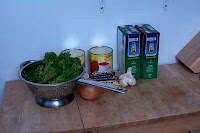 Its not that survival eaters dont like food; they just dont think about food before they need it. By then its too late to go to the store and, perhaps obviously, nothing has been prepared in advance. The solution is eating out, convenience food, or repeat appearances of PB&J or cereal for dinner. Theres nothing wrong with any of those things on occasion, but these can get expensive and unhealthy over time.
Perhaps its telling that most of the survival eaters I know work in the food service industry and get fed by their jobs. However, my charming boyfriend, CB, is a survival eater and not a waiter. He recently asked me to give him the basics of grocery shopping and cooking. He wants to be able to make healthy and delicious meals without too much advanced preparation, but hes willing to put in some effort.
I think the results of our first few lessons apply to survival eaters and anyone who is planning-challenged. Its easier to plan meals when youre constantly thinking about food, like I am. But what if you only think about food when your stomach tells your brain youre hungry?
The secret is keeping a well-stocked kitchen. Buy these items any time you see them on sale to save money as well as time.
1. Stockpile staple items.
Grains, pasta, and beans are a survival eaters friend. Canned beans are okay if you are time-crunched and really cant get a handle on dried beans. Dried beans will save you money, and if you have a crock pot, can cook while you sleep. Grains like rice, quinoa, and bulgar, cook up quickly and add fiber, protein, and heft to veggie-laden meals. Pasta, especially whole-grain varieties, fill the same void, in your diet and your belly.
Other pantry items that will make your life easier include vegetable oils like canola, safflower, and extra virgin olive oil; kosher salt or sea salt; black pepper; red wine vinegar or apple cider vinegar; and low-sodium vegetable bullion cubes.
2. Fill up on frozen vegetables and fruits.
If youre concerned about rotting vegetables and fruit, go frozen! Frozen vegetables and fruit are often fresher than fresh, depending on where you buy your produce, and will keep for months. Keep your favorites on hand and youll never miss your 5-a-day.
3. Keep a supply of canned tomatoes.
Canned tomatoes can become pasta sauce or salsa, flavor vegetable dishes and soups, and anchor chili and pizza. Canned tomatoes, whether they be crushed, diced, whole or sauce, will keep you cooking all week long.
4. Rock the root vegetables.
Potatoes, yams, turnips, carrots, and other root vegetables have a nearly eternal shelf life. Pick up a few tubers at the market, and chances are, theyll be there when youre ready.
5. Have a few fresh items.
Garlic, onions, and lemons will rarely go bad in a well-used kitchen. These items are inexpensive, long-lasting, and essential in nearly every type of cuisine. Keep a few of each on hand.
6. Update your spices every now and then.
Spices are the spice of cooking. If your spices predate moving into your current dwelling and you dont remember when that was, its time for a change. Experts say spices have a one-year shelf life, but we both know that turmeric has been there for at least six, amirite?! A few staples to have on hand: thyme, oregano, paprika, garlic powder, onion powder, and red pepper flakes.
Once you have your ingredients, its just a matter of putting them together. Think about foods you like to eat and seek out recipes for those foods. Ask your friends and family, look at the Interwebs, or check out cookbooks from the library to get started. Having a few go-to recipes in your arsenal will keep survival eaters, like CB, from eating cereal and PB&J for dinner every night—or their loved ones for bearing the meal-prep burden alone.
 Before our first cooking lesson, I gave CB a shopping list for my Easy Tomato Sauce. (Since its winter, we made it with canned tomatoes.) He did all the work while I coached and we had a delicious meal, complete with a fresh salad, and bread. The next time I came over, the sauce was simmering when I arrived. Within a few minutes, dinner was on the table* and we were eating well before 10 p.m. I cried a little tear of joy and pride. (*laps on the couch)
For the next lesson, I showed CB a few variations by adding white beans to the sauce, tossing in some frozen spinach, and using the sauce on bread to make bruschetta. Everyone was happy; hunger was quickly satiated.
CB requested rice and beans for lesson three. Weve made them several ways over the last few weeks, since theyre a favorite for both of us. Rice and beans are a vegetarian staple customizable to every taste: spicy, smoky, mild; mashed or whole; over grains, with vegetables, as a dip, in a wrap, or on toast. Whatever your tummy desires.
Below is the simplest of beans and rice recipes. Alone it is a clean and flavorful dish that can easily become a favorite. Add chilies and spices and it becomes a canvas for more creative culinary adventures. You can use any type of bean, and I recommend brown rice as a stick-to-your-ribs base. For a change of pace, try quinoa or millet in place of rice.
With a well-stocked pantry, you need never eat cereal for dinner again. Unless you just want to.
~~~
If you dug this article, point your shovel toward:
- Vegetarian Meal Planning for Meat Eaters
- Converting Those Pesky Weights and Measures
- 20 Cheap, Healthy Dishes Made from 10 Pantry Staples
Simple Black Beans and Rice
Serves 4

1 cup dried black beans, washed and picked over
8 cups water
1 medium onion, peeled and cut in half
3 cloves garlic, crushed
salt to taste
black pepper to taste
1 cup brown rice
2 cups water
1 tsp salt
1) Wash and pick rocks from beans and place in a slow cooker with 6 cups of cold water. Set on low and cook for eight hours. Rinse well and place in a large sauce pan with 2 cups of water over medium high heat. Bring to a boil and reduce heat to medium.
2) Add to the beans the two onion halves, crushed garlic, salt, and pepper. Stir, cover, and simmer for 30 to 40 minutes or until beans are tender, but not mushy. (Cooking times depend on the type of bean you use.) Remove cover, remove from heat, and allow to rest for 5 minutes.
3) In the meantime, bring to boil 2 cups of salted water. Stir in rice. Bring to a boil again, reduce heat to medium-low, cover and simmer until the water is absorbed and rice is tender, about 20 minutes.
4) Whether beans are served over the rice, side-by-side, or mixed together is a matter of taste and cultural perence. Eat as your heart guides you, garnished with cilantro or a squeeze of lime juice.
Approximate Calories, Fat, Fiber, Protein, and Price per Serving
358.5 calories, 2g fat, 14.5g fiber, 12.75g protein, $.53
Calculations
1 cup dried black beans: 662 calories, 2g fat, 46g fiber, 39g protein, $0.73
1 medium onion: 40 calories, 0.2g fat, 0g fiber, 0g protein, $0.44
3 cloves garlic: 12 calories, 0g fat, 0g fiber, 0g protein, $0.04
1 cup brown rice: 720 calories, 6g fat, 12g fiber, 12g protein, $0.90
salt: negligible calories, fat, fiber, protein, $.02
black pepper: negligible calories, fat, fiber, protein, $.02
TOTALS: 1434 calories, 8.2g fat, 58g fiber, 51g protein, $2.15
PER SERVING (TOTALS/4): 358.5 calories, 2g fat, 14.5g fiber, 12.75g protein, $.53
Announcing Cooking With Seeds Dals
Wednesday, January 29, 2014
I cant imagine my pantry without dals, usually we never failed to cook or have dals atleast once a day. One of the important ingredient of Indian cooking is dals. We cook variety of dals and obviously dals are consider as seeds. For this months Cooking with seeds event its going to Dals, even a simple tempered dal to a creamy dal makhani goes pectly under this theme.
Dal have many nutritional value especially proteins, vegetarians consumes atleast a day a dish prepared with dal for proteins.Dals are rich in vitamin B, thiamine and folic acid also several minerals especially the iron and zinc The word dal derives from Sanskrit and its means split, nowadays dal is cooked and eaten with rice as well as along with Indian breads.If you are cooking anything with dals,dont forget to send me, so that many peoples around the world may learn to cook dals.
 Wat you need to do:
1)Cook or create dishes with dals as anything(vegetarian, vegan or non-vegetarian are accepted)..
2)Many entries per person are allowed..
3)Link back ur entry to this announcement..
4)Ill accept the old entries, if they are linked with this page..
5)Using logo will be appreciated..
6)Once you are done with your dal recipe, dont forget to link it back to the linky tool attached below.
Please take care to send all ur entries before 31st March 2013.
);
Dal have many nutritional value especially proteins, vegetarians consumes atleast a day a dish prepared with dal for proteins.Dals are rich in vitamin B, thiamine and folic acid also several minerals especially the iron and zinc The word dal derives from Sanskrit and its means split, nowadays dal is cooked and eaten with rice as well as along with Indian breads.If you are cooking anything with dals,dont forget to send me, so that many peoples around the world may learn to cook dals.
1)Cook or create dishes with dals as anything(vegetarian, vegan or non-vegetarian are accepted)..
2)Many entries per person are allowed..
3)Link back ur entry to this announcement..
4)Ill accept the old entries, if they are linked with this page..
5)Using logo will be appreciated..
6)Once you are done with your dal recipe, dont forget to link it back to the linky tool attached below.
Please take care to send all ur entries before 31st March 2013.
);
Saturday Throwback Free Cooking Lessons II A Beginners Guide to TV Chefs
Monday, January 13, 2014
Each and every Saturday, we post a piece from the CHG archives. This babys from March 2008, and man, Im kind of shocked by how much of a difference two years makes, at least on TV.
(Rejected titles for this post: “Free Cooking Lessons Part II: Electric Cookaloo,” “Free Cooking Lessons Part II: The Cookening”)
Months ago, CHG featured two pieces about finding cooking lessons for free on the internet. One was cleverly called Free Cooking Lessons, while the other, a rundown of web-based slicing and carving techniques, was titled Chop ‘til You Drop. Today’s article is a sequel to those posts, focusing on television instead of the web.
See, while many might of us not have access to high speed internet, many of us get some form of basic cable or cable TV. This means that morning, noon, and night, we’re exposed to some of the best chefs and cooks on Earth, from flame-haired, Dionysian Italians to entrancingly mom-esque Hampton doyennes. These folks can teach us TONS, as long as we’re patient, observant, and know how to navigate through the programming. That last part is where CHG comes in.
What follows is a basic guide to 21 instructional cooking shows, including brief descriptions and links. It’s designed to give beginners an idea of where to start, and to direct more advanced cooks to series that might interest them. It focuses mostly on the Food Network, though several PBS shows and a few Martha Stewart ventures are included. Air times should be included in the links.
Before getting started, a word: while I usually try to avoid injecting my opinion into Wednesday articles, it’s not the case here. This post is 99% personal opinion (1% bad jokes), with my favorite shows marked as “suggested viewing.” That said, I urge readers to chime in with brilliant suggestions, supportive comments, terrible insults, and threats to turn me into a tablescape.
Lets get this thing started...
BEGINNER
America’s Test Kitchen with Christopher Kimball (PBS)
Good for: anyone
Bad for: N/A
America’s Test Kitchen is PBS in a nutshell: calm, informative, and most excellent. The sister show to Cook’s Illustrated magazine, it’s chock full of equipment tests, product tastings, and painstakingly researched recipes. The cuisine is mostly traditional American, though international dishes do make frequent appearances. Suggested viewing.
Healthy Appetite with Ellie Krieger (Food Network)
Good for: healthy eaters, dieters
Bad for: sumo wrestlers
Oh, I like Ellie a lot. Her measured, sweet demeanor is a soothing oasis in a land of yappers. As FN’s resident healthy chef, she creates sane, lo-cal dishes with a dollop of nice flavor. I’ve prepared several of her recipes, and their success/failure rate is about 3 to 1. Suggested viewing.
Everyday Food with the Everyday Food Crew (PBS)
Good for: folks on the go, simplicity enthusiasts, fans of Thoreau’s “Walden”
Bad for: N/A
Martha Stewart is the Executive Producer here, and it shows. Simply presented and gorgeously shot, EF’s a solid reference for casual cooks and beginners, both. It covers the basics of preparation quite well, and has some fine-looking recipes to boot. The show’s one downfall? The 14,000 hosts, who switch off every segment. Theyre a tad tough to identify.
 Everyday Italian with Giada DeLaurentiis (Food Network)
Good for: anyone, but especially Italian food lovers
Bad for: N/A
Dubbed "Little Big Head" by the denizens of Television Without Pity, the quality of Giada’s food is in direct proportion to the fabulousness of her cleavage. In other words, the lady can cook. By employing fresh ingredients and simple techniques, she creates some seriously good-looking Italian food that’s easy enough for most kitchen novices. GD takes a lot of flack for being an abnormally attractive, thin chef (well, that and the claw hand), but the haters need to back off.
Good Deal with Dave Lieberman
Good for: college kids, first-time apartment owners, anyone
Bad for: N/A
Cute! Smart! A good cook! The eminently date-able Lieberman centers his show on simple, lower (but not low) cost food – the kind most people can procure at the local supermarket. I haven’t made many of his dishes, but the Braised Hoisin Beer Short Ribs are TO DIE FOR. Worth checking out, especially for younger viewers.
Good Eats with Alton Brown (Food Network)
Good for: anyone
Bad for: N/A
Food Historian, Science Geek, Gastronomic Innovator, Guy You Wish Was Related Somehow: Alton Brown is all of these and then some. It’s really, really hard to find detractors of his show, Good Eats, because I don’t think there are any. Alton pretty much breaks down where meals originate, how they come together on a chemical level, and which ways they’re best prepared. I CAN NOT recommend it (or his cookbooks) highly enough. Suggested viewing.
Guy’s Big Bite with Guy Fieri (Food Network)
Good for: dudes
Bad for: people concerned about their health
Are you a dude? Are you a large dude? Are you a large dude who’ll eat 87 wings in a single sitting and then take enormous pride in farting on your girlfriend? Big Bite is the show for you. Guy’s a spike-haired skater who specializes in Man Food, and his series is a solid resource for Super Bowl Sunday and/or any impending tailgate parties.
Jacques Pepin’s various shows (PBS)
Good for: almost anyone
Bad for: people who don’t understand thick Bourg-en-Bresse accents
Initially, I thought Jacques’ shows consisted entirely of upscale French chef-ery. Alas, I’m dumb. While he does specialize in la cuisine de Paris, he’s also a technique guy, who carefully and methodically demonstrates the proper ways to make a plethora of dishes. Jacques, vous êtes trés bon.
Paula’s Home Cooking with Paula Deen (Food Network)
Good for: southern cooking enthusiasts, comfort food lovers
Bad for: weight watchers, people allergic to “Y’ALL!!!!!!!”
Years ago, PauDain was a relaxed, sweet middle-aged lady who serenely prepared all sorts of indulgent, down-home goodies. Today she cooks the same food, but the personality volume is constantly jacked up to 11. I still harbor happy feelings about Paula and her wonderfully extravagant “27 sticks of butter!” meals, but others may shy away from the loud.
30 Minute Meals with Rachael Ray (Food Network)
Good for: people who love Rachael Ray
Bad for: people who hate Rachael Ray
The objective view: Rachael Ray shows viewers how to prepare a diversity of filling meals in under 30 minutes with easily attainable ingredients. Her recipes are do-able for almost anyone, and she’s inspired more home chefs than possibly even Julia Child. Also, she has dogs.
The subjective view: Anyone who uses the word “yummo” in regular conversation deserves ... well, a food empire, apparently.
Sara’s Secrets with Sara Moulton (Food Network)
Good for: Anyone
Bad for: N/A
Repeat episodes of this show are becoming ever so rare, and that’s a big, fat bummer. If you have the good fortune to catch Sara Moulton on anything, you’ll quickly find she’s a lot like my friend K – quiet, competent, and blonde. It’s really a pleasure to watch her cook, and like Alton or the America’s Test Kitchen crew, she’s a great teacher of the basics. Suggested viewing.
 Simply Ming with Ming Tsai (PBS)
Good for: anyone, but especially Chinese food lovers
Bad for: people with ginger allergies
America’s most famous Chinese chef, Ming Tsai makes a wonderful case for eating the cuisine exclusively. Also? He’s super-hot. Suggested viewing. (Especially for all the ladies out there.)
Food 911 or Tylers Ultimate with Tyler Florence
Good for: anyone
Bad for: N/A
Tyler specializes in meals fundamental to American menus, but branches out from time to time with positive results. Provided Good Eats and America’s Test Kitchen aren’t broadcasting at the same time, those searching for the end-all-be-all macaroni and cheese recipe could do worse than starting here.
BEGINNER/INTERMEDIATE
Barefoot Contessa (Food Network)
Good for: anyone - especially if you own a beach house
Bad for: N/A
I put Ina in the intermediate section for two reasons: 1) she tends to use some expensive ingredients, which beginner cooks may not want to experiment with yet, and 2) that Kitchen-Aid standup mixer makes an appearance in 50% of her recipes, and it’s kind of an advanced tool. If neither of these apply to you, please tune in to Barefoot Contessa RIGHT NOW. Ina rules, and her recipes simply do not fail. Even if you don’t give a flying crap about braising, icing, or frying, it’s worth a gander for the soothingness of her voice. Suggested viewing.
Boy Meets Grill with Bobby Flay (Food Network)
Good for: dudes, chile pepper lovers, people with grills
Bad for: people who hate mango
The Flayster. Flayorama. The Flayonator. Food Network built part of their empire on this man’s back, and it’s kind of easy to see why. His food is fun, gorgeous, and unifying, in that it marries a lot of fruit and spiciness to great effect. Like Ina, Flay’s tools and ingredients can be a tad expensive (he works with a bunch of seafood), which is why he’s not in the beginner’s category. Nonetheless, Boy Meets Grill is a great resource for recipe ideas, particularly if you’re planning a backyard shindig.
Easy Entertaining with Michael Chiarello (Food Network)
Good for: easy entertainers
Bad for: difficult entertainers
For those who need to wow a crowd, Michael Chiarello is the man with the plan. Based in Napa Valley, Easy Entertaining concentrates on classy, crowd-friendly dishes, often created with neato wine pairings in mind. The ingredients could run a buck or two, but otherwise, Chiarello’s fun to watch.
Essence of Emeril or Emeril Live with Emeril Lagasse (Food Network)
Good for: anyone, especially Louisiana food lovers
Bad for: Emeril’s nemesis - Evil Emeril
There’s not much to say about Emeril that hasn’t already been covered by every food blog, ever. Yet, in spite of his tiny-bit-hammy onstage persona - dude can cook like the dickens. Watch and learn.
Lidia’s Italy with Lidia Bastianich (PBS)
Good for: anyone, especially Italian food lovers
Bad for: N/A
Lidia is my secret Italian grandma – the one who whipped up massive Istrian feasts every Sunday without breaking a sweat. Her elegant show is a gentle wonder, and her children’s occasional appearances are always good for comic relief. The abundance of handmade pasta may be a bit complex for newbies, but otherwise, Lidia’s Italy is aces. Suggested viewing.
INTERMEDIATE/ADVANCED
 Lessons with Master Chefs with Julia Child (PBS)
Good for: the cult of Julia, anyone
Bad for: people who believe this is actually Julia Child
From what I’ve seen of this older show, it’s lovely and not as slick as todays cooking series. There aren’t many beauty shots (of the food) and the techniques seem to fly by fairly quickly, which makes them a tiny bit harder to follow. That said, it’s Julia fargin’ Child. The woman didn’t become the first lady of American cooking for nothing. Plus? Apparently, Meryl Streep signed on to play Julia in the upcoming Julie & Julia movie, so that’s fun.
The Martha Stewart Show with Martha Stewart (NBC)
Good for: moms, organized people, fans of Real Simple, anyone
Bad for: frat guys
Do you spatchcock? Would you like to know how? Martha knows. In fact, Martha knows everything, except possibly how to project enthusiasm loudly (though she can be dryly hilarious, and isn’t above poking fun at herself). Her show is faboo for creative meal ideas, from flavor combinations to placemat patterns to cupcakes that look like toadstools. And while Martha’s recipes can occasionally seem very Sunday Dinner in Cape Cod, those who look past her image will discover a treasure trove of kitchen brilliance.
Molto Mario with Mario Batali (Food Network)
Good for: anyone, especially Italian food lovers
Bad for: N/A
Look, this guy is a GREAT chef (I’ve eaten at two of his restaurants), but preparing his food on my own scares the crud out of me. Those not totally intimidated by Mario’s awesomeness should DVR this show at every possible opportunity. He’s not just a wonder to behold, but a veritable fountain of culinary knowledge as well.
UNCLASSIFIABLE
Semi-Homemade with Sandra Lee (Food Network)
Good for: people who hate food
Bad for: everyone else
Two words: Kwanzaa Cake.
UNKNOWN (Input welcomed)
Daisy Cooks! with Daisy Martinez (PBS)
Down Home with the Neelys (Food Network
The Hot Australian Guy That Cooks for People in Their Homes (?)
Jamie at Home with Jamie Oliver (Food Network)
Kathleen Daelemans (Food Network)
Mark Bittman (PBS)
Nigella Feasts with Nigella Lawson (Food Network)
Party Line with the Hearty Boys (Food Network
Quick Fix Meals with Robin Miller (Food Network)
Simply Delicioso with Ingrid Hoffman (Food Network)
Comments are open and I’d love to hear your input. Thanks!
(Photos courtesy of CelebChefs.net, newasiancuisine.com, and circlealine.com.)
Overcoming Your Cooking Obstacles Part II So Your Family Doesn’t Cook
Wednesday, December 18, 2013
A few months ago, CHG posted a piece called Overcoming Your Cooking Obstacles, discussing why folks avoid their own kitchens. I argued that cooking is imperative to saving cash (because you spend less) and eating healthier (because you have control), and then presented some strategies for conquering common culinary fears.
 Sadly, there’s an obstacle I missed. A big one. Maybe the biggest one of all.
What if your family doesn’t cook? What if they never did? What if they don’t want to, either?
At first, this may seem like a problem easily solved. “Suck it up and get going,” you might hear. “This is your journey, not theirs.” Boo, I say. Boo. That response ignores the cultural, behavioral, and environmental factors inherent in family issues. Especially ones dealing with food.
I understand. My grandma lived until I was 30. She was wonderful and smart as hell, but in the three decades we hung out, I never saw her roast, chop, or heat a single victual. My parents hold their own, but don’t consider cooking a particularly thrilling activity. (With the exception of Ma’s masterful Christmas cookies. I got your back, Ma.) My sister would rather hit herself in the head with a mallet than sauté something.
And this is totally okay. Yeah, sometimes I envy my Italian friends, who seem to have the recipe for red sauce imprinted in their DNA. But family is family, and you can’t will them into the kitchen. To borrow a support-group adage phrase, I can only change myself. Same goes for everybody.
In the meantime, here are some tips for co-existing with your kitchen-resistant kin. The tricks should make learning to cook a little easier, and might even get your live-in relations involved in the process. We’d love to hear more ideas, too, so don’t forget to have your say in the comment section.
Avoid pointing fingers.
Though a lack of cooking skillz is nobodys fault per se, it’s tempting to blame that gap in knowledge on those who neglected to teach. Alas, this road leads only to ruin. (Weird, passive-aggressive ruin.) Instead of wasting time with accusations and bad feelings, concentrate on the positive. You’re about to discover a delicious new world, and it’s going to be a fabulous journey.
Realize there’s only so much you can control.
You may begin to cook hoping it will alter your family’s eating habits. If this works out, go you! If it doesn’t, no worries. Dietary behaviors are pretty ingrained, and you can’t force people to transform themselves. (They may not want to, anyway. It’s a bit presumptuous to think so.) Work on your own situation, and shrug off non-constructive criticism as best you can.
Observe friends.
If you’re itching to cook, but can’t learn at home, look to your social circle for help. Hang out with pals who enjoy tooling around the kitchen. Watch their parents as they prepare meals. Ask if you can participate. It’s free, and odds are the observed will be flattered.
Volunteer to make meals at home.
Learning to cook is a hands-on activity. By stepping in to handle dinner, you’re gaining valuable experience AND alleviating your family of a chore. If they’re happy with the results, they might even do the dishes. And that, my friends, is the greatest gift of all.
Make cooking a group activity.
When it comes to exercise, I am strictly a team sports kind of girl. Treadmills bore my face off, but I’ll play softball until the apocalypse. The same may be true of your family and meal prep. So, try choosing dishes that require group assembly, like burritos or personal pizzas. The more fun you have, the better. It could inspire you to keep going, and spark kitchen interest in someone else.
Ask a family member to show you how to prepare his/her specialty.
If crowds aren’t your thing, go one on one. Even the most clueless of cooks has one decent meal in his/her repertoire, and it’s likely he/she will be thrilled to share. Again, you’ll gain experience, and maybe make a happy memory.
Watch a cooking show together.
Do you know someone who doesn’t give a flying you-know-what about food, until they see Giada DeLaurentiis making it? Yeah, me too. While TV might not propel loved ones into the kitchen, it can get the conversation rolling.
Try new food.
If your family members are daring types (though not necessarily cooks themselves), try bringing unusual fruit or vegetables home. My parents discovered persimmons this way, and now it’s a healthy food we can all eat together. If you’re feeling really saucy, make it a contest: whoever buys the weirdest, tastiest edible wins … a nickel? A DVD? A pony? Whatever reward suits your brood the best.
With that, I hand it over to you guys. What are some other ways to deal with a cooking-adverse family?
~~~
If you like this article, you might also dig:
(Photo courtesy of Where is the Outrage?)
Sadly, there’s an obstacle I missed. A big one. Maybe the biggest one of all.What if your family doesn’t cook? What if they never did? What if they don’t want to, either?
At first, this may seem like a problem easily solved. “Suck it up and get going,” you might hear. “This is your journey, not theirs.” Boo, I say. Boo. That response ignores the cultural, behavioral, and environmental factors inherent in family issues. Especially ones dealing with food.
I understand. My grandma lived until I was 30. She was wonderful and smart as hell, but in the three decades we hung out, I never saw her roast, chop, or heat a single victual. My parents hold their own, but don’t consider cooking a particularly thrilling activity. (With the exception of Ma’s masterful Christmas cookies. I got your back, Ma.) My sister would rather hit herself in the head with a mallet than sauté something.
And this is totally okay. Yeah, sometimes I envy my Italian friends, who seem to have the recipe for red sauce imprinted in their DNA. But family is family, and you can’t will them into the kitchen. To borrow a support-group adage phrase, I can only change myself. Same goes for everybody.
In the meantime, here are some tips for co-existing with your kitchen-resistant kin. The tricks should make learning to cook a little easier, and might even get your live-in relations involved in the process. We’d love to hear more ideas, too, so don’t forget to have your say in the comment section.
Avoid pointing fingers.
Though a lack of cooking skillz is nobodys fault per se, it’s tempting to blame that gap in knowledge on those who neglected to teach. Alas, this road leads only to ruin. (Weird, passive-aggressive ruin.) Instead of wasting time with accusations and bad feelings, concentrate on the positive. You’re about to discover a delicious new world, and it’s going to be a fabulous journey.
Realize there’s only so much you can control.
You may begin to cook hoping it will alter your family’s eating habits. If this works out, go you! If it doesn’t, no worries. Dietary behaviors are pretty ingrained, and you can’t force people to transform themselves. (They may not want to, anyway. It’s a bit presumptuous to think so.) Work on your own situation, and shrug off non-constructive criticism as best you can.
Observe friends.
If you’re itching to cook, but can’t learn at home, look to your social circle for help. Hang out with pals who enjoy tooling around the kitchen. Watch their parents as they prepare meals. Ask if you can participate. It’s free, and odds are the observed will be flattered.
Volunteer to make meals at home.
Learning to cook is a hands-on activity. By stepping in to handle dinner, you’re gaining valuable experience AND alleviating your family of a chore. If they’re happy with the results, they might even do the dishes. And that, my friends, is the greatest gift of all.
Make cooking a group activity.
When it comes to exercise, I am strictly a team sports kind of girl. Treadmills bore my face off, but I’ll play softball until the apocalypse. The same may be true of your family and meal prep. So, try choosing dishes that require group assembly, like burritos or personal pizzas. The more fun you have, the better. It could inspire you to keep going, and spark kitchen interest in someone else.
Ask a family member to show you how to prepare his/her specialty.
If crowds aren’t your thing, go one on one. Even the most clueless of cooks has one decent meal in his/her repertoire, and it’s likely he/she will be thrilled to share. Again, you’ll gain experience, and maybe make a happy memory.
Watch a cooking show together.
Do you know someone who doesn’t give a flying you-know-what about food, until they see Giada DeLaurentiis making it? Yeah, me too. While TV might not propel loved ones into the kitchen, it can get the conversation rolling.
Try new food.
If your family members are daring types (though not necessarily cooks themselves), try bringing unusual fruit or vegetables home. My parents discovered persimmons this way, and now it’s a healthy food we can all eat together. If you’re feeling really saucy, make it a contest: whoever buys the weirdest, tastiest edible wins … a nickel? A DVD? A pony? Whatever reward suits your brood the best.
With that, I hand it over to you guys. What are some other ways to deal with a cooking-adverse family?
~~~
If you like this article, you might also dig:
- Frugal Food Hacks: 10 Tips to Simplifying Online Recipe Searches
- Life Skills 101: A Curriculum for Food, Finance, and Other Real World Basics
- 15 Reasons I Gained Weight (and Two Reasons I Didnt)
(Photo courtesy of Where is the Outrage?)
Subscribe to:
Posts (Atom)


